


On a crisp November morning in 1960, an eight-year-old girl named Gloria Kowalewicz slipped out of her home just before eight o’clock, her small feet carrying her along the familiar streets of Chicago toward St. Mary of Mt. Carmel Church. She had a white communion purse looped over her wrist, containing her prayer book, and she wore her coat and shoes against the chill of the autumn air. It was a short walk, only a few blocks, a route she likely knew by heart. But Gloria never made it to Mass. Her body was discovered roughly four hours later in a ditch at a forest preserve southwest of the city, and the horror of that discovery sent shockwaves through the community. She had been shot and killed, a brutal end to a life that had barely begun. For more than sixty-five years, her murder remained one of those haunting cold cases that families carry like a stone in the chest, always wondering, always waiting, never knowing who had stolen their little girl from the world. The investigation was massive, with police interviewing more than 1,300 people and knocking on hundreds of doors, but the killer seemed to have vanished into the very fabric of the city. Now, in a stunning and deeply unsettling twist, authorities have finally identified the man responsible: Thomas F. McInerney Jr., a former Chicago homicide detective who wore the same badge as the officers who hunted him. He was the monster hidden in plain sight, a man who spent his career investigating violent crimes while carrying a secret that would not be uncovered until long after his death.
The decades following Gloria’s murder were marked by grief, frustration, and an unrelenting search for answers. Her parents never stopped loving her, never stopped hoping, but they went to their graves without ever learning the name of the person who had taken their daughter’s life. The case file grew thick with notes, witness statements, and dead ends. Investigators preserved every piece of evidence they could find, including the bullet that had killed Gloria, her coat, her shoes, and the white communion purse that had been found with her prayer book. On that purse’s strap, there was a fingerprint, a fragile remnant of whoever had touched her that day. For years, that fingerprint sat in evidence, waiting for technology to catch up with the cruelty of the crime. The case became one of those quiet tragedies that haunt a police department, a reminder that even the most dedicated efforts can fail to bring justice. Detectives came and went, generations of officers studied the file, and the Kowalewicz family was left to wonder if the truth would ever surface. But the evidence was never destroyed, never forgotten. And in the end, it was that patience, that stubborn refusal to let the case die, that made the breakthrough possible. Advances in DNA technology and the painstaking preservation of that single fingerprint allowed modern investigators to do what their predecessors could not: they matched the evidence to a man who had been living among them all along, a man who had once been one of their own.
Thomas F. McInerney Jr. joined the Chicago Police Department in 1959, just one year before Gloria was abducted and murdered. He was young, ambitious, and apparently trusted enough to be given a badge and a gun. As the years passed, he rose through the ranks and became a detective investigating violent crimes, the very kind of offenses he himself had committed. It is a chilling irony that cannot be overstated: while Gloria’s family and the community searched desperately for a killer, that killer was likely walking the same corridors, attending the same briefings, and perhaps even working alongside the very investigators trying to solve her murder. McInerney remained with the Chicago Police Department until he retired in 1987, meaning he spent nearly three decades in law enforcement after taking an innocent child’s life. He then moved on to work for the Federal Public Defender’s Office in Nevada, where he remained until retiring in 2004. By the time the truth finally caught up with him, he was already gone. McInerney died in 2006 at the age of seventy, never having been charged, never having been confronted, never having to answer for what he did to Gloria Kowalewicz. The fact that he escaped earthly justice is a bitter pill to swallow, and it leaves a lingering sense of outrage that a man who swore to protect the vulnerable could commit such an atrocity and then live out his life in relative peace.
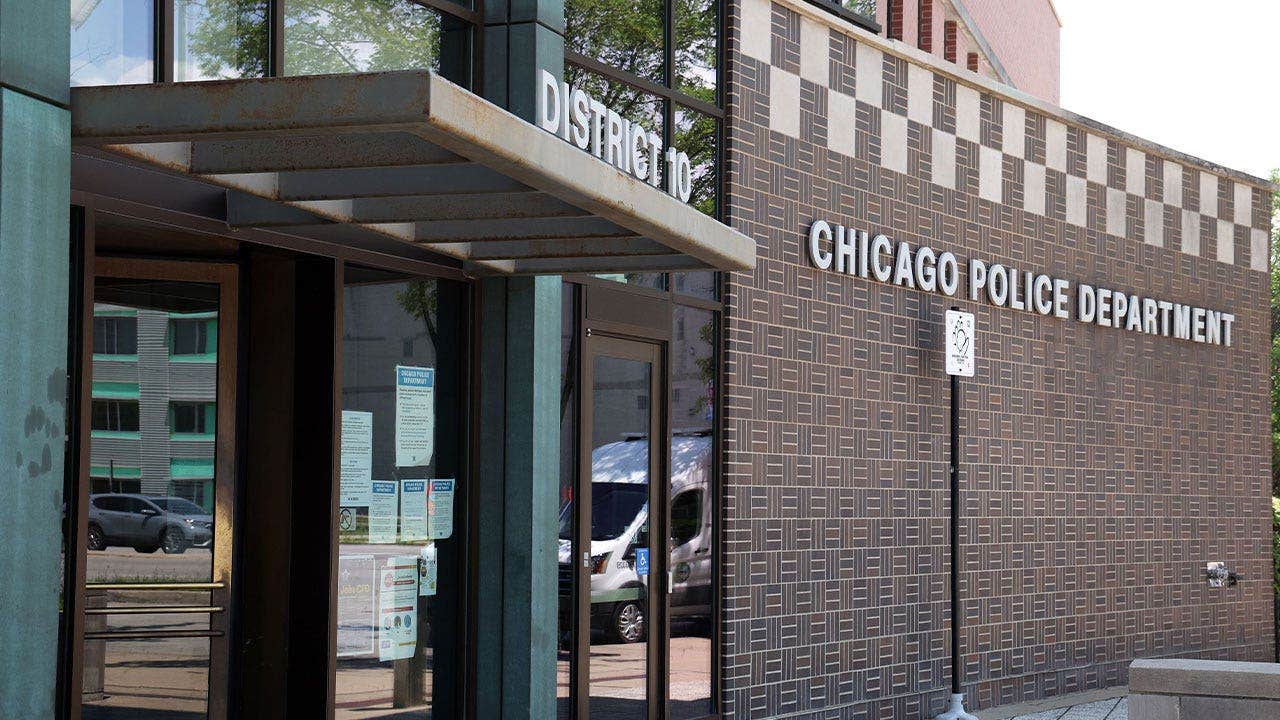
The breakthrough that finally identified McInerney came through the combined efforts of the Chicago Police Department, the FBI, and the Illinois State Police. Using modern forensic technology, investigators were able to link DNA evidence and the preserved fingerprint from Gloria’s communion purse directly to McInerney. It was a moment of clarity after more than six decades of darkness, but it was also a moment of profound betrayal. The Chicago Police Department did not mince words in its statement, saying that McInerney should never have worn the department’s star and that it was devastating to accept that he was never identified and held accountable while he was alive. Those words carry the weight of institutional shame, a recognition that one of their own was not only a killer but a killer who used his position to evade suspicion. The department expressed hope that identifying McInerney would bring some closure to those who knew Gloria, even though her parents had already passed away. But closure is a complicated thing. For the surviving family members, friends, and the community that still remembers the little girl who never made it to church that morning, the answer comes with a mix of relief, sorrow, and anger. Relief that the mystery is finally solved. Sorrow for a life stolen so early. Anger that the man who did it was never brought before a judge and jury. And perhaps a quiet, unsettling awareness that evil can wear the most respectable of masks.
Now that McInerney has been identified, authorities are not stopping with Gloria’s case. The Cook County State’s Attorney’s Office is working to examine other cases that may have involved the former detective, according to the Associated Press. This is a necessary and sobering step, because when a police officer commits murder, the abuse of power rarely happens only once. McInerney spent decades in law enforcement, and his access to crime scenes, evidence, and information would have made it terrifyingly easy for him to hide his tracks. Investigators are now looking back through old files, unsolved homicides, and suspicious cases that may bear his fingerprints, both literal and figurative. The thought that there could be other victims, other families who have waited years for answers, is a haunting one. But it also means that Gloria’s story may be the key to unlocking other long-buried secrets. Her death, tragic as it was, may now serve as a beacon of justice for others who suffered at the hands of the same man. The investigation is ongoing, and it is impossible to know what else might be uncovered. What is certain is that McInerney’s legacy is no longer that of a respected detective, but of a predator who exploited his badge to escape accountability. His death may have spared him punishment in this life, but it cannot spare him from the judgment of history, nor from the relentless pursuit of truth by those who refuse to let his victims be forgotten.
In the end, this story is about more than a cold case solved. It is about the fragility of life, the cruelty of hidden evil, and the enduring power of love and memory. Gloria Kowalewicz was a little girl with a whole future ahead of her, a child of faith walking to church on a November morning, carrying a prayer book and a white purse that would become evidence in her own murder. She deserved to grow up, to laugh, to love, to live. Instead, her life was cut short by a man who was supposed to protect her community, a man who hid his darkness behind a badge and a title. The fact that he was never held accountable while alive is a wound that will never fully heal. But the identification of her killer, even after all these years, matters. It tells her family that they were not forgotten. It tells the world that the truth cannot be buried forever. And it reminds us all that justice, though sometimes delayed, can still find its way through the cracks of time. Gloria’s name will now be remembered not just as a victim, but as the girl who helped expose a monster. Her story is a painful chapter in Chicago’s history, but it is also a testament to the tireless work of investigators who refused to let her case go cold, and to the quiet dignity of a family that never stopped loving her. May she rest in peace, and may her memory be a blessing that no amount of darkness can ever extinguish.