






At the heart of the latest federal crackdown on systemic corruption lies a devastating betrayal of the public trust, where the vulnerability of children and struggling young adults was traded for the keys to high-end sports cars. For families who rely on Medicaid, behavioral health and psychotherapy services are not mere line items on a state budget; they are vital lifelines designed to help young people heal, grow, and navigate complex psychological challenges. When families sent their children to local summer camps, church groups, and recreational youth programs, they believed they were placing them in safe environments that prioritized their mental well-being and developmental progress. Instead, federal authorities reveal that these children were treated as commodities in a massive $30 million Medicaid fraud scheme orchestrated by four deeply cynical defendants in Ohio. Rather than funding clinical therapy sessions or providing genuine psychological support, millions of dollars in taxpayer funds meant for disadvantaged youth were diverted to finance an incredibly lavish lifestyle for the perpetrators. The sheer audacity of this scheme, which stripped away necessary therapeutic resources from young minds who desperately needed them, highlights the profound moral failure of white-collar criminals who view the public safety net as a personal cash machine.
To understand the mechanics of this exploitation is to see how easily bureaucratic systems can be manipulated when greed overcomes human decency. According to prosecutors, the defendants operated Ohio-based behavioral health organizations that systematically billed Medicaid for highly specialized therapeutic programs and psychotherapy sessions that were either entirely unnecessary or simply never took place. The depths of this deception became even more apparent when one of the fraudulent companies lost its formal credentialing with the Ohio Department of Mental Health and Addiction Services; rather than halting their operations or seeking to rectify their standards, the defendants merely shifted their billing apparatus to a different corporate entity to keep the illicit funds flowing. The magnitude of their self-indulgence was laid bare when law enforcement agencies moved in to freeze their assets, seizing three bank accounts holding roughly $469,000, along with a fleet of fourteen high-performance vehicles valued at approximately $800,000. This staggering collection of luxury transportation included six sleek Mercedes-Benz vehicles, a Bentley, a BMW, a Jaguar, a Maserati, two rugged Land Rovers, a GMC, and an exotic McLaren supercar, demonstrating that the funds meant for children’s mental healing were instead spent on a fleet of high-class toys.
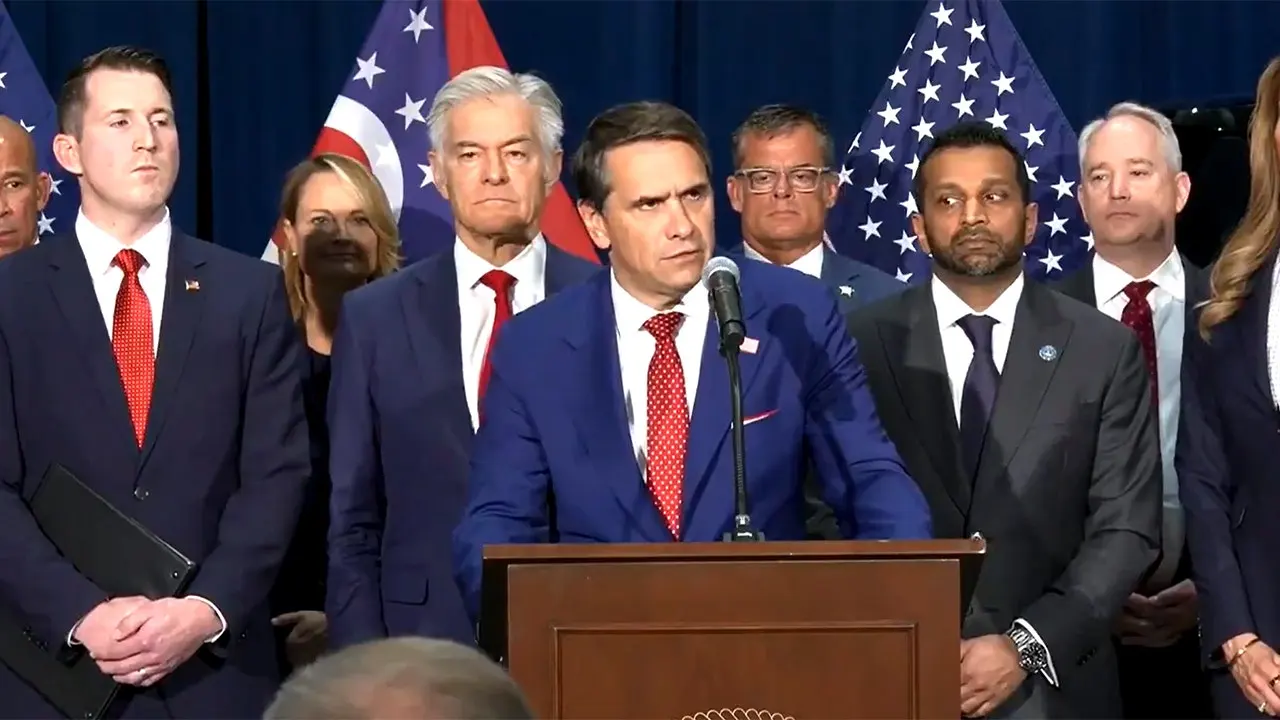
This alarming Ohio case served as the centerpiece for a much larger, coordinated offensive by the Department of Justice, illustrating that government program fraud is far from a victimless or distant bureaucratic issue. During a press conference in Ohio, acting Attorney General Todd Blanche spoke with palpable resolve, expressing that some criminals have grown so daring, so incredibly audacious, that they do not hesitate to rob the public of tens of millions of dollars in broad daylight. Blanche emphasized that the details of these cases should deeply shock the conscience of the American public, as they represent a direct assault on the resources meant to protect vulnerable citizens. This unprecedented federal-state sweep resulted in charges across multiple jurisdictions, highlighting a collective loss of more than $57 million from healthcare fraud, government assistance program manipulation, and predatory consumer scams. By combining the investigative power of federal agents with the localized knowledge of state prosecutors, this joint initiative marks a significant turning point in law enforcement’s strategy, shifting from passive administrative tracking to aggressive, high-stakes criminal prosecution of white-collar networks.
To bolster this aggressive new stance and bring these elusive financial predators to justice, the FBI has unveiled a powerful new public weapon: the “Most Wanted Fraudsters” list. This digital billboard of high-level financial fugitives was born out of a direct suggestion from Vice President JD Vance, who recognized that while traditional “Most Wanted” lists successfully target violent gang members, international terrorists, and drug traffickers, white-collar criminals who ruin lives from behind computer screens often evade the public spotlight. FBI Director Kash Patel championed this vision, explaining that individuals who steal tens of millions or even billions of dollars from hardworking Americans and vital public programs deserve the same level of global scrutiny and pursuit as violent offenders. The newly launched list, now live on the FBI website, is designed to mobilize public awareness and leverage international law enforcement networks to track down and apprehend fugitives who have fled the country after orchestrating massive financial scams. By putting a public face on these complex financial crimes, the federal government aims to dismantle the sense of impunity that wealthy scammers have enjoyed for far too long.
While the Medicaid scheme in Ohio targeted the physical and emotional welfare of youth, other facets of this federal crackdown revealed an equally heartbreaking disregard for human dignity, particularly in a sophisticated international romance scam that targeted isolated and elderly Americans. Operating primarily out of Ghana, these digital predators utilized dating websites, popular social media platforms, and advanced artificial intelligence-driven video technology to fabricate convincing, compassionate female personas. They systematically groomed more than 130 vulnerable victims across the United States, exploiting their loneliness and desperate desire for human connection to manipulate them into wiring over $15 million in life savings. The perpetrators used these stolen fortunes to purchase symbols of extreme wealth, which federal authorities subsequently seized, including a flamboyant Lamborghini, a high-tech Tesla Cybertruck, another Mercedes-Benz, and a BMW, with total seized assets in this single case valued at over $3 million. Simultaneously, the Department of Justice announced charges against four individuals who exploited the COVID-19 Paycheck Protection Program, fraudulently securement of over $1.4 million in emergency economic relief loans by falsifying business income and later filing deceptive loan forgiveness applications, proving that no national crisis or human vulnerability is sacred to those bent on theft.
Ultimately, these sweeping prosecutions are intended to do more than just recover stolen funds and seize flashy sports cars; they are designed to establish a new blueprint for systematic reform and restore faith in public institutions. The Department of Justice has made it clear that the collaborative model pioneered in Ohio, which seamlessly integrates local, state, and federal resources, will serve as the primary framework for the Trump administration’s expanded campaign to eliminate waste, fraud, and abuse across all government programs. By aggressively targeting those who exploit public safety nets, pandemic relief, and the emotional vulnerabilities of senior citizens, law enforcement is sending an unequivocal message that financial crimes carry devastating, real-world consequences. Humanizing these administrative battles is essential, for it reminds the public that every dollar stolen through Medicaid or identity fraud is a dollar taken directly from a child who needs therapy, a senior citizen who deserves a secure retirement, or an honest business owner struggling to keep their doors open. As these multi-state task forces expand their reach, the ultimate goal remains the defense of the vulnerable, ensuring that the resources designed to heal and support the community are never again transformed into a playground for the corrupt.