





On a hot summer afternoon in Charlotte, North Carolina, a woman walking down a street had no reason to believe her life was about to change in an instant. She passed a man, perhaps glancing at him, perhaps offering a small wave of recognition—a gesture so ordinary and innocent that most people would not think twice about it. But in the seconds that followed, that wave became a trigger for an explosion of violence. A disturbing video recorded by the attacker himself and later shared by local reporter Hannah Goetz shows Di-Quan Schafar Hunt, a 32-year-old man with an extensive criminal history, screaming, “Don’t wave at me” before landing a brutal sucker punch that sent the woman crashing to the ground. As she lay there, vulnerable and stunned, he stood over her, thrusting a finger in her face and slapping her, shouting, “You still talking? July 21st. Say Elijah, say Elijah.” The words were chilling, cryptic, and deeply unsettling. Police say the woman was taken to a hospital with serious but non-life-threatening injuries, but the emotional and psychological wounds of such an attack are not so easily measured. This was not a confrontation between people who knew each other, or a dispute that escalated from an argument. It was a random, startling act of cruelty inflicted on a person simply trying to go about her day. The video, raw and unfiltered, has sparked outrage across the Charlotte community and beyond, because it shows something deeply frightening: the sudden, senseless nature of violence and the alarming reality that a man with a long history of arrests was on the street to do it again. For the woman on that sidewalk, a simple wave became a nightmare she will likely carry with her for the rest of her life.
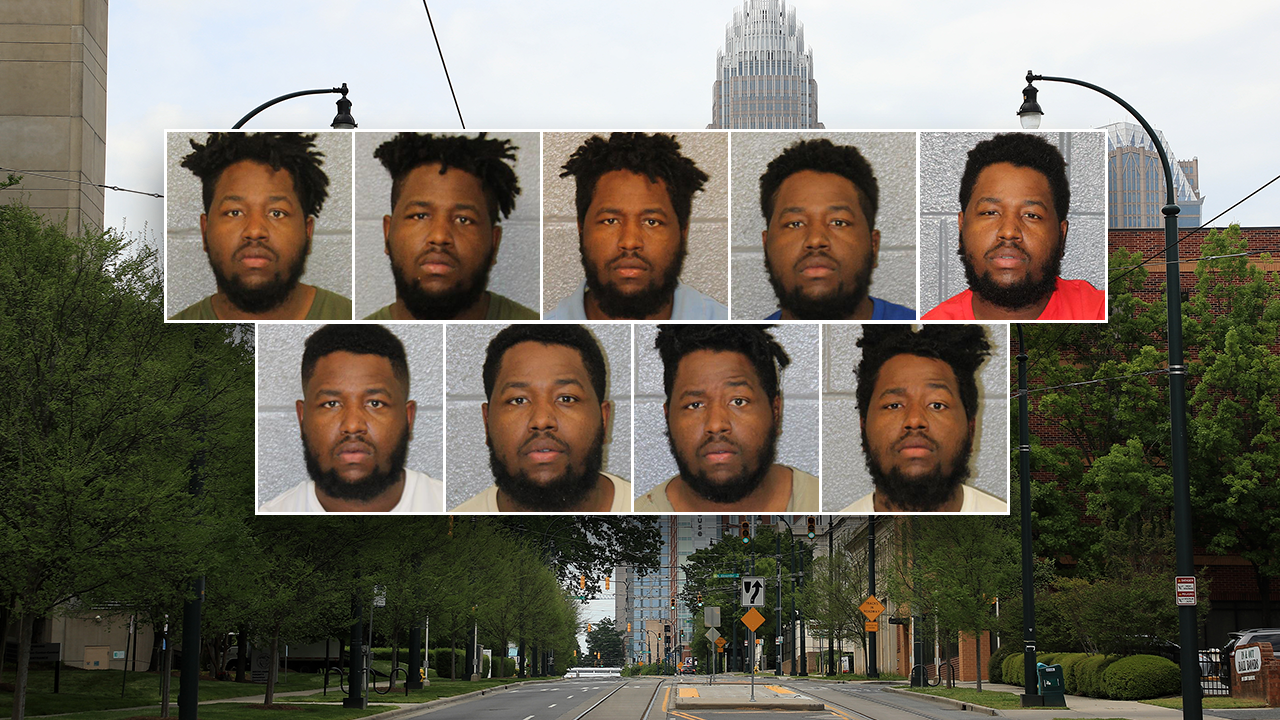
The man at the center of this attack is not a stranger to the criminal justice system. Di-Quan Schafar Hunt has been arrested nine times in the last three years alone, according to Mecklenburg County Sheriff’s Office records. His charges paint a sobering picture of escalating and varied wrongdoing: trespassing, simple assault, assault on a female, assault with a deadly weapon, resisting an officer, violating a protective order, contempt of court, breaking or entering, and probation violations. In 2020, he was convicted of shooting into an occupied building or vehicle—a serious offense involving firearms and the potential for deadly consequences. In December, he was arrested after authorities accused him of threatening a man with a knife near a Charlotte public transit line. This is not a man who slipped through the cracks once. This is a man who has repeatedly encountered the legal system, been arrested, processed, and at some point released, only to find his way back into the streets and, ultimately, back into the lives of innocent people. Perhaps most disturbing is the suggestion that the July 30 assault was not an isolated incident. Police are now investigating Hunt in connection with several similar assaults on women—attacks that authorities say Hunt recorded himself committing. One additional video reportedly shows him chasing a woman who runs into the street and hides behind a car for safety. The pattern that emerges is one of intimidation, domination, and targeted violence against women. It raises a deeply unsettling question for the community: How many times must a person demonstrate that he is a danger before something is done to stop him? The frustration is palpable. People look at Hunt’s record and wonder why a man with nine arrests in three years, including violent offenses, was free to roam the streets and allegedly punch a woman in the face on a public sidewalk. The answer, or lack of one, has only deepened the public’s distrust.
When police finally took Hunt into custody on Thursday evening, there was a sense of relief, but also confusion. Officers arrested him and transported him to a medical facility for treatment, though officials did not specify why he needed care. Once released from that facility, he will be transferred to the Mecklenburg County Sheriff’s Office and charged with assault with a deadly weapon. The charge itself is striking—because the weapon in this case appears to be his own hands, or perhaps something else not yet disclosed, but the severity reflects the prosecutor’s intent to treat this case seriously. Yet the questions surrounding his repeated release remain. A spokesperson for the Charlotte-Mecklenburg Police Department was candid when asked why Hunt had been released so many times despite his history: “We don’t have an answer for you for that question because it’s not our jurisdiction.” That brief response speaks to a frustrating reality—law enforcement can make arrests, but the decision to hold someone or release them often rests with the courts, the jails, and a broader criminal justice system that sometimes seems to let dangerous people slip through the cracks. The spokesperson also acknowledged that there may be more victims. Based on the other videos that have surfaced, police anticipate there could be other cases, but they do not yet have enough information to share. They have issued a public call: anyone with information should report it to a detective or anonymously through Crimestoppers. But the plea also reveals a painful truth—authorities are learning about violence only after it has been posted on social media, and they are now relying on the public to help piece together a pattern that should perhaps have been stopped long ago. Meanwhile, the women who may have been victimized by Hunt are left to wonder whether anyone will listen, whether their stories matter, and whether the system that failed to keep them safe will finally do its job.
The echoes of another recent tragedy loom large over this case. Less than a year ago, Charlotte was shaken by the brutal stabbing of Iryna Zarutska, a 23-year-old Ukrainian refugee who had come to the United States seeking safety and a new beginning. She was attacked on a public transit train in an apparently random act of violence that shocked the nation. The suspect, Decarlos Dejuan Brown Jr., 34, had previously been arrested fourteen times—including on violent assault charges—and was out in the community when he allegedly took her life. The similarities are impossible to ignore. Both cases involve a deeply disturbing pattern: a repeat offender with a documented history of violence and instability, a system that repeatedly released him, and an innocent person caught in the crosshairs of that failure. Zarutska’s death drew national attention because it highlighted the human cost of these systemic failures. She was a young woman who had already endured the trauma of war, displacement, and the terrifying uncertainty of fleeing her homeland. She came to Charlotte hoping for peace, and instead she was killed on a train by a man who should, by all accounts, have been behind bars. For her family, for the Ukrainian community, and for the city of Charlotte, her death became a symbol of what happens when repeated arrests do not lead to meaningful intervention. Now, with the video of the assault on the woman in the street, that painful memory is revived. The public is asking the same question all over again: How many warnings does the system need? How many videos, how many prior arrests, how many assaults on women are necessary before a dangerous individual is removed from public life? The answer, tragically, seems to be “too many.”
This is not simply about one man or one city. It is about a broader conversation regarding public safety, mental health, criminal justice reform, and the way we handle people who repeatedly demonstrate an inability to live safely in society. When a person is arrested nine times in three years, there are ample opportunities for intervention. There are opportunities for courts to impose meaningful bail conditions, for probation officers to respond swiftly to violations, for more robust mental health treatment, for substance abuse support, for longer sentences in cases involving violence. But these opportunities are often missed because of overcrowded dockets, strained resources, or legal mandates that prioritize pressure to release defendants awaiting trial. The police spokesperson’s comment about jurisdiction is not just a bureaucratic excuse; it reflects a deep fracture in the criminal justice system where no single agency is fully responsible for the outcome. Police make arrests. Prosecutors pursue charges. Judges set bail. Jail officials manage custody. Treatment providers offer services. And somewhere in that chain, people fall through. The result is that violent offenders with lengthy records are repeatedly returned to the streets, sometimes with tragic consequences. In the video, Hunt shouts the name “Elijah” twice—a detail that is cryptic and haunting, perhaps a reference to a person or a date known only to him, perhaps a sign of mental illness or personal delusion. Whatever its meaning, it adds to the sense of unpredictability and danger that surrounded him. For ordinary residents, the fear is not just that such a man exists, but that the system has made it clear, through action and inaction, that his behavior is a risk it is willing to tolerate—until another innocent person is harmed.
In the end, the story is about people, not policies. The woman who was punched on the street is more than a victim in a video; she is someone’s daughter, perhaps someone’s mother, someone’s friend. She was going about her life when a stranger’s rage overtook her in the most brutal way. Her injuries were described as serious but not life-threatening, which is a relief—and also a painful reminder that survival does not mean the absence of suffering. Many victims of violence carry invisible wounds: anxiety, post-traumatic stress, a lingering sense of fear when they see a stranger approach, a haunting memory that can be triggered by a sound or a word. Even after Hunt’s arrest, the woman will have to rebuild her sense of safety. The same is true for the other women who police believe may have been assaulted by him. Their stories are not just evidence in a case; they are chapters in a larger narrative of how violence disproportionately affects women and how often it is minimized, overlooked, or excused. Charlotte is a city that has been forced to confront this issue repeatedly, and the anger and grief are understandable. But for there to be real change, that anger must turn into action: stronger responses to repeat offenders, better support for victims, more transparent communication from agencies, and a commitment to treating violent behavior as the emergency it is. The video of the assault should never have been necessary to get this man off the streets. The grief of Iryna Zarutska’s family should never have been the price of attention. As the city waits to see what happens next in the legal proceedings against Hunt, the public is left with a simple but profound longing: that this time, the system will make good on its promise to protect the innocent, to hold the violent accountable, and to give survivors the justice and peace they deserve. Only then can a community truly begin to heal.