





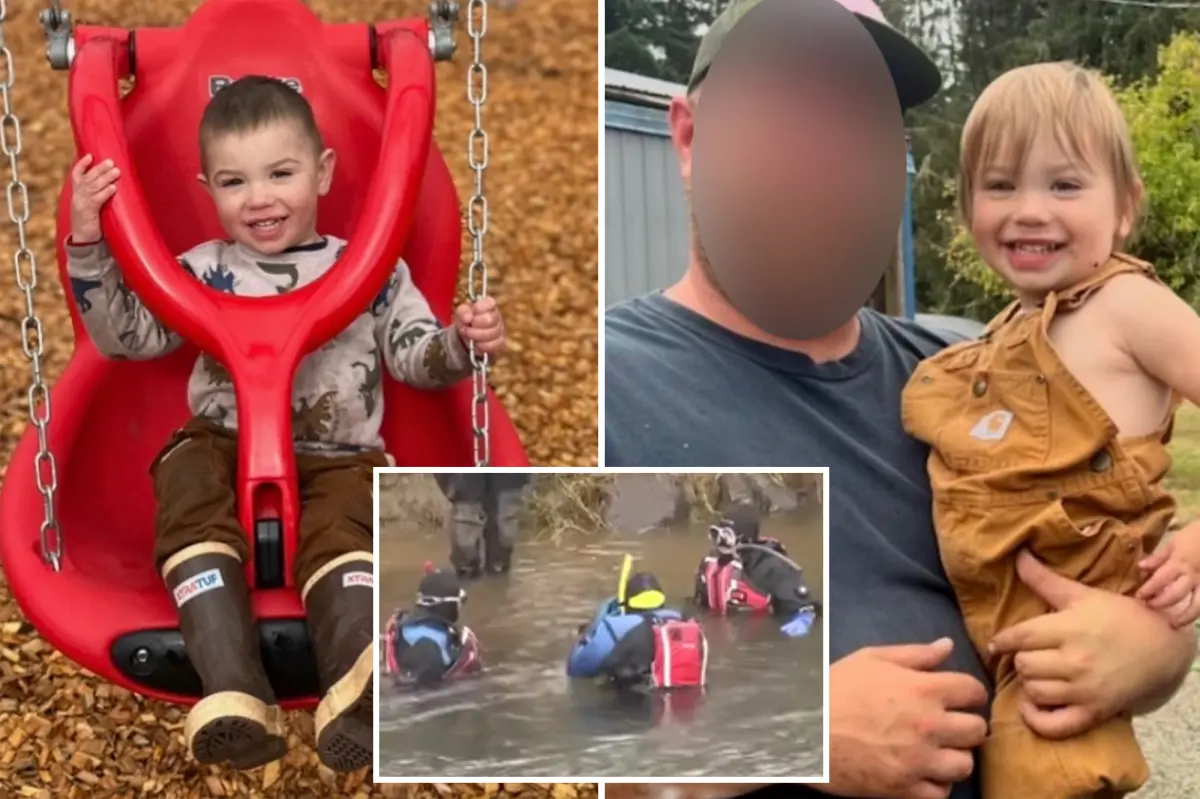
The quiet, mist-shrouded beauty of Siletz, a small rural gem tucked away in coastal Oregon, became the backdrop for an unimaginable family tragedy on March 1, 2025—a day that would forever shatter the lives of a local family and deeply shake the surrounding community. On that cold late-winter afternoon, a vibrant, curious two-year-old boy named Dane vanished from his family’s riverside home, leaving behind a sudden, suffocating silence where joyful childhood energy had existed just moments prior. What initially began as a frantic search by desperate volunteers and rescue teams soon evolved into a painful, heartbreaking reality when the child’s body was recovered from the chilly, unforgiving depths of the Siletz River after an agonizing eleven-day search. The discovery of a single, tiny toddler footprint pressed into the damp mud at the river’s edge, alongside a favorite toy abandoned on the bank, painted a devastatingly clear and agonizing picture of Dane’s final moments of innocence before he slipped beneath the water’s surface, forever altering the lives of everyone who loved him.
Behind this unspeakable loss lies a deeply troubling narrative of modern distraction and profound parental oversight, as revealed in raw, newly unsealed court documents that seek to piece together the final hours of the little boy’s life. Prosecutors allege that as Dane wandered toward the perilous currents of the river, his father, Aaron Paulsen, was utterly absorbed in his television screen, admittedly “binge-watching” a show rather than keeping watch over his vulnerable toddler. The child’s mother, Cha Met Jackson, had explicitly reminded Paulsen of his caretaking duties before she stepped away to a trailer parked on the property, creating a fragile safety net that collapsed almost immediately. In a chilling detail revealed by investigators, Jackson later recalled hearing a quiet, persistent knocking on the trailer door while she was busy cleaning inside, recognizing the sound of her little boy outside but failing to open the door, later telling police she simply assumed the baby had gotten out but chose not to interrupt her chores—a series of small, seemingly mundane decisions that ultimately paved the way for an absolute catastrophe.
During a emotionally charged court hearing in November, District Attorney Jenna Wallace laid out a devastating timeline, revealing that little Dane was left completely unsupervised for approximately fifteen crucial minutes before his parents finally realized he was gone, a brief window of time that proved fatal for a child too young to comprehend the physical dangers of the world around him. To make the tragedy even more poignant, court filings indicate that both parents were fully aware of Dane’s intense, magnetic attraction to water; he was a little boy who loved to splash and play, possessed no innate fear of the river, and yet had never been taught the vital life skills of how to swim. An independent diver, acting on a desperate hope to bring closure to the grieving community, eventually located the toddler’s body in the river channel, confirming the community’s worst fears and transforming the search and rescue operation into a solemn, grieving recovery mission that emphasized the terrifying finality of a water hazard left completely unprotected from a curious child.
This tragic drowning, however, was not an isolated incident of distraction, but rather the culmination of a deeply concerning history of chronic neglect that had repeatedly raised alarm bells among neighbors and passersby long before the family ever moved to Siletz. Court documents painted a dark, unsettling picture of a household where basic supervision was frequently treated as an afterthought, detailing how previous neighbors had felt compelled to contact law enforcement after witnessing Dane’s older sister left to play entirely alone in the street and yard for extended stretches of time as a toddler. Perhaps the most terrifying warning sign of all occurred when a local teenager spotted a tiny toddler—later identified as Dane—standing completely alone on the shoulder of a nearby highway, clad in nothing but a diaper and a light blue sweater. The teenager had gently guided the lost child back home, a near-miss that should have served as a wake-up call to the parents but instead joined a growing list of ignored red flags that foreshadowed the eventual loss of the boy’s life.
In the wake of this devastating event, the wheels of the justice system have begun to turn, with a grand jury indicting Aaron Paulsen in October 2025 on misdemeanor charges of child neglect, a charge to which he has since entered a plea of not guilty. As his trial approaches, prosecutors are preparing an incredibly thorough and powerful case to illustrate the environment of neglect that ultimately cost Dane his life, filing a motion indicating their intent to call twenty separate witnesses to testify about the family’s history and the events of that fateful March afternoon. This upcoming legal battle is poised to lay bare the painful realities of the household, bringing forward neighbors, law enforcement officers, and community members who will collectively testify to the systemic lack of supervision that defined the young boy’s brief existence, forcing a grieving community to relive the tragedy through the clinical lens of the courtroom.
Ultimately, the heartbreaking story of little Dane serves as a deeply humanizing, cautionary tale about the fragile sanctity of early childhood and the high cost of parental distraction in an increasingly screen-filled world. It forces a collective reflection on the sacred responsibility of protecting those who cannot protect themselves, highlighting how quickly a moment of digital escapism can translate into a lifetime of grief, regret, and legal reckoning. As the community of Siletz continues to mourn the bright, water-loving little boy who should have had a lifetime of summers ahead of him, his memory remains a somber reminder of the vital importance of watchful eyes, community vigilance, and the irreplaceable protective embrace that every child inherently deserves from those who brought them into the world.