



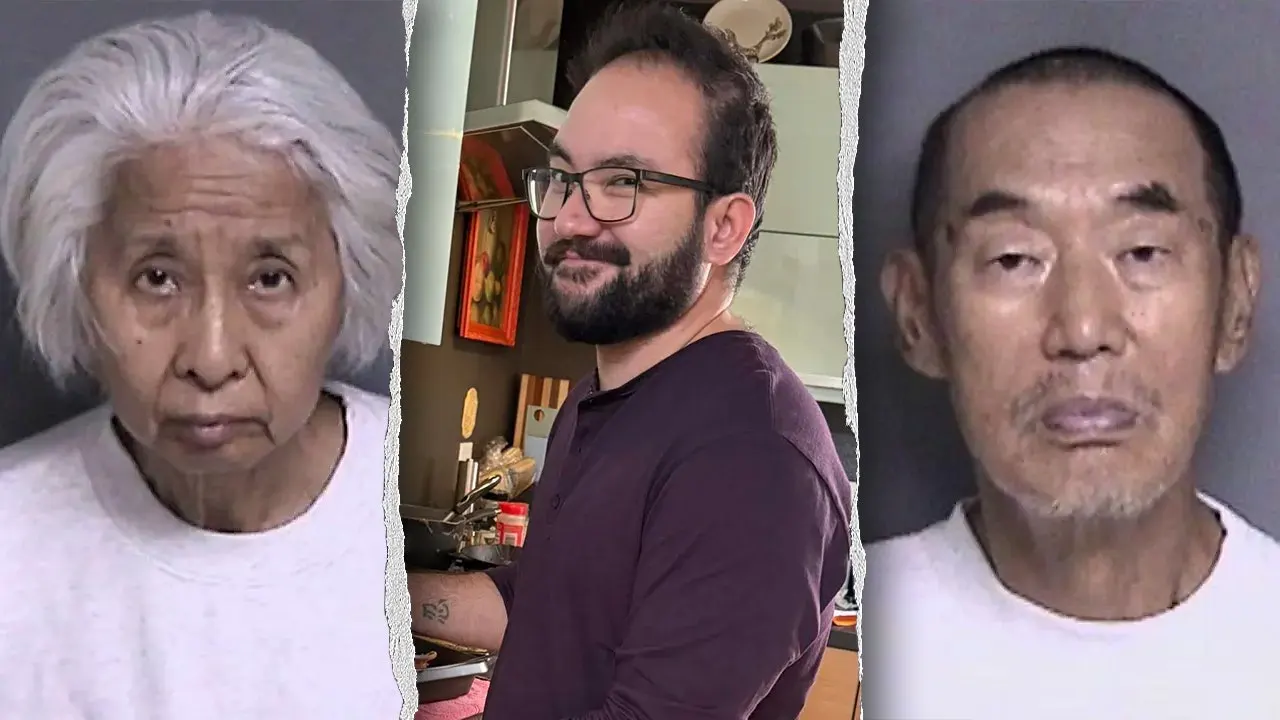
In the quiet, sunlit expanse of a California park, a routine Tuesday afternoon was shattered by the crack of gunfire, an act of violence so sudden and brutal that it would leave a community reeling and expose the darkest undercurrents of a family’s bitter war. The victim, 40-year-old Jonathan McKinsey, a respected engineering director for The New York Times, was found lying face-up in the parking lot of the Dublin Sports Grounds, his life ended by multiple gunshot wounds. But the shockwaves of this tragedy deepened when police swiftly arrested the alleged perpetrators: his own in-laws, 77-year-old Shouyong Zhang and Shili Chen. The couple, both septuagenarians, now face charges of murder, with prosecutors alleging a cold, calculated ambush that was the final, fatal chapter in a vicious custody battle. The image of two elderly grandparents as accused killers is jarring, yet the court documents paint a picture of a premeditated attack, carried out not in a moment of passion, but with a chilling and deliberate intent, turning a public recreational space into a scene of tragedy.
The sequence of events, as pieced together from newly filed court records, reveals a swift and decisive police response. Multiple 911 calls flooded the dispatch center, reporting gunfire at the park. A Dublin Police Services sergeant arrived to find McKinsey gravely wounded and unresponsive. He was pronounced dead at the scene, his death a stark confirmation of the grim reports. The investigation then pivoted to finding the suspects as witnesses quickly pointed authorities toward a black Honda Civic seen fleeing the parking lot. Officers located the vehicle nearby and initiated a high-risk traffic stop, a moment of high tension that would lead to the detainment of the couple. Shili Chen was driving the car and was allegedly found in possession of a firearm. Her husband, Shouyong Zhang, was in the passenger seat. The aftermath of the stop was almost immediate, as three separate witnesses would identify both Chen and Zhang as the individuals who had opened fire on McKinsey. This eyewitness testimony was further corroborated by surveillance video, which allegedly captured the couple firing their weapons “in concert” on their son-in-law, a detail that transforms the act from a spontaneous crime of passion into a coordinated, joint effort.
The allegations against the couple are made even more heinous by the location and circumstances of the shooting. Police noted that the couple opened fire in a crowded park parking lot with a “blatant disregard for public safety,” an act of reckless violence that took place with children present in the vicinity. The public nature of the attack not only endangered innocent lives but also suggests a level of brazen desperation or rage that overrode all caution. Following their arrest, the couple was transported to police headquarters. Shili Chen chose to invoke her Miranda rights, remaining silent in the face of questioning. Her husband, however, allegedly chose a different path. In a later interview with investigators, Shouyong Zhang is reported to have admitted to the shooting, a confession that sealed the prosecution’s case. When police searched their Honda, they recovered a second firearm, which Zhang allegedly admitted using in the attack on McKinsey. These admissions and the physical evidence paint a damning picture of a couple who, according to authorities, were not merely present but were active, willing participants in a premeditated killing.
But the question that hangs in the air, the one that gives this story its profound and heartbreaking depth, is why. Why would two elderly individuals engage in such a violent act? The answer, revealed in a swirl of court records and family disputes, points to a deep-seated hatred and a bitter, protracted legal war. McKinsey’s killing did not occur in a vacuum; it was the horrific culmination of a divorce and custody battle against his wife, Candice Jang, who is the daughter of the accused couple. The legal filings reveal a toxic environment of competing accusations. Court documents show that Jang sought a domestic violence restraining order against McKinsey in October, and just two months later, McKinsey filed his own request against her. These competing matters were scheduled for a three-day hearing in December, a legal showdown that now will never come to pass in the way either party had intended. McKinsey, a transgender man, had accused his wife and her parents of years of abuse in court filings before his death, alleging that some of the abuse was rooted in prejudice against his gender identity.
The allegations of abuse that McKinsey detailed are both specific and disturbing, painting a portrait of a family dynamic fraught with hostility and cruelty. According to reports from The Mercury News, McKinsey accused his mother-in-law, Shili Chen, of directing anti-LGBTQ slurs at him and one of his children. He also alleged that his father-in-law, Shouyong Zhang, had struck him in the chest while he was still recovering from a double mastectomy, a deeply vulnerable time for any person. These accusations stand in stark contrast to the competing allegations made by Jang, who claimed she was the victim of domestic violence and that McKinsey had abused their children. The conflicting narratives present a classic, tragic “he said, she said” scenario, but one with life-or-death consequences. The court system had been struggling to untangle this web of accusations, but the ultimate resolution was not delivered by a judge, but by a hail of bullets in a public park. The death of Jonathan McKinsey is a stark reminder that the bitterness and anger that can fester within family conflicts, especially when fueled by issues of identity, custody, and long-held grievances, can have unimaginable and violent endings.
Now, the legal system will grapple with the fallout. The Alameda County District Attorney’s Office has charged Shouyong Zhang and Shili Chen with murder, adding a special-circumstance allegation of “lying in wait.” This specific allegation is a powerful legal tool, as it implies the couple deliberately and patiently waited for an opportunity to ambush their son-in-law, essentially planning the attack to ensure its success. The complaint further alleges the killing involved “great violence” and acts showing a “high degree of cruelty, viciousness, or callousness,” underscoring the prosecution’s view of the severity and brutality of the crime. Both defendants are also accused of being armed with and using a weapon during the killing. If convicted of first-degree murder with the special circumstance, they could face life in prison without the possibility of parole. As the couple, both 77 years old, awaits trial, they sit in custody, their futures sealed by the events of that afternoon. The case has naturally drawn intense media scrutiny due to the age of the defendants and the tragic backstory, but for the family at the center of it, the loss is deeply personal. Beyond the legal proceedings, there remains a profound human tragedy: a man has lost his life, children have lost a parent, and a family has been irrevocably shattered by hatred and violence.
In the end, this is not just a story about a crime, but a story about the devastating power of unresolved conflict and the depths of human cruelty. Jonathan McKinsey was not just a victim; he was a man who, according to his own accounts, endured prejudice and abuse for who he was, sought legal protection, and fought for his children. His life was cut short in a brutal and public manner, allegedly at the hands of the very people he had accused of tormenting him. The case forces a confrontation with uncomfortable questions about family, acceptance, and the lengths people can go to when they feel wronged or when their prejudices go unchecked. While the accused couple is presumed innocent until proven guilty, the evidence laid out in the court documents paints a horrifying picture of a coordinated and heartless act. As the community in Dublin mourns, and as the loved ones of Jonathan McKinsey grieve, the story stands as a somber testament to the fact that some family battles are fought not in the quiet desperation of a courtroom, but with deadly consequences in the open air, leaving behind a legacy of pain, unanswered questions, and a profound sense of senseless loss.