


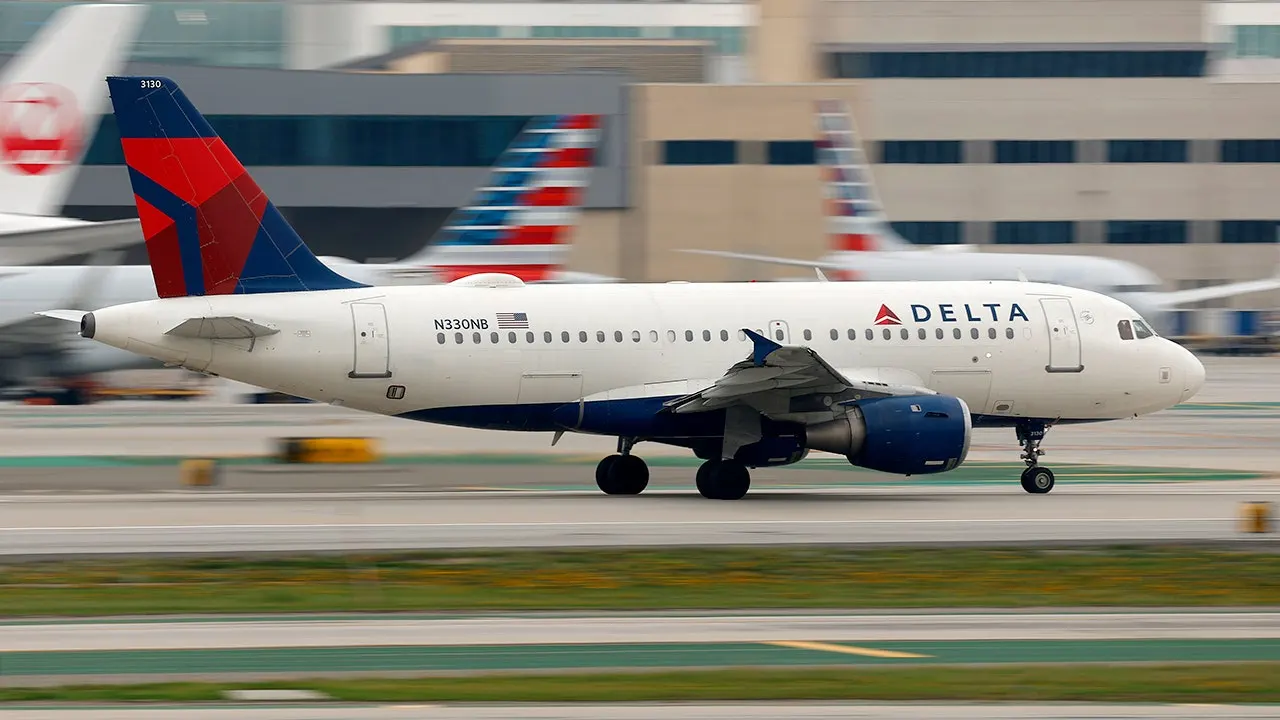
On a bright Saturday morning, Delta Air Lines Flight 2351 departed from the vast, sun-drenched tarmac of Dallas Fort Worth International Airport, carrying 129 passengers and a dedicated crew of six toward the historic coastal city of Boston. For the passengers on board, the journey was nearing its quiet end as the aircraft began its initial descent over the picturesque New England landscape. From the perspective of those tucked into their cabin seats—perhaps reading, finishing business emails, or lightly napping—this final phase of flight was a familiar routine, marked only by the soft chime of the seatbelt sign and the subtle deceleration of the jet engines. Traveling by air is always an act of deep, subconscious trust; flyers place their lives in the hands of invisible systems, quiet professionals in the flight deck, and the silent laws of physics. That peaceful environment, however, was suddenly transformed at approximately 11:30 a.m. local time as the plane descended close to the runway at Boston Logan International Airport. Rather than the expected gentle bump of tires making contact with the concrete, the quiet of the cabin was abruptly shattered by the dramatic, sudden roar of the twin engines surging to maximum thrust. The aircraft tilted upward at a steep angle, pressing passengers firmly back into their seats as the ground below rapidly receded. This maneuver, known in the aviation community as a “go-around,” can be a deeply unsettling experience for those unaccustomed to the physical sensations of flight, triggering a wave of hushed whispers, racing hearts, and white-knuckled grips on armrests. Yet, while a go-around feels like a sudden emergency to the anxious flyer, it is actually one of the most highly choreographed, routine safety procedures in commercial aviation, representing a proactive decision to prioritize human lives over schedule convenience.
The catalyst for this sudden airborne detour was a high-stakes traffic conflict unfolding on the tarmac below, revealing the intricate patterns of modern airport operations. Boston Logan International Airport, bounded by water and limited in geographical expansion, is well-known for its complex layout of intersecting runways—a design that allows the airport to handle heavy traffic flows in shifting New England winds but requires absolute precision to avoid conflicts. As Delta Flight 2351 prepared for landing on its designated runway, another commercial aircraft was simultaneously accelerating down an intersecting runway for its departure. At 11:30 a.m. on Saturday, June 20, the paths of these two massive machines briefly threatened to overlap, creating a scenario that demanded instantaneous intervention to prevent a potential runway incursion. The Federal Aviation Administration immediately recognized the gravity of this close call, launching a comprehensive investigation into the incident to dissect every single second of telemetry, radio communication, and radar data. For the regulatory body, incidents of this nature are treated with the utmost seriousness, as they highlight the vanishingly small margins of error that exist within highly congested modern airspace. Air travel has become safer than ever before, but this safety is maintained through a relentless commitment to analyzing “near-misses” and ensuring that the lessons learned from a Saturday morning in Boston are applied to prevent future incidents across the global aviation network. The FAA’s investigation will look closely at the timing of the clearance given to both aircraft, the visibility conditions, and the response times of the air traffic controllers, ensuring that any vulnerability in the system is quickly identified and corrected.
Behind the closed door of the Delta cockpit, the atmosphere was far from one of panic; instead, it was a clinic in cold, calculated professionalism and flawless communication. The captain and first officer of Flight 2351 were navigating the transition from a standard landing approach to an active missed approach with the calm reliance of professionals who have practiced this exact scenario hundreds of times in highly realistic flight simulators. In the modern cockpit, the relationship between pilots is governed by Crew Resource Management (CRM)—a safety philosophy that emphasizes open communication, mutual cross-checking, and the elimination of hierarchy in moments of high workload. When the pilots received an advisory indicating that their path would intersect with the departing aircraft, their training instantly overrode any natural human hesitation. In a split second, they executed the go-around protocol: one pilot flying the aircraft, manually pitching the nose up and calling for maximum thrust, while the other monitored the flight instruments, retracted the landing gear, managed the flap settings, and communicated with air traffic control. This transition requires incredible hand-eye coordination, rapid cognitive processing, and a deep, intuitive understanding of the aircraft’s aerodynamic limits. By choosing to abandon the landing, the flight crew demonstrated the psychological resilience required of modern aviators. It is easy for the public to view pilots as passive observers monitoring automated flight decks, but events like this serve as a stark reminder of why human pilots remain irreplaceable; their ability to make critical, life-saving decisions under pressure is the ultimate safety net of commercial travel.
Helping the pilots make this crucial decision was a sophisticated array of onboard technology acting as a silent, digital co-pilot in the sky. Modern commercial airliners like Delta’s fleet are equipped with cutting-edge collision avoidance systems, most notably the Traffic Alert and Collision Avoidance System (TCAS). This system constantly communicates with the transponders of other nearby aircraft, building a precise, three-dimensional picture of the surrounding airspace and calculating relative speeds, trajectories, and closure rates. In the case of Delta Flight 2351, the airline confirmed that its onboard advisory systems successfully alerted the flight crew to the potential traffic conflict on the intersecting runway before they even had visual contact with the departing plane. This technology provides pilots with an invaluable gift: time. In the fast-moving environment of terminal airspace, a few extra seconds of advanced warning can make the difference between a highly controlled safety maneuver and a panicked, last-minute correction. The integration of such technology does not replace the human element; rather, it elevates it, allowing the pilot to make informed decisions based on real-time data. This symbiosis of human pilot skill and advanced computer intelligence is the cornerstone of contemporary aviation, ensuring that even when human eyes cannot see a threat through the haze or around a blind spot on the runway, the aircraft itself is vigilant, watching over the lives of everyone on board.
While the pilots managed the physics of the aircraft, the air traffic controllers in the iconic Boston Logan tower were managing the geometry of the skies. Air traffic controllers work in one of the most high-stress professional environments in the world, responsible for directing a fast-moving, high-consequence ballet of metal and fuel through crowded corridors of air. On that Saturday morning, as the conflict arose on the intersecting runways, these controllers had to act with absolute clarity and calm. When the Delta crew initiated the go-around in coordination with the tower, a rapid, highly structured exchange of radio calls took place. The controller’s voice, steady and devoid of panic, provided the climbing Delta jet with immediate radar vectors, steering them away from the path of the departing aircraft and routing them into a safe altitude block above the city. This seamless interchange highlights the deep bond of trust that exists between pilot and controller, a relationship built on standardized terminology, mutual respect, and a shared, unwavering commitment to the safety of flight. The controllers quickly reshuffled the landing queue, slotting other arriving flights into holding patterns while guiding Flight 2351 back into the active approach sequence, transforming a highly complex, dynamic situation into an orderly, controlled process within minutes.
Following the brief detour over the Boston skyline, Delta Flight 2351 was safely guided back to the airport, completing a standard, flawless landing that brought its 129 passengers and six crew members securely to the gate. Though the flight arrived slightly behind schedule, and the passengers likely stepped off the jet bridge with racing pulses and a dramatic story to tell, the airline, the air traffic controllers, and the FAA viewed the entire event as a profound testament to the success of modern aviation safety. In many industries, a sudden, dramatic change in plans might be viewed as a failure, but in aviation, a go-around is celebrated as the system working exactly as it was designed to do. Every policy, piece of software, and training hour is geared toward a single, absolute rule: if a landing is not one hundred percent certain to be safe, you do not land. The fact that the pilots proactively initiated the go-around, aided by their onboard collision avoidance technology and supported by alert air traffic controllers, shows that the layers of safety redundancy built into our transport infrastructure are incredibly robust. As the FAA continues its investigation to refine these systems even further, travelers around the world can find comfort in this event, recognizing that behind every flight is an invisible, unbreakable safety net composed of human dedication, technological brilliance, and an uncompromising refusal to take shortcuts with human life.