



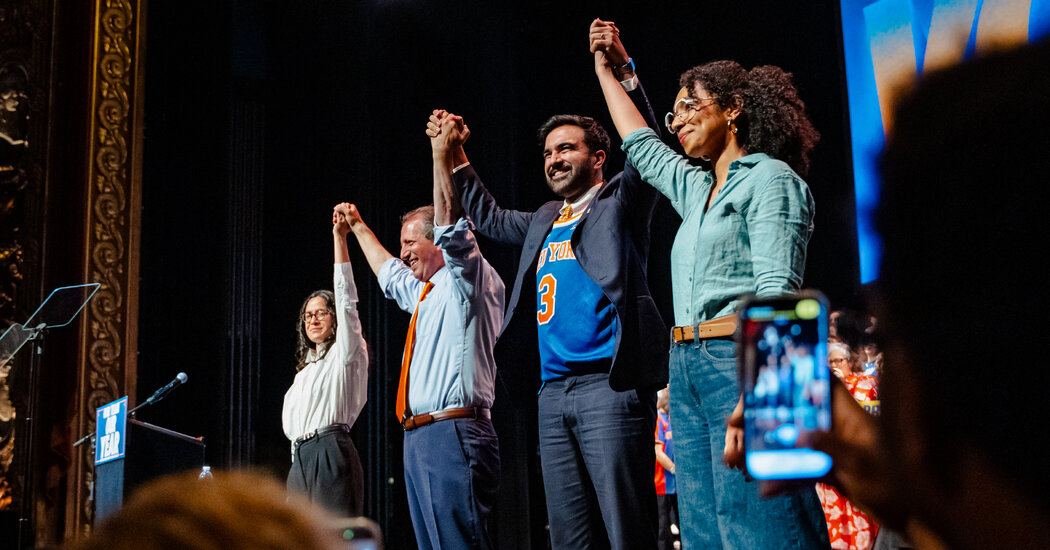
Just one year ago, the political foundations of New York City were shaken to their core when Zohran Mamdani, a charismatic 34-year-old democratic socialist, pulled off a stunning, barrier-breaking victory in the Democratic primary for mayor. It was an iconic triumph that completely defied the traditional political playbook, driven by an unprecedented groundswell of passionate young volunteers, grassroots working-class organizers, and a building public yearning for an unapologetic brand of progressive politics that placed human dignity above real estate and corporate interests. Yet, rather than retreating into the comfortable, risk-averse posture typical of newly inaugurated chief executives seeking to consolidate their governing coalitions and enjoy a peaceful honeymoon phase, Mamdani has chosen to throw himself directly back into the electoral fire. With the ink barely dry on his first major municipal budget and only six months into his tenure, he is aggressively putting his hard-won political capital on the line in a way few modern leaders would ever dare. In the final, frantic stretch of a high-stakes legislative primary season, Mamdani is not merely endorsing from a distance; he is personally leading an audacious campaign to unseat entrenched Democratic incumbents, aiming to dismantle the old guard and replace them with a new wave of democratic socialists. It is a breathtakingly bold gamble that could either crown him as the ultimate kingmaker who permanently shifts the center of gravity in New York politics, or leave him politically isolated, with his wings clipped by the very party establishment he seeks to remake. His strategy represents a fundamental departure from his predecessors like Michael Bloomberg or Bill de Blasio, who generally sought to broaden their coalitions while governing rather than shrinking them through bitter intra-party warfare. For Mamdani, political power is not something to be hoarded or spent cautiously on incremental policy wins; it is a tool to be actively wielded to dismantle systemic inequities, regardless of the personal or political cost.
At the heart of Mamdani’s high-stakes crusade is a fierce, ideological battle to reshape the city’s congressional delegation, targeting representatives whom the left views as too comfortable with corporate donors and out of step on crucial foreign policy matters—most notably, the war in Gaza. This primary offensive is aimed squarely at two heavyweights of the old guard: Representatives Daniel Goldman and Adriano Espaillat. To mount this challenge, Mamdani has mobilized a trio of insurgent candidates who represent the diverse, passion-fueled core of the modern democratic socialist movement. In Manhattan and Brooklyn’s 10th District, Brad Lander, a prominent city official with a deep bench of progressive support, is running a formidable campaign to unseat Goldman, leaning heavily on criticism of Goldman’s ties to the American Israel Public Affairs Committee (AIPAC). Meanwhile, in the Seventh and 13th Districts, two young socialist organizers—Claire Valdez and Darializa Avila Chevalier—are executing grassroots campaigns that have thrown their respective races into statistical dead heats. Valdez, a first-term state assemblywoman backed by Mamdani, is vying for the seat left vacant by the retiring progressive icon Nydia Velázquez, while Chevalier is mounting a fierce challenge against Espaillat in upper Manhattan and the Bronx. These candidates are not just run-of-the-mill progressives; they are activists who view their campaigns as extensions of global justice movements, explicitly calling for an end to corporate donor influence and demanding an immediate ceasefire in Gaza. By framing these local races around massive, emotionally charged debates over international human rights, money in politics, and community displacement, Mamdani and his allies have turned a sleepy off-year primary into a referendum on the very soul of the Democratic Party, forcing everyday New Yorkers to decide whether they prefer pragmatic, institutional power or disruptive, moralistic reform.
Yet, this relentless drive to expand the socialist caucus has ignited a firestorm of personal resentment and exposed raw, bleeding wounds within the city’s progressive ecosystem. By bypassing established leaders, Mamdani has deeply alienated the very Black, Latino, and labor coalitions that originally helped lift him to City Hall. Perhaps the most devastating rupture is with Representative Nydia Velázquez, a trailblazing progressive who felt personally betrayed when Mamdani rejected her preferred successors in favor of Claire Valdez. The ensuing anger has been visceral, with reports of Velázquez expressing her fury in no uncertain terms to colleagues like State Attorney General Letitia James, who noted that the congresswoman’s reaction was filled with raw emotion and explicit frustration. The campaign has deteriorated into a proxy war between Velázquez—supported by the Working Families Party and long-time community organizers—and the Democratic Socialists of America (DSA), whom critics accuse of capitalizing on gentrification to push aside legacy minority leadership. Similarly, in the Bronx and upper Manhattan, Mamdani’s endorsement of Chevalier has ruptured a quiet understanding with Representative Adriano Espaillat. Following his mayoral victory, Mamdani had privately assured Espaillat of his mutual support, a promise that now lies in tatters as Mamdani prioritizes Chevalier’s staunchly anti-AIPAC platform. This perceived breach of trust has outraged veteran Latino leaders, leaving many to wonder if Mamdani is willing to sacrifice essential, hard-built trust for short-term ideological expansion. The emotional weight of these broken alliances hangs heavily over the campaign trail; it is no longer just about policy platform differences, but about the deeply personal currency of one’s word, trust, and the painful feeling of being cast aside by a newcomer who was once a close ally.
The tremors of these municipal skirmishes are vibrating all the way to Washington, where Representative Hakeem Jeffries, the House minority leader in waiting, watches with mounting anxiety. Jeffries’ path to the speaker’s gavel relies on maintaining a unified Democratic front, a goal directly threatened by the radical rhetoric and uncompromising stances of Mamdani’s insurgent slate. Candidates like Valdez and Chevalier have notably refused to commit to backing Jeffries for House leader, a stance that has drawn sharp condemnation from establishment figures. More concerningly for national party strategists, the far-left policies championed by these candidates—such as Chevalier’s controversial past social media posts calling for the abolition of all deportations—provide potent ammunition for Republicans eager to paint the entire Democratic Party as dangerously out of touch. Moderate swing-seat Democrats across the country may find themselves forced to answer for the rhetoric of New York’s urban progressives, potentially costing the party the narrow margins needed to reclaim the House majority. For Jeffries and other national leaders, Mamdani’s local revolution feels like an indulgence the national party can ill afford, a self-absorbed crusade that prioritizes ideological purity over the pragmatic, grueling work of winning national power. The fear is that in seeking to build a socialist paradise in Brooklyn and Manhattan, Mamdani might inadvertently hand the keys of Congress back to the Republican Party, demonstrating a profound disconnect between the localized passions of New York’s cultural elite and the anxieties of working-class voters in the swing districts that actually decide the fate of the nation.
As the sweltering primary weekend reached its climax, the palpable anxiety among Mamdani’s inner circle became impossible to ignore. While the mayor spent his days barnstorming frantically from one district to another—sweating alongside his candidates under the summer sun, filming ad spots, and delivering impassioned speeches—the harsh reality of early voting data threatened to derail his grand vision. A year ago, Mamdani’s path to victory was paved by a massive surge of enthusiastic young voters who overwhelmed the more conservative, older electorate. But this week, the numbers told a sobering story: the youth vote had “cratered,” triggering a series of emergency, behind-closed-doors meetings of the local Democratic Socialists of America chapter. Without his own name on the ballot, Mamdani has struggled to translate his personal magnetism into turnout for his proxies. This looming disconnect has filled his supporters with a sense of secondhand dread, epitomized by election analyst Michael Lange’s warning that if these candidates fail, “the knives would be out” and critics would dismiss the movement as nothing more than a cult of personality surrounding a single, charismatic figure. Even as Mamdani points to the star-studded fundraisers and packed rallies at landmarks like the Kings Theater to prove the movement’s vitality, the quiet panic in the campaign offices speaks to a deeper vulnerability. It is the realization that while building an online brand and raising millions of dollars in gentrified brownstones is relatively simple, the gritty work of convincing weary, working-class New Yorkers to turn out for off-year primaries is an entirely different, incredibly fragile endeavor.
Backstage at the Kings Theater, amidst the echoing remnants of cheering crowds, Mamdani appeared resolute, insisting that any political damage to his own standing was a necessary price to pay for the broader struggle to uplift working people and reform a stagnant Democratic Party. Yet, the political fallout from this primary season will linger long after the ballots are cast. If his candidates lose on Tuesday, Mamdani will face a severely diminished mayoralty, confronted by emboldened rivals, alienated labor unions, and a deeply fractured progressive coalition that may no longer be willing to cooperate with his administration. For veteran politicians like Attorney General Letitia James, the fractures run far too deep to be easily mended by post-election platitudes, challenging the conventional wisdom that New York politicians have short memories. Whether Mamdani’s high-stakes gamble is viewed by history as a visionary moment of political courage that successfully remade the state’s Democratic party, or as a reckless act of political hubris that fatally fractured his own base of power, remains to be seen. What is clear, however, is that Mamdani has fundamentally changed the rules of engagement in New York City. By treating his office not as a permanent home but as a high-odds betting chip to be risked for systemic change, he has permanently shattered the cozy, risk-averse nature of municipal governance, leaving a lasting mark on the city’s political soul that will dictate its trajectory for years to come.