





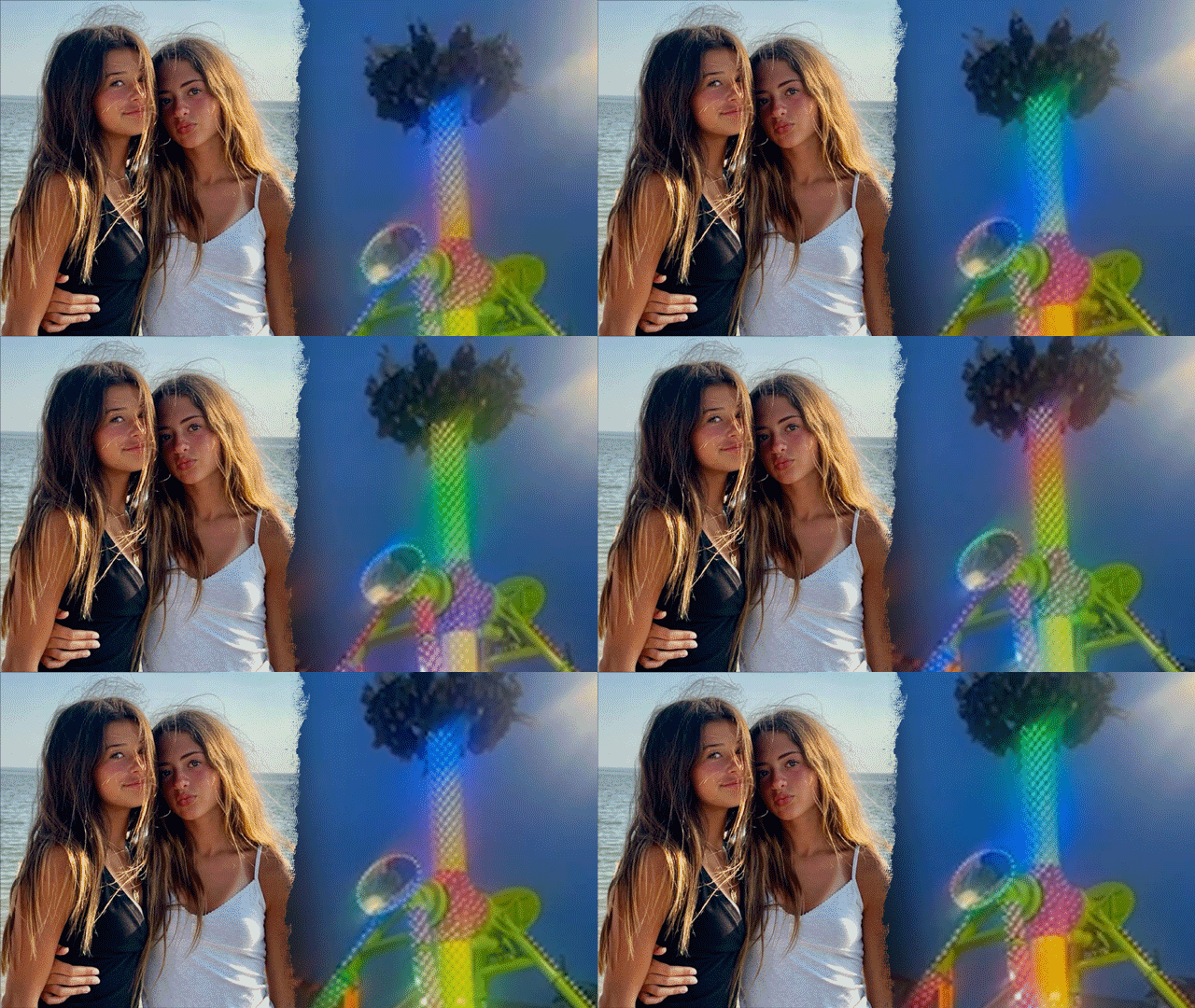
The warm, salt-kissed air of the Jersey Shore on a midsummer evening usually carries the sweet scent of caramelized funnel cakes, the distant rhythm of crashing Atlantic waves, and the collective soundtrack of joy, laughter, and arcade sirens. On the evening of July fifth, the day after the nation celebrated its independence, the historic boardwalk of Ocean City, New Jersey, was teeming with families seeking to stretch the holiday magic just a little bit longer. Among the crowd were thirteen-year-old best friends Charlotte Hacker and Emilia Gordon, two vibrant girls on the cusp of adolescence who were eager to celebrate a major milestone: Emilia’s upcoming thirteenth birthday, which was officially arriving the very next day. To mark this rite of passage, the girls, accompanied by Charlotte’s uncle and cousins, headed directly to Playland’s Castaway Cove, a beloved local amusement park that has served as a beacon of childhood wonder for generations of vacationers. Seeking a thrill worthy of their newly minted teenage status, the girls decided to bypass the gentler rides they had outgrown and set their sights on the “Wipe Out”—a glittering, towering new addition to the park’s lineup. This imposing attraction was designed to mimic the chaotic energy of a tidal wave, utilizing a massive pendulum arm to swing riders high into the sky, repeatedly flipping them completely upside down while the circular passenger compartment spun on its axis. Secure in their harnesses and sitting side-by-side, Charlotte and Emilia exchanged excited glances, fully expecting the familiar, controlled rush of adrenaline that they had experienced on so many other boardwalk attractions in the past, completely unaware that their festive night out was about to derail into a waking nightmare.
The transition from exhilarated laughter to paralyzing terror occurred in a single, sudden, and silent instant. As the massive mechanical arm of the Wipe Out reached the absolute peak of its vertical arc, suspending its passengers at a gravity-defying angle, the ride inexplicably shuddered to a complete and motionless halt. Instantly, the natural joy of the evening evaporated, replaced by the disorienting and painful physical reality of being suspended completely upside down high above the boardwalk. The human body is fundamentally unequipped to withstand prolonged inversion, and the physiological effects of gravity immediately began to take a heavy toll on the trapped riders. Blood rushed violently to the girls’ heads, creating a throbbing, high-pressure sensation behind their eyes and causing their temples to pound with a relentless rhythm. Emilia would later recall the terrifying sensation of trying desperately to lift her head to relieve the immense pressure, only to find that gravity had rendered her neck muscles virtually useless, pinning her chin toward her chest in a state of helpless restriction. The physical discomfort was quickly overtaken by a rising tide of panic as the seconds began to tick away without any sign of movement from the machine or communication from the ground. Suspended in the empty air, with the glittering lights of the boardwalk shimmering upside down far below them, the girls were forced to confront the terrifying realization that they were entirely at the mercy of a malfunctioning piece of heavy machinery, with absolutely no way to free themselves.
In the midst of this terrifying ordeal, the human instinct for survival and connection manifested in a deeply touching display of teenage solidarity. Clinging to each other’s presence in the adjacent seats, Charlotte and Emilia made a conscious, desperate decision to try and keep their mounting panic at bay by forcing themselves to engage in mundane, everyday conversations. Through the rushing sound of blood in their ears and the distant murmurs of the crowd below, they talked about trivial matters, school gossip, and the ordinary details of their lives—anything to construct a temporary mental shield against the terrifying void gaping beneath them. Yet, the physical reality of their situation continually threatened to shatter this fragile peace, particularly when the darkest thoughts began to creep into their minds. Emilia found herself gripped by the horrifying, intrusive thought that the mechanical lap bars securing them to their seats might suddenly malfunction and click open, sending them plunging headfirst toward the unforgiving wooden deck of the boardwalk. This psychological distortion of time is a well-documented phenomenon during high-stress events, and though the girls were ultimately trapped upside down for a duration of five to seven minutes, to their terrified minds, those minutes stretched out into what felt like a grueling, agonizing hour. Every second spent suspended in that inverted limbo felt like an eternity, testing the absolute limits of their emotional resilience as they waited for a rescue that felt increasingly distant.
Down on the solid ground, a parallel drama of sheer helplessness and terror was unfolding among the families who could do nothing but watch the nightmare play out from below. Charlotte’s uncle, who had happily agreed to chaperone the group of cousins for a fun-filled night out, found himself suddenly thrust into every parent’s worst nightmare as he stared upward at his niece dangling helplessly in the sky. The festive, carefree atmosphere of the amusement park instantly dissolved for the family, replaced by a cold, stomach-churning panic as they realized the ride had stalled in the worst possible position. Around them, other onlookers began to notice the silence emanating from the top of the Wipe Out, and a crowd quickly gathered at the base of the ride, their faces illuminated by the bright, artificial neon lights of the attraction. What was once a source of colorful amusement had transformed into a towering monument of danger, and the collective anxiety of the crowd below was palpable. Parents clutched their children tighter, whispers of concern rippled through the gathering spectators, and some began filming the scene on their phones, while family members shouted frantically to the ride operators, demanding answers and immediate action. The profound disconnect between the festive music still pumping through the park’s speakers and the silent, terrifying struggle occurring high above created a surreal, haunting atmosphere that left the family members on the ground feeling entirely powerless.
After several agonizing minutes that stretched the endurance of everyone involved, the ride’s operators finally managed to bypass the mechanical glitch and initiate the descent, but the relief the girls desperately craved was frustratingly delayed. To Charlotte and Emilia’s utter dismay, when the machine finally sputtered back to life, it did not simply lower them safely and gently to the platform; instead, the automated system forced them to endure the remainder of the ride’s violent swinging and spinning cycle before finally grinding to a complete halt. Even after the motion stopped, the girls were kept locked in their seats for several more agonizing minutes while operators worked to release the safety harnesses, prolonging their containment. When the restraints finally popped open and their feet touched the solid, grounding wood of the boardwalk, the surrounding crowd erupted into a spontaneous, collective burst of applause—a heartwarming tribute to their survival, but one that did little to soothe the deep shock vibrating through the girls’ systems. In a highly controversial move that left the girls and onlookers baffled, the ride was not immediately shut down for a rigorous safety inspection; instead, the line of waiting patrons was allowed to move forward, and the Wipe Out continued operating almost immediately after the incident. To make matters worse, the park’s attempt at restitution felt like a stinging insult to the trauma the girls had just endured. Playland’s Castaway Cove offered them simple ticket refunds, but even this administrative gesture was poorly executed: while the ride cost five tickets to board, Charlotte was inexplicably refunded only three tickets, while Emilia received five, leaving the girls feeling that their terrifying, near-death experience had been reduced to a trivial, bureaucratic transaction of pocket change.
In the weeks following the incident, the lack of transparency and official accountability has only served to compound the frustration felt by the families involved. Fox News Digital reached out extensively to the Ocean City Fire Department, the Ocean City Police Department, the ride’s independent operator, and the New Jersey Department of Community Affairs—the state agency responsible for overseeing amusement ride safety—seeking clarity on what caused the malfunction and whether any formal investigation was underway, but these inquiries were initially met with institutional silence. For Charlotte and Emilia, the physical bruises from the safety harnesses and the temporary headaches have faded, but the psychological impact of those seven minutes upside down remains a defining chapter of their summer. The carefree allure of the boardwalk, once a sanctuary of childhood innocence and pure joy, has been permanently altered, replaced by a newfound awareness of the fragile mechanics that underpin the thrills they once took for granted. Yet, amidst the lingering fear and the disappointing corporate response, the bond between the two thirteen-year-olds has only strengthened, forged in the crucible of a shared trauma where they had only each other to hold onto. As they navigate the transition into their teenage years, the memory of that July evening serves as a stark reminder of both the unexpected dangers that can lurk within our most cherished summer rituals and the remarkable resilience of youth when faced with the terrifying unknown.