





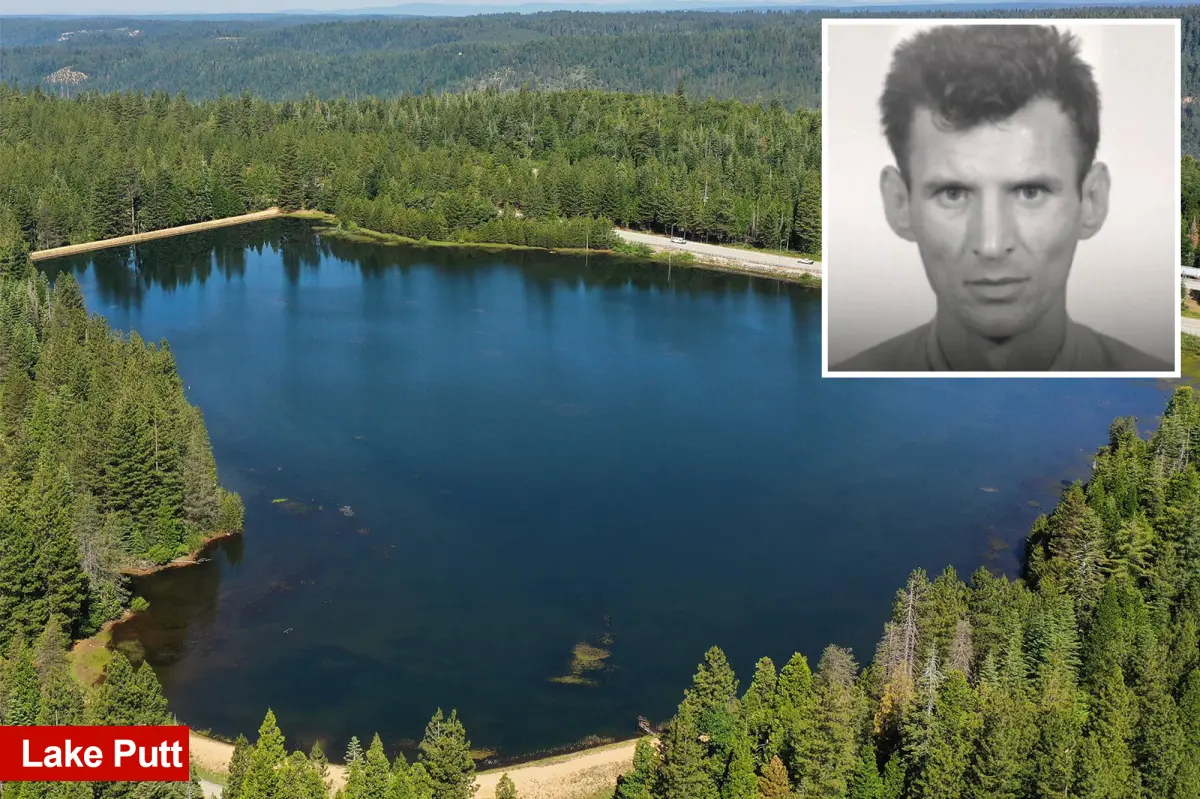
There are secrets the Sierra Nevada keeps well, but even the oldest mountains eventually give up their dead. For more than three decades, one of California’s most stubborn cold cases began as a grisly discovery in the wild, a single piece of humanity left to the silence of the pines. On July 7, 1994, loggers working near Putt Lake in Nyack, a remote corner of Placer County in the northern reaches of the state, stumbled across something that did not belong to the forest floor: a partial human skull. It lay at what appeared to be a deserted campsite, a place so far from roads and routine that no one had likely stumbled upon it in years. Deputies were called, evidence was collected, and investigators examined the scene with the careful hope that the skull would tell them who this person was and how he had come to rest in such a lonely place. But the skull did not cooperate. It had no wallet, no jewelry, no clothing tags, no name. It was just an object of sorrow, and the only thing the investigators could say with any confidence was that death had come long before the loggers arrived. They estimated the remains had been lying there for at least a year, perhaps much longer. The phrase “quite some time, upwards of a year” went into the case file, but it was about as far as the investigation would go. There was not enough information to establish how the man died, and there was even less information about who the man was. The wilderness had surrendered one of its hardest truths, and then it closed its mouth again. The case went cold, but not forgotten.
For the detectives who inherited the case over the years, the skull from Putt Lake became a kind of ghost, the kind of mystery that never fully leaves a person’s mind. It was entered into the National Missing and Unidentified Persons System, a database built for exactly these nameless souls, where it joined the ranks of thousands of other unidentified people waiting for a name that might never come. The man was described as being between 50 and 60 years old, and that was almost everything. There was no cause of death, no next of kin, no obvious reason why a man would be in that part of the Sierra Nevada alone. The file grew thick with reports and theories, but it also grew old. Every year that passed made the possibility of an answer seem less likely. The skull sat in evidence, a quiet reminder that somewhere, someone might still be wondering what happened to a father, a brother, a friend. Perhaps his family had searched for him once, maybe for years. Perhaps they had given up. Perhaps they had never known to search at all. That is the cruelest part of unidentified remains: a person can exist in the world for decades, be loved, be missed, and then, in death, become nothing more than a number and a date. For a long time, the man from Putt Lake was exactly that—a nameless tragedy, hidden in a database and in the back of investigators’ minds. But the case was never truly dead, and the people who kept it alive had not stopped looking. They just needed the right tools.
Those tools arrived at last, and they arrived from a world far beyond the mountain clearing where the skull had been found. In December 2024, investigators from the Placer County Sheriff’s Office joined forces with the California Department of Justice and Othram Inc., a private laboratory that specializes in advanced DNA testing and forensic genealogy. The case finally got the jolt it had been waiting for. For decades, the skull had resisted traditional methods of identification, but Othram’s scientists were able to extract something remarkable from the remains: a comprehensive DNA profile. It was not simply a partial sequence or a degraded sample that could not be used. It was a full, workable genetic fingerprint, a biological key that could be used to open doors that had been locked for years. The following month, in January 2025, that profile was sent to the Investigative Genetic Genealogy Center at Ramapo College in New Jersey. There, a team of genealogists and researchers took over, and they did something different from what law enforcement had tried before. Instead of searching directly through missing-person records or hoping for a hit, they used the genetic information to work backward through the family connections. They were not looking for a name in the obvious places. They were looking for the invisible threads that tie one human being to another, the shared DNA that links a man to his great-grandchildren, his cousins, his distant relatives. It was slow, careful, and painstaking work. But it was also the kind of work that could turn a skull into a person again.
It was never going to be easy, and the team at Ramapo knew that early on. The unidentified man’s ancestry made the search especially difficult. Cairenn Binder, the director of Ramapo’s Investigative Genetic Genealogy Center, said the case was “very challenging due to the Croatian and Yugoslavian ancestry of the unidentified.” But she did not stop there. She explained that there was “low representation in accessible DNA databases and limited availability of genealogy records in some populations,” and that this combination made the research far more complex than the typical cold case. In the world of genetic genealogy, the search for a person depends heavily on finding other people in the same family line who have also been tested. If a relative has never submitted a DNA sample, if their records were lost to history, war, or privacy, the trail goes quiet. For many people of Croatian and Yugoslavian descent, the paper trail and the genetic trail can be thin. There are not as many genetic cousins waiting in the databases, and without those cousins, every step forward has to be taken carefully and alone. The Ramapo team did not give up. They worked through the difficult branches, followed the scraps of data that did exist, and slowly built a family tree out of the science available to them. It took months. The case stretched from winter into spring, from spring into summer, and on through autumn. It was the kind of work that cannot be rushed, and the team knew that one wrong branch could send the entire investigation into a dead end. But eventually, in December 2025, the team made a breakthrough. They identified a potential match, and the name that surfaced was George Krusely.
The name did not mean much to anyone at first. It was a name that had been lost to time, a name that no one had been looking for because no one knew it needed to be found. George Krusely was born on April 30, 1929, which meant he had lived through the Great Depression, through World War II, through the cold war, through the many changes that reshaped America in the twentieth century. The last time any public record placed him in California was 1963, over three decades before the loggers found his skull near Putt Lake. Where he had gone after that, what he had done, why he had ended up in the Sierra Nevada mountains—all of that remained unclear. But his DNA did not lie. After Ramapo identified Krusely as a possible match, investigators went looking for people who might still carry his genetic code. They found a living descendant, someone whose relationship to Krusely could be confirmed through the same science that had untangled the case. With help from the Lordstown Police Department in Ohio, they obtained a DNA sample from that relative. The sample was compared to the profile developed from the skull, and the match was conclusive. The decades-old remains were finally confirmed to be George Krusely. The man who had been nothing more than an unidentified skull in a remote campsite had a name again. He had a birthdate, an ancestry, a place in the world. He was someone’s family. He was a human being who had lived and breathed and had a story, and for the first time since that day in 1994, his story was no longer unknown.
What remains unresolved, of course, is the deeper mystery of how he died and how long he had been waiting in that wilderness before the loggers arrived. Authorities still do not know how many years had passed between his death and the discovery of his remains. They cannot say whether his final days were peaceful or troubled, whether he died of natural causes or something more sinister, whether he was alone by choice or by circumstance. The partial skull may never reveal those details. But the central mystery—the one that had haunted investigators for more than thirty years—has finally been solved. The man from Putt Lake was not unknowable. He was not beyond the reach of memory. He was George Krusely, born in 1929, a man whose roots reached back to Croatia and Yugoslavia, a man who, for reasons that may never be fully explained, ended his life in the mountains of Northern California. In the end, it was not luck that solved the case. It was DNA technology, genetic genealogy, and the stubborn refusal of investigators to let a nameless skull fade into history. They worked together across counties, across states, across the boundaries of public records and private lives, and they brought a lost man back to his family, to his heritage, and to his own name. The Sierra Nevada may keep its secrets, but this time, it was forced to give one back. And while the full story of George Krusely may still be incomplete, the most important page has finally been turned. He is no longer a cold case. He is a person, remembered at last, and allowed to rest.