





Here is the information summarized and humanized into a six-paragraph narrative.
—
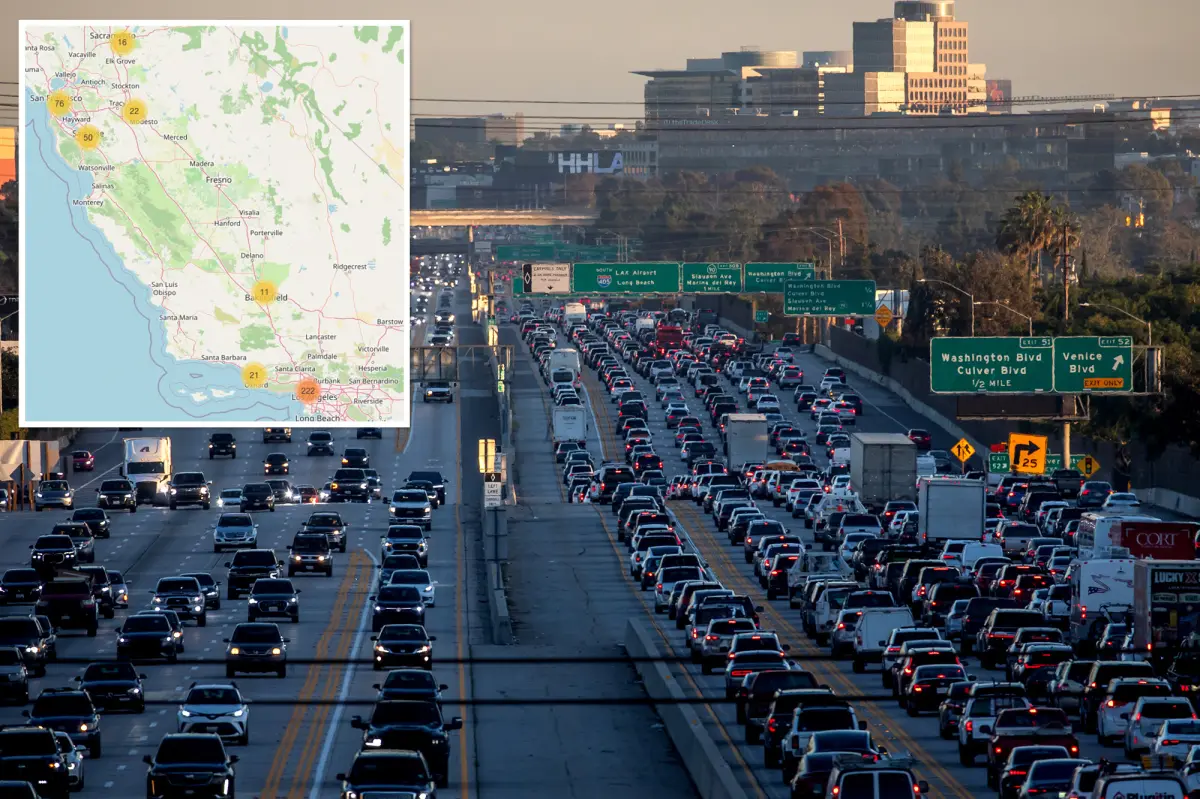
A new interactive map is shedding light on the increasingly widespread use of automated traffic enforcement across California, revealing a complex patchwork of cameras focused on red lights and speeding. The comprehensive list, compiled by the traffic data website Ticket Snipers, pinpoints the locations of these enforcement devices, which have become a familiar sight for many motorists. The map highlights a significant concentration of these systems in the state’s two major metropolitan areas, with Los Angeles and the San Francisco Bay Area emerging as the primary hubs. This technological approach to traffic safety is rapidly expanding, moving from a niche tool into a standard practice for municipalities looking to address dangerous driving behaviors without the constant need for physical police presence.
The data from the map underscores the sheer scale of these programs, differentiating between those already in operation and those in the pipeline. In the north, the Bay Area currently leads with 83 active camera sites spread across its various cities, including well-known locales like San Francisco, Oakland, and San Jose. However, the Southland is poised to take the lead in the near future. The greater Los Angeles area is expected to see a significant surge in these devices, with a projected total of 139 locations. Within Los Angeles County, future enforcement sites are slated for dense, traffic-heavy neighborhoods like Koreatown, West Hollywood, Pico-Robertson, and the city of Long Beach, signaling a major push to curb speeding and red-light running in some of the region’s most congested corridors.
Even upscale coastal communities are getting in on the act, driven by specific safety concerns. Malibu, for instance, has recently deployed its own cameras along the iconic and often perilous Pacific Coast Highway. This decision is a direct response to a notorious problem with speeding and reckless driving on that stretch of road, which has a long history of severe and often fatal crashes. The city’s move illustrates a key motivation behind the adoption of these systems: addressing specific, localized dangers that are difficult to police with traditional methods alone. By installing automated cameras, Malibu aims to create a constant deterrent for speeders on a road where the scenery can be a dangerous distraction.
The enforcement landscape, however, is not uniform across the state. The Ticket Snipers map reveals a significant number of red-light cameras operating in various cities, many of which have been in place for well over a decade. For example, San Francisco has 25 active red-light cameras, while San Jose has 18 and the capital city of Sacramento has 16. Further inland, the map shows a mix of deployments, with Modesto and Merced having a combined total of 22 cameras. Traveling south, Bakersfield has 11, Ventura has 21, and the city of Los Angeles itself maintains a vast network of 71 red-light cameras, with additional sites in Orange County. Smaller beach towns like Solana Beach and Del Mar have also adopted the technology, each with a handful of cameras, showing that these systems are seen as a viable solution for communities of all sizes.
Looking ahead, the future of automated enforcement in California is set to expand even further, particularly in the realm of speed detection. Los Angeles is preparing to launch one of the largest speed-camera programs in the state, a direct result of Assembly Bill 645, signed into law by Governor Gavin Newsom in 2023. This legislation created a five-year pilot program allowing six cities—Los Angeles, San Francisco, Oakland, San Jose, Glendale, and Long Beach—to deploy speed cameras in designated areas like school zones and streets with high rates of traffic crashes. Under Los Angeles’ new plan, the city intends to install 125 speed cameras, with citations expected to begin in the fall. The fine structure has been set to penalize excessive speed, starting at $50 for driving 11 to 15 mph over the limit and escalating to $200 for going 26 mph or more over the posted speed.
This expansion is not without its share of debate and controversy. Proponents, including city officials and traffic safety advocates, argue that these cameras are a highly effective and objective tool for improving road safety. They point to successful programs and data, such as San Francisco’s report of a 72% average reduction in speeding at its camera locations, as proof of their effectiveness. Furthermore, because the violations are civil penalties, they don’t add points to a driver’s license or cause insurance rates to increase. The law also includes provisions for income-based reduced fines, aiming to ensure the financial burden doesn’t fall disproportionately on low-income drivers. However, critics like Jay Beeber, policy director for the National Motorists Association, counter that these programs often shift their primary focus from safety to revenue generation. Beeber and other opponents argue that the true motivation can become financial, turning what should be a safety measure into a system that disproportionately targets certain communities. As the state embarks on this significant pilot program, that tension between proven safety benefits and concerns about government overreach and revenue motives remains a central point of public discussion.