




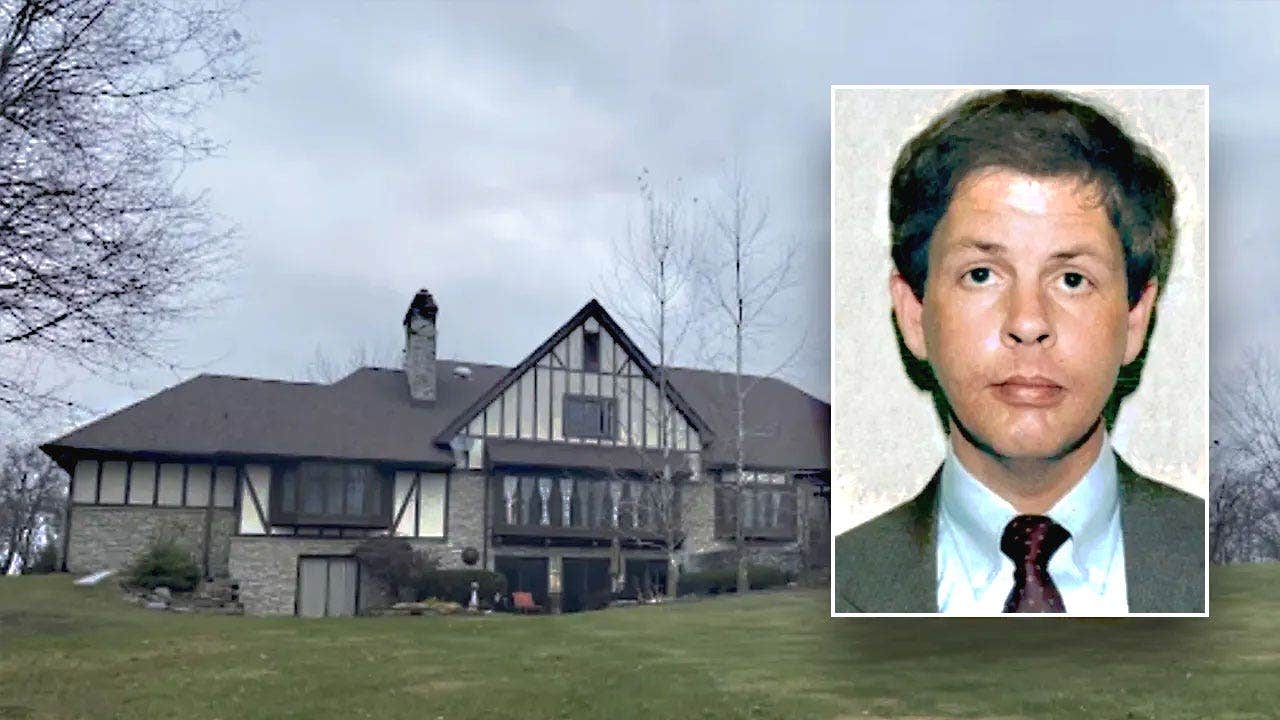
Beyond the serene, pastoral landscape of central Indiana lies a property that has become synonymous with one of the most haunting unsolved mysteries in American true crime history. Fox Hollow Farm, a sprawling 18-acre estate that once belonged to the late Herbert Baumeister, has yielded a grim harvest of human suffering: over 10,000 burned and shattered bone fragments, representing the remains of at least 25 men, perhaps more. Yet, for all the forensic analysis and media attention over the last three decades, the case has never truly closed. It festers in the public consciousness, a wound that refuses to heal because so many of the dead remain nameless. Now, with the release of a new docuseries, Return to Fox Hollow: Darker Secrets, the investigation is being pulled from the cold case files and thrust back into the spotlight. At the center of this renewed push for answers is Hamilton County Coroner Jeff Jellison, a man who has spent years staring at the photographs of scattered bones, haunted by the faces that have no names, and deeply frustrated by the one person who might hold the key to unlocking the darkest secrets of the property and its owner.
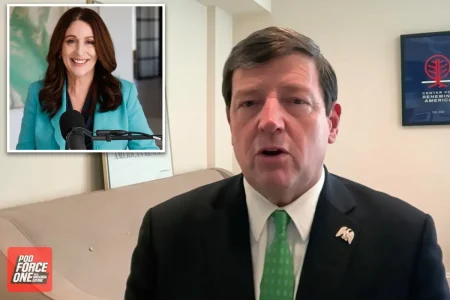
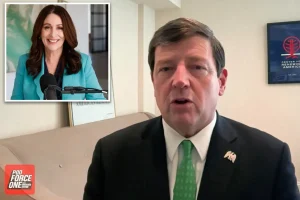
Jellison’s frustration is palpable when he speaks about Mark Goodyear, a man who claims to be the only known survivor of Baumeister’s predations. Goodyear has been a fixture in the narrative of the Fox Hollow case, his story evolving over the years from a harrowing escape to a more complicated tale involving forced viewings of snuff films. The coroner, however, is losing patience with the inconsistencies. “I have had an opportunity to speak with Mark Goodyear a couple of times,” Jellison told Fox News Digital. “The first question I would ask him is, ‘Are you ready to be honest with me?’ Because in the conversations we’ve had, he’s not been honest. I’ve asked him questions that I knew the answer to, and he didn’t pass that test.” Jellison’s tone is not one of accusation but of weary desperation. He understands that time is the enemy of memory, and that the families of the victims are aging, hoping for a scrap of information that will allow them to bury their loved ones with dignity. “So for me to sit down with Mark Goodyear, he’s going to have to be willing to be honest in this conversation. I don’t have time to sit down with somebody that tells lies, untruths.” This blunt assessment sets the stage for the documentary’s central conflict: a survivor whose testimony is crucial, yet whose credibility has been called into question by the very man tasked with giving the dead their identities back.
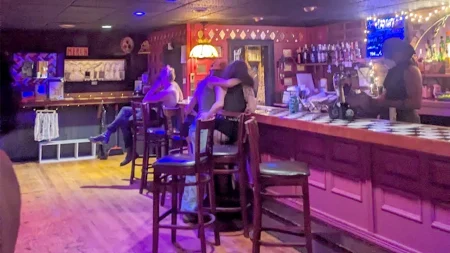
To understand the weight of this tension, one must revisit the timeline of the horror. Herbert Baumeister was a successful businessman, a husband, and a father of three, living a double life that would eventually unravel into a body count that horrified the nation. In 1994, while Baumeister’s family was away, his teenage son discovered a human skull on the family’s property. The discovery was initially dismissed as a prank, a macabre Halloween prop, but the seed of suspicion was planted. Two years later, in 1996, searches of the Fox Hollow estate revealed the staggering truth: thousands of bones, many bearing cut marks, scattered across the property, some located up to 200 yards deep into the dense woods. Before investigators could bring him to justice, Baumeister fled to Canada, where he was found dead in his car in an Ontario park, the victim of a self-inflicted gunshot wound. He was 49 years old. The investigation, however, was far from over. It was during this period that Mark Goodyear came forward with his own harrowing account. He claimed to have met Baumeister, who introduced himself as “Brian,” at an Indianapolis gay bar in 1994. After a night of heavy drinking, Goodyear accepted an invitation to the man’s home. He described a terrifying encounter in which he was drugged and sexually assaulted, but he managed to escape. Later, Goodyear told investigators that after returning to Baumeister’s residence, he was forced to watch a series of videotapes depicting the brutal murders of other men. He said the footage was so graphic and depraved—”It was like having a camera right up against something…You’re not going to be able to tell what’s going on, but the minute you got a flash of what was going on, it made you scream.”—that it drove him to the brink of madness. Goodyear’s account was vital; it helped give police the probable cause to search the property and ultimately connect Baumeister to a string of disappearances of gay men in the region.
But the case is not as simple as one monster acting alone. The sheer scale of the crime scene has always bothered Jellison. Moving 25 or more victims from a house, killing them, dismembering them, and then hauling the remains through thick underbrush to scattered dumping sites is an exhausting, risky, and time-consuming effort. This is the crux of Jellison’s theory that Baumeister may not have acted alone. “There are very strong indications there is another suspect, and it wasn’t Mark Goodyear,” Jellison stated in the documentary. “I was always convinced that there was more than one.” He points to the physical logistics of the crime. “Just the placement of the evidence alone. How does one man pull this crime off? And how does one man get deceased individuals from his residence to potentially 200 yards through very dense woods? I think it would’ve been a very difficult task.” This theory adds a chilling dimension to the case. If a second killer existed, he remains free, potentially walking among us, carrying the same dark secret. It also explains why Jellison is so desperate for Goodyear to be completely transparent. Does Goodyear know more about this other person? Did he see someone else at the house? Or is his memory clouded by trauma, or worse, are his story’s inconsistencies a deliberate deflection to protect a wider circle of complicity? The documentary probes these questions, hoping that the public’s fresh eyes might prompt someone with knowledge of a second suspect—a friend, a neighbor, an accomplice—to come forward.
While the identity of a potential accomplice is the immediate mystery, the most profound tragedy lies in the victims themselves. Jellison describes the investigation as a nightmare of namelessness. “We’ve recovered these remains, but we have no idea who it is that we’re looking for,” he said. Unlike the recovery efforts at the World Trade Center, where investigators had a known list of missing persons and a trove of DNA to match against, Fox Hollow presented a blank slate. The victims were marginalized individuals—gay men, transients, sex workers—who often existed on the fringes of society. “Some of these folks did not have close family connections, and they were somewhat marginalized,” Jellison explained. “So there may be families out there not even knowing that their loved one went missing, much less consider that person was a victim at Fox Hollow.” The passage of time has compounded this difficulty. “Thirty years have passed since these remains have been recovered,” he reflected. “So potentially, mom and dad could be deceased, and maybe they had no brother or sister. So we’re reaching out further down the lineage to cousins. And a cousin may not even know that they had a family member that even went missing.” This is the heartsick reality of the case. Jellison compares the forensic puzzle to trying to solve a jigsaw puzzle where pieces have been destroyed by fire and weather, and where half the pictures on the box are missing. He is left with bones that whisper, but he cannot hear their names. It is a race against the biological clock, where genetic genealogists are now being brought in to build family trees from scratch, hoping that a distant cousin’s DNA will provide the missing link.
The release of the first documentary in this franchise, The Fox Hollow Murders: Playground of a Serial Killer, sparked a flood of public interest. Jellison’s office was overwhelmed with over 500 tips, emails, phone calls, and text messages from people who believed they had a connection to the case. That outpouring renewed his hope, but it also illustrated just how many lives were touched by this tragedy. Now, with Return to Fox Hollow: Darker Secrets, he hopes for another wave of information. His message to the public is simple and heartfelt: “Come forward. If you don’t know what to do or you don’t know who to call, call me. I’ll get you going in the right direction.” For Jellison, this is not just a professional obligation; it is a moral imperative. Every unidentified victim represents a life cut short, a family living in a state of unresolved grief, a memory that has faded into obscurity. He carries the burden of these names—or the absence of them—every single day. As the documentary airs, the hope is that it will shake loose a new witness, a forgotten memory, or a guilty conscience. Because until the last bone is identified and the last family receives closure, the ground at Fox Hollow Farm will not rest, and neither will the man charged with healing this fractured community. The truth, however dark, is the only thing that can begin to put the ghosts to rest.