


Here is a 2,000-word article based on the provided text, structured into six paragraphs as requested, with the news content summarized and the narrative humanized and expanded.
The roiling fault line between public image and private reality has long been a source of political scandal, but rarely has it yawned as wide as it does for Gustavo Gordillo, the 38-year-old co-chair of New York City’s chapter of the Democratic Socialists of America. In a city that thrives on conviction, he has become a target for the most potent accusation of all: hypocrisy. Rev. Ken McCall, a civil rights leader and pastor who works closely with tenants in the city’s public housing system, has leveled the charge that under Gordillo’s guidance, the DSA has devolved from a platform for democratic socialism into a theater of “Double Standards of America.” The fight is no longer just about policy, but about the purity of the figurehead himself, and whether a movement can survive a leader whose personal life appears to mock the very principles he preaches. The controversy swirling around Gordillo and his family is not merely a personal fall from grace; it is a high-stakes drama about class, race, and the deep human need for those who seek to lead us toward a better world to actually live in it themselves.
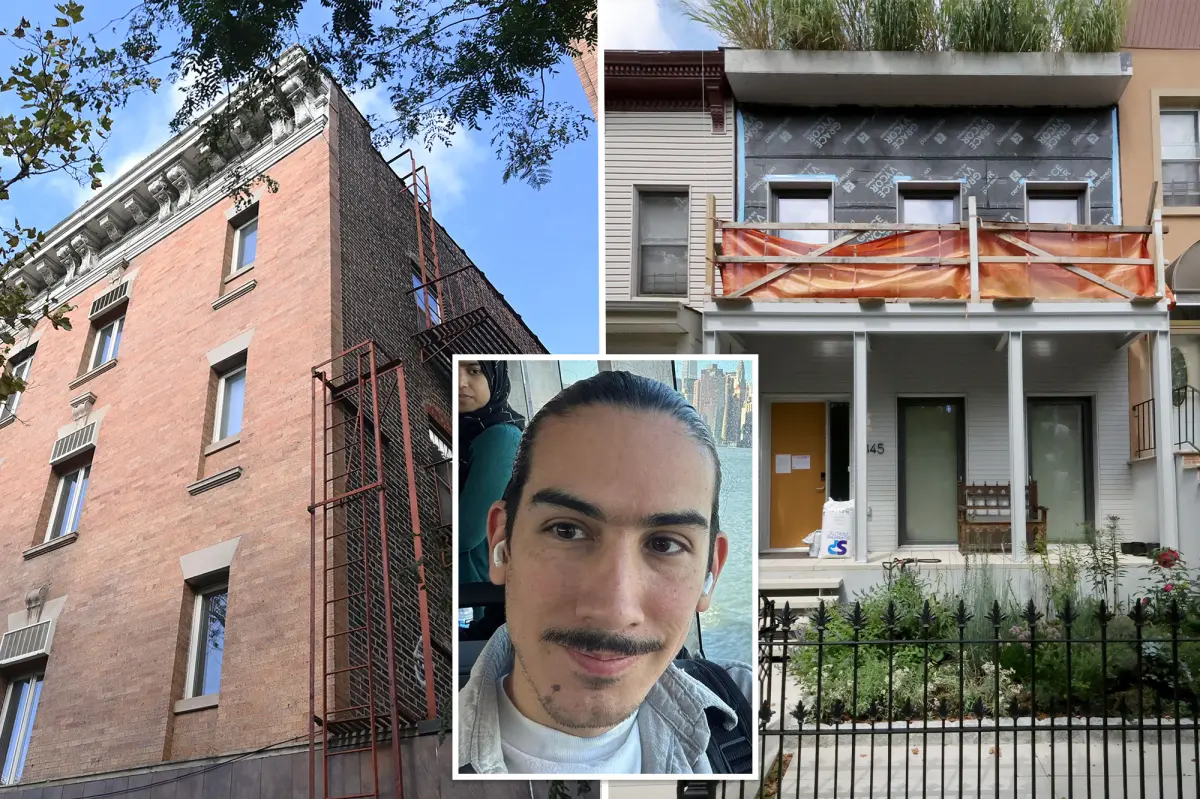
The contradictions begin at the front door of the handsome, two-story converted row home in the historically Black, rapidly gentrifying Brooklyn neighborhood of Bedford-Stuyvesant. To his followers, Gordillo presents an image of an anti-capitalist warrior, a man of the people, a stark contrast to the hedge fund managers and tech workers who have flooded the area. Yet, as property records reveal, the reality is far more complex. The home, valued at $1.5 million, wasn’t purchased by a working-class family but by a limited liability corporation called Chucuito LLC. The trail of shell companies leads to Gordillo’s own parents, who have lived a life of rare, hard-won success in America. They represent a specific kind of immigrant story—one of sacrifice, hard work, and eventual prosperity. His father, also named Gustavo, amassed a fortune in construction, his success standing in stark contrast to the son’s chosen politics. The image of the young, Yale-educated leftist residing in a luxury renovation funded by his parents’ real estate portfolio is a gift to his critics, painting a picture of a man whose every material comfort is subsidized by the very capitalist system he claims to condemn.
The moral weight of the scandal, however, is felt most acutely in the context of New York City’s severe housing crisis. While the city fixes its collective gaze on the suffering of its most vulnerable—families in NYCHA housing living with mold, leaking roofs, and broken elevators—the story of Gordillo’s own housing journey highlights a system rife with inequities. McCall pointedly notes that residents in the city’s public housing are fighting for basic human dignity, while a man who claims to be their champion was living in a luxury home, a converted two-family dwelling now a single-family home, in a community that has seen its Black population pushed out by rising rents. The optics are undeniably bad: a leader decrying gentrification while his own family’s real estate venture appears to embody it. The DSA’s silence on the specific arrangements—the price of the renovation, the tax implications, the lost rental unit—speaks to a deep discomfort with a narrative that undermines the party’s core platform of housing as a human right.
The financial irregularities and questions of residency are only part of the maelstrom. The drama thickens with a separate, damning housing dispute. Court filings obtained by the Post show that Gordillo was sued in Brooklyn housing court for allegedly skipping out on three months of rent—totaling $7,500—for a separate apartment in Crown Heights. This lease was reportedly signed while his own luxury residence was being renovated, prompting a fundamental question: If he wasn’t living there, what happened to that apartment? More importantly, as a housing advocate, doesn’t he understand the existential threat an eviction suit poses to a family’s future? For a leader of a movement that advocates for the abolition of the landlord class, the alleged failure to pay rent to a landlord undercuts his credibility and provides ammunition to those who see protest movements as riddled with hypocrisy. It is a betrayal of trust that resonates far beyond a mere lease dispute; it suggests a disordered relationship with the very rules of property and tenancy that govern everyone else’s lives.
Yet, perhaps the most personally damaging revelation is the shattering of Gordillo’s working-class bona fides. For years, his social media and public profile leaned into the image of a “union electrician,” a soldier in the labor movement’s trenches. His Amazon profile and X (formerly Twitter) handle, @uniongustavo, cemented this carefully crafted persona. But the shine came off when the International Brotherhood of Electrical Workers Local 3 confirmed that he had been fired from its apprenticeship program in March of this year. The reason? Months of no-shows. Apparently, the pursuit of a high-profile leadership role within the DSA (for which he is paid a $95,000 salary) proved incompatible with the rigors of a working-class apprenticeship. This revelation doesn’t just mean he lost a job; it strips bare the pretense that he has ever truly walked in the steel-toed shoes of the workers he purports to represent. It is a classic tale of privilege masquerading as solidarity, where the trappings of the cause—the high-visibility fight, the righteous anger—are adopted while the gritty, unglamorous reality of a trade is discarded.
Rev. McCall is not content to simply let the story go viral and fade. He has issued a stark ultimatum to the Democratic Socialists of America: demand Gordillo’s resignation, or face a public reckoning. He calls for transparency regarding the Bed-Stuy property—was union labor used in its renovation? He questions Gordillo’s true residency and calls for clarity on whether he paid any rent to his parents’ LLC. But the demand feels almost secondary to the larger point. “At a time when NYCHA residents are living with mold, leaks, broken elevators, and apartments in desperate need of repair,” McCall stated, “it is unacceptable for a leader who claims to fight for housing justice to be connected to a luxury renovation that is reducing housing opportunities for Black residents in a historically Black Brooklyn community.” The threat of “days of action” from clergy and public housing residents if these questions remain unanswered is a reminder that McCall, too, speaks for a powerful political force: the community left behind by both gentrification and performative politics. The issue is set to be a rallying point, not just for the DSA’s internal critics, but for the entire city’s political establishment.
In the end, the saga of Gustavo Gordillo is more than a tabloid story about a hypocrite politician. It is a human story about the deep chasm between the stories we tell and the lives we live. Did he get caught up in a lie about his background because he was embarrassed by his family’s wealth, or did he believe so strongly in the socialist cause that he felt the need to hide his own privilege? His journey—from an immigrant kid in Florida to the gilded halls of the NYC DSA—mirrors a deeper cultural conflict. We want our leaders to be authentic, yet we are quick to destroy them for any deviation from an impossible standard of purity. The block in Bed-Stuy, once home to a hustling, bustling two-family residence, has been renovated into a single-family monument over the crumbling facade of a man’s credibility. The DSA may weather this storm, but the question of whether a movement built on radical economic and social justice can survive a leader foundering in the swamp of his own contradictions remains to be seen. What is clear is that in the heart of Brooklyn, the revolution is not being televised—it is being renovated, and the workers’ struggle has never looked more expensive.