






The Battle for Mogadishu: How a Political Impasse Ignited the Worst Violence in Years and Put Somalia’s Fragile Future on the Brink
The Dawn of Chaos: Heavy Weaponry Rattles the Capital
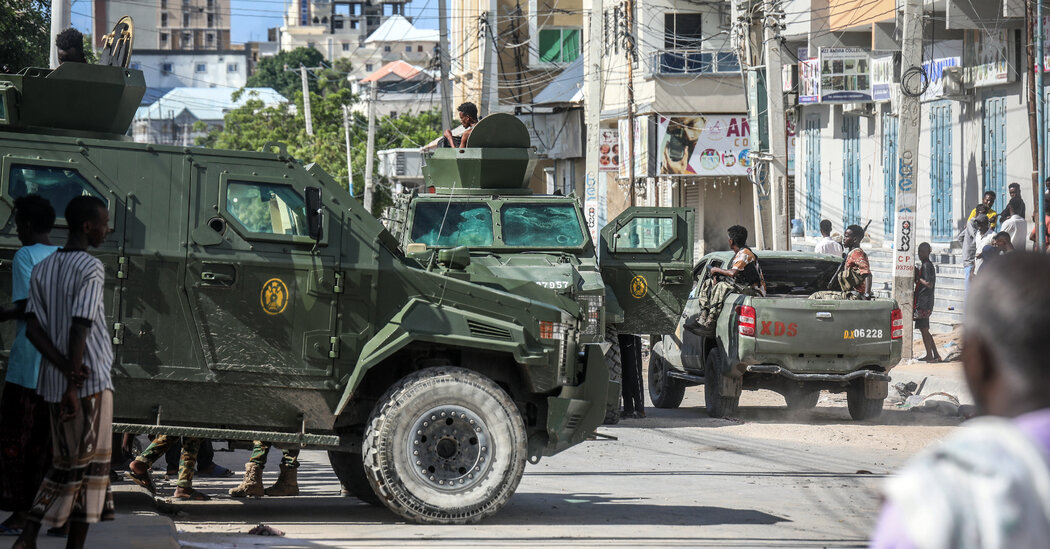
The pre-dawn quiet of Mogadishu was shattered on Thursday as a torrential downpour of heavy artillery, mortar rounds, and rocket-propelled grenades transformed the Somali capital into an active combat zone. For a metropolis of nearly three million residents, the sudden escalation represented a terrifying regression into the dark eras of civil strife that have plagued this Horn of Africa nation for decades. Terrified families huddled in the interior rooms of their stucco homes as the concussive force of explosions rattled windows and sent plumes of gray smoke drifting across the skyline. Videos emerging from local neighborhoods showed abandoned, dust-swept streets devoid of their usual bustling market traffic, punctuated only by the sharp, rhythmic crackle of automatic gunfire and the ominous rumble of armored personnel carriers. The physical devastation was compounded by a profound psychological toll on a civilian population that had dared to hope the worst of the country’s historic violence was behind them. “I no longer trust that I can live in this country, as no politician seems genuinely concerned about our basic safety,” lamented Fartun Da’ud, a twenty-seven-year-old mother of two, who spoke through the din of sporadic gunfire while preparing to flee her neighborhood. Her words captured the collective exhaustion of Mogadishu’s citizens, who find themselves caught once again in the dangerous crossfire of elites willing to risk total state collapse to secure their hold on power.
Tactical Flashpoints: The Neighborhoods of the Opposition Elite
The physical architecture of the clashes reveals a deeply entrenched system of factional militarization, with the violence centered around fortified residential compounds belonging to two of the president’s most formidable political rivals. Fighting ignited with particular ferocity near the homes of former President Sharif Sheikh Ahmed and former Prime Minister Hassan Khayre, prominent opposition figures whose private security detachments function essentially as heavily armed personal militias. According to local military sources and independent political analysts on the ground, the immediate catalyst for the combat was a pre-emptive maneuver by government forces attempting to forcibly clear Mr. Khayre’s loyalist fighters from positions they had secured near the heavily fortified presidential palace, known locally as Villa Somalia. This aggressive pushback instantly triggered a counter-mobilization, transforming upscale residential sectors into highly volatile front lines where battle-hardened government soldiers and loyalist clan fighters traded high-caliber rounds from behind makeshift barricades. As the fighting dragged into the afternoon, residents began a desperate exodus toward outlying, safer districts, carrying whatever belongings they could salvage. Meanwhile, traditional clan elders—who have historically held the social fabric of Somali society together during times of state collapse—initiated frantic, behind-the-scenes negotiations in a bid to broker a temporary ceasefire and prevent the tactical urban warfare from devolving into an uncontrollable, all-out clan war.
The Constitutional Trigger: A Disputed Extension of Power
The underlying fuel for this sudden conflagration is a bitter, long-running constitutional crisis centered on the democratically disputed tenure of President Hassan Sheikh Mohamud. Tensions reached a boiling point following a highly controversial decision by the bicameral Somali Parliament to extend the president’s official mandate by an additional year, bypassing his scheduled May 15 exit date. Although President Mohamud and his legislative allies framed the pause as a necessary transitional phase to prepare the country for direct democratic elections, opposition leaders denounced the move as an illegal power grab designed to subvert the established electoral cycle. The political atmosphere darkened further when high-level diplomatic interventions, spearheaded by the United States and the United Kingdom aimed at mediating the legislative impasse, collapsed after failing to yield a workable compromise. The failure of these talks left no peaceful outlet for the opposition’s grievances, prompting their coalition to call for mass street demonstrations on Thursday—a move that pushed elite military units and opposition militias into dangerous, face-to-face proximity. The zero-sum nature of the dispute was vocalized by former President Sharif Sheikh Ahmed, who accused the executive of launching a targeted “military assault” designed to assassinate him, warning bluntly that if his forces faced further aggression, they would return fire with every bullet at their disposal.
The Democratic Paradox: One-Person-One-Vote Versus Pragmatic Reality
At the heart of the political division lies a fundamental disagreement over how to transition Somalia away from its historically fragile political model toward a modern democratic state. President Mohamud has defended his term extension as an essential prerequisite for dismantling the country’s antiquated “indirect” electoral system—in which elite clan elders select delegates who in turn select members of parliament—and replacing it with a historic “one-person-one-vote” direct ballot. While universal suffrage sounds ideal on paper, a coalition of opposition politicians known as the Somali Future Council has warned that holding a nationwide direct election under current security conditions is an absolute impossibility. With the brutal extremist insurgency Al-Shabab still exercising control over massive geographic swathes of the country’s interior, any attempt at holding direct elections would systematically disenfranchise millions of citizens who cannot safely access voting booths. Critics argue that instead of ushering in a new era of true democracy, the administration is using the idealistic rhetoric of electoral reform as a convenient cover to entrench its authority, freeze out political rivals, and dismantle the fragile inter-clan consensus that has successfully prevented the nation from sliding back into total civil war.
Geopolitical Aftershocks: The Strategic Importance of the Somali Coast
The sudden destabilization of Mogadishu sent immediate shockwaves through foreign embassies, as regional neighbors and global superpowers alike recognize the immense geopolitical stakes tied to stability in the Horn of Africa. The United States Embassy in Mogadishu issued a stern public condemnation of the fighting, labeling the urban combat reckless and urging all parties to immediately lay down their arms and return to the negotiating table. The international community’s profound anxiety stems from Somalia’s critical geographic position along the Gulf of Aden and the Red Sea—a maritime superhighway that sustains global commerce and has become increasingly vital due to security threats along other global shipping chokepoints. For over a decade, international partners, including the Pentagon, have heavily invested in Somalia’s fragile state-building project, conducting targeted airstrikes and training elite local counterterrorism forces like the Danab Brigade to combat the persistent threat of Al-Shabab. Political observers, such as Omar Mahmood of the International Crisis Group, warn that when the Somali security apparatus turns its weapons inward to resolve elite political disputes, it actively derails years of hard-fought security gains, leaving the central government highly vulnerable to exploitation by regional militant networks.
The Human Toll: Famine, Malnutrition, and the Cost of Political Warfare
While politicians and military commanders contest control over Mogadishu’s streets, the true victims of this structural paralysis are the millions of ordinary Somali citizens who are already enduring one of the worst humanitarian crises on the planet. According to recent reports compiled by the United Nations and various international aid agencies, approximately six million people—representing nearly thirty percent of the entire Somali population—are currently facing acute food insecurity driven by a devastating combination of climate-induced drought and inflation. Even more heartbreaking is the projection that roughly 1.88 million children across the country will require intensive therapeutic treatment for severe acute malnutrition this year alone. By diverting precious military resources, disrupting trade networks, and forcing humanitarian organizations to suspend operations in the capital, the elite political class is actively exasperating an already dire humanitarian catastrophe. As the sounds of gunfire echo through Mogadishu, the tragic reality remains that the country’s greatest threat may not be the external forces of terror or the harsh elements of nature, but rather the internal, unyielding hubris of its political leaders, who continue to prioritize personal power over the very survival of their nation.