






Paragraph 1
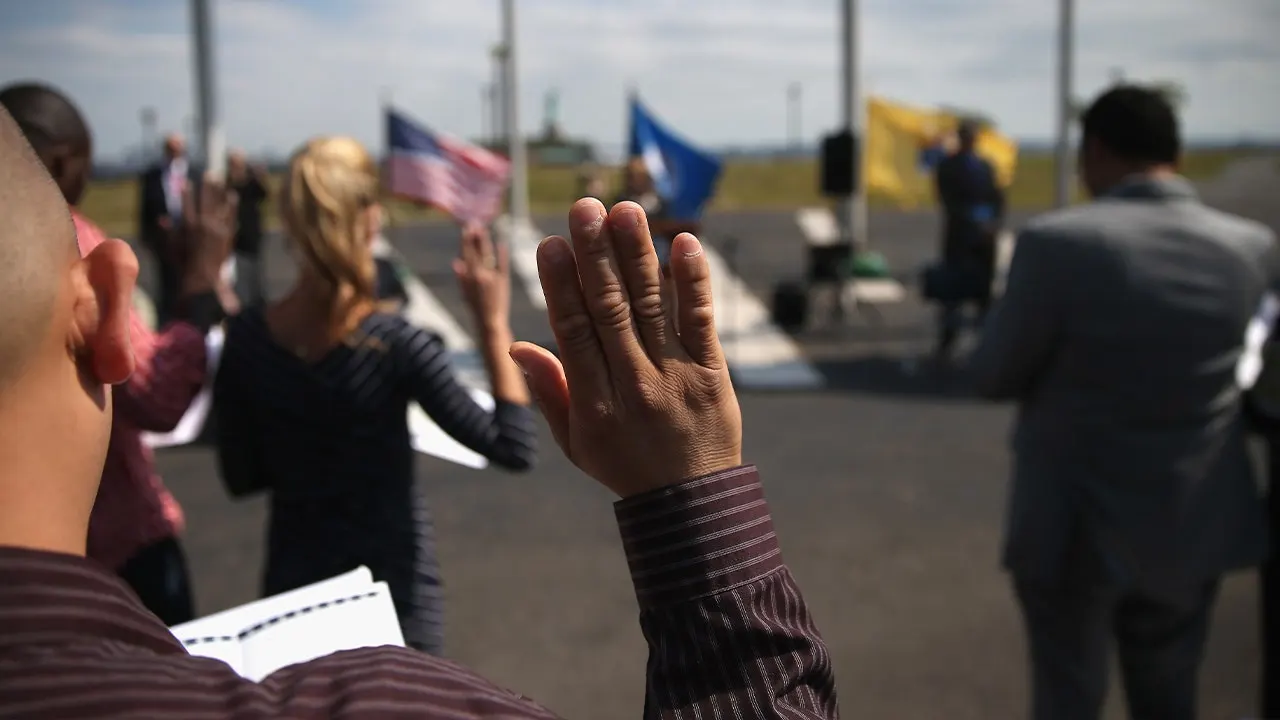
The journey toward American citizenship is often described as the culmination of the ultimate modern pilgrimage, an arduous and deeply emotional path paved with sacrifice, hope, and the promise of a fresh start. For millions of immigrants who arrive on American soil, standing in a federal courtroom with a raised right hand to recite the Oath of Allegiance is a moment of profound personal transformation—a literal rebirth wherein one sheds their former national allegiance to inherit the rights, privileges, and protections of the United States. However, this sacred covenant is built upon an uncompromising foundation of absolute honesty and mutual trust between the applicant and the state. When that foundation is compromised by deliberate falsehoods, the entire structure of naturalization begins to fracture. This fragile legal and moral balance was brought to the forefront on Monday when the United States Department of Justice announced a sweeping, aggressive effort to revoke the naturalized citizenship of seventeen individuals. These citizens, who span thirteen different countries of origin and are now mostly middle-aged or senior adults ranging from 39 to 69 years of age, stand accused of obtaining their American nationality through elaborate schemes of fraud, deceit, and systemic misrepresentation. By allegedly lying during their naturalization proceedings, these individuals bypassed the fundamental statutory requirement of displaying “good moral character”—a centerpiece of federal immigration law designed to ensure that those welcomed into the American family possess a baseline of civic virtue and respect for the rule of law.
Paragraph 2
The federal government’s move to denaturalize these seventeen individuals represents a stark enforcement shift under the current administration, signaling a rigorous, zero-tolerance approach toward those who view the immigration framework as something to be manipulated. Denaturalization is one of the most severe actions the United States government can take against an individual, as it stripped away the constitutional armor of citizenship and leaves a person vulnerable to deportation and loss of status. Acting Attorney General Todd Blanche underscored the gravity of this enforcement push, stating unequivocally that gaining U.S. citizenship is a distinct privilege and that under his leadership, the Department of Justice maintains an absolute zero-tolerance policy for any abuse of this transformative process. Adding to this sentiment, Department of Homeland Security Secretary Markwayne Mullin emphasized that American citizenship must be earned with unyielding honesty, warning that those who enter the country with the intent to break laws and lie during their immigration proceedings will naturally forfeit the immense privileges they fraudulently acquired. This coordinated, high-profile stance is not merely a bureaucratic cleanup but a deliberate philosophical statement intended to restore public trust in an immigration system that many citizens feel has been exploited. By targeting individuals who allegedly hid serious crimes, the government seeks to reaffirm the principle that citizenship is a reciprocal contract: the nation offers protection and liberty, and in return, the newcomer offers truthfulness and an adherence to the laws of the land.
Paragraph 3
Behind the dense legal jargon and the dry spreadsheets of the Justice Department’s press release lies a series of deeply unsettling human tragedies, none more harrowing than the allegations of egregious child sexual exploitation hidden within these naturalization histories. Fully thirty-five percent of the accused individuals—six out of the seventeen—were identified by authorities as having deep, hidden connections to heinous child sex crimes, including statutory rape and the possession or receipt of explicit, illegal images involving minors. The betrayal inherent in these cases is magnified by the realization that these individuals utilized their fraudulently obtained legal status to integrate themselves into communities, schools, and neighborhoods where they could quietly harbor these dark secrets. Among the most egregious of these cases is that of a Roman Catholic priest who allegedly used his position of sacred spiritual authority and community trust to groom and abuse a child, leveraging his clean-shaven immigration profile to evade systemic scrutiny. By humanizing the victims of these crimes, the narrative surrounding denaturalization shifts from a cold, administrative exercise to an urgent matter of public safety and moral justice. For decades, these victims lived with the invisible trauma of their abuse while their abusers enjoyed the security, prestige, and freedom of American citizenship—a bitter irony that the Justice Department is now seeking to correct by peeling back the layers of deception to expose the criminal realities beneath the naturalization paperwork.
Paragraph 4
While some of the defendants used fraudulent citizenship to escape the consequences of physical violations, others leveraged their new American identities to orchestrate massive, predatory white-collar and organized crime operations that bled millions of dollars from both public systems and private entities. The financial fraud cases outlined by federal authorities reveal a staggering level of greed and sophistication, proving that the abuse of the naturalization process often serves as a primary shielding mechanism for international criminal enterprises. In one extraordinary case, an individual is accused of orchestrating a massive $54 million securities and wire fraud scheme that decimated the savings of innocent investors. Another case details a fraudulent Billing operation that extracted $36.7 million from Blue Cross Blue Shield through a network of non-existent physical therapy clinics, directly exploiting the American healthcare system. Furthermore, federal prosecutors highlighted a case where an individual allegedly used inherited funds directly tied to a notorious Colombian drug cartel to finance luxury real estate transactions in the United States, effectively laundering the proceeds of international narcotics trafficking under the guise of legitimate American citizenship. Another defendant is accused of systematically stealing millions of dollars from a Florida tribal casino. These economic crimes are far from victimless; they destabilize financial markets, drive up insurance premiums for everyday families, fund violent cartel operations abroad, and erode the integrity of the domestic economy, proving that a lack of moral character during the immigration process often portends continuous criminal conduct within the United States.
Paragraph 5
To maintain these parallel lives of domestic respectability and hidden criminality, several of the accused resorted to elaborate, multi-layered identity fabrications designed to completely bypass the rigorous vetting systems of the United States immigration apparatus. Four of the individuals are accused of executing complex schemes involving the use of entirely fabricated names, misrepresenting their marital status to unsuspecting U.S. citizens to secure green cards, and submitting multiple applications under completely different personas after their initial requests were denied. For decades, these individuals lived as ghosts within the system, confident that their past transgressions and authentic identities were safely buried under mountains of historical paper records. However, the relentless march of technological innovation has reshaped the landscape of immigration enforcement, dramatically illustrated by the case of one woman who adopted a false identity to bypass a 1995 denial of her application. For nearly thirty years, she constructed a life in America under a false name, only to have her deception shattered when government agencies digitized legacy paper fingerprint records. Using modern biometric algorithms, federal investigators were able to instantly link her current digital footprint to the physical ink-and-paper fingerprints she left behind in 1995, proving that while time may fade memories, the digital archive remains an unforgiving arbiter of truth. This intersection of human fallibility and retroactive technological accountability underscores a haunting reality for those who built their American dreams on a foundation of lies: the past is never truly dead, and the systems of justice are increasingly capable of reaching back through the decades to reclaim the truth.
Paragraph 6
Ultimately, the diverse origins of the seventeen accused individuals—spanning Cuba, Haiti, Jamaica, the Dominican Republic, Trinidad and Tobago, Mexico, Colombia, former Yugoslavia, India, China, the Philippines, Somalia, and the Democratic Republic of the Congo—reflect the vast global tapestry of modern immigration. This demographic breadth reminds us that the desire for a better life in America is a universal human ambition, but it also highlights that the capacity for deception crosses all cultural, geographic, and socioeconomic boundaries. In prosecuting these seventeen cases, the Department of Justice is not merely punishing a small group of bad actors; it is actively working to preserve the sanctity of the naturalization process for the millions of honest, law-abiding immigrants who wait years in line, pay thousands of dollars in fees, and undergo exhaustive background checks with complete transparency. When individuals cheat the system, commit heinous crimes, and lie under oath, they diminish the enormous value of the citizenship that others have worked so tirelessly and honorably to achieve. By removing those who gained their status through fraud and violence, the state restores true value to the phrase “good moral character” and protects the communities these individuals sought to exploit. In the end, this crackdown humanizes the struggle of the honest immigrant, reinforcing the profound truth that the American dream is only truly realized when it is built upon the solid, immutable bedrock of honesty, justice, and the rule of law.