





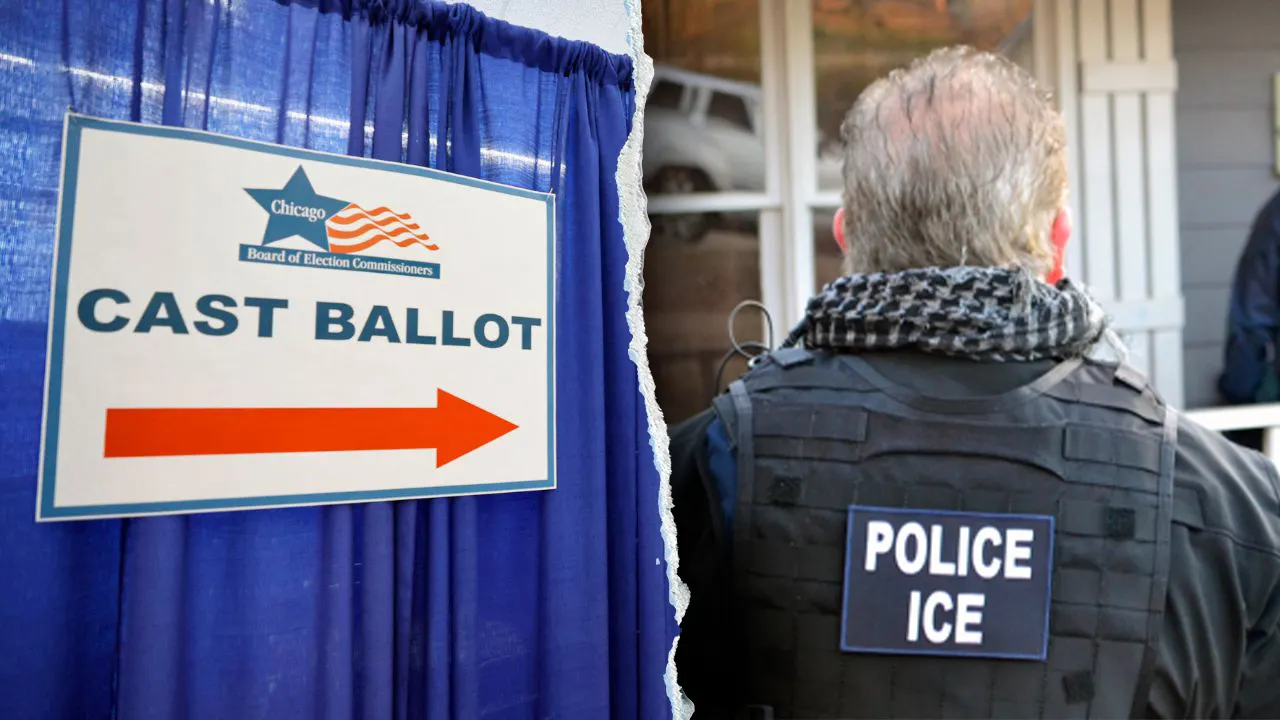
At the heart of the American experience lies a powerful, almost sacred ritual: the act of casting a ballot. For citizens, voting is the ultimate expression of voice, agency, and community belonging. However, the boundaries of who is permitted to participate in this democratic process are tightening under a strict new policy enforcement. In a decisive move, the Department of Homeland Security (DHS) has formally instructed U.S. Immigration and Customs Enforcement (ICE) to prioritize the deportation of any undocumented immigrants who unlawfully cast a ballot in American elections. Written in a sweeping directive by DHS General Counsel James Percival, the mandate demands that federal authorities apply the harshest possible penalties to those who bypass immigration laws to enter the polling booth. For many living on the margins of American society, what once might have been handled as a minor bureaucratic infraction is now being treated as an immediate catalyst for exile.
This tough-on-crime stance is not a standalone policy; it is part of a broader, systemic effort by the Trump administration to fundamentally reshape the American election landscape. The directive directly aligns with the administration’s March 2025 executive order, “Preserving and Protecting the Integrity of American Elections,” which targets perceived systemic vulnerabilities in voter registration, voting machine standards, and mail-in voting. By linking national security directly to the ballot box, policymakers are advancing the philosophy that the integrity of a nation is status-dependent. As Percival noted in his message to ice leadership, the dilution of legitimate votes by noncitizens is not just a legal violation—it is an existential threat to the democratic process. From this perspective, protecting the sanctity of the vote requires a zero-tolerance policy where unlawful electoral participation is met with swift, life-altering consequences.
Legally, the foundation for this crackdown lies within the longstanding Immigration and Nationality Act, which already permits the removal of noncitizens who illegally participate in state or federal elections. However, the new directive bridges a common enforcement loophole by highlighting that illegal voting and falsely claiming U.S. citizenship almost always go hand-in-hand. To register to vote in most jurisdictions, an individual must declare under penalty of perjury that they are a citizen. For federal prosecutors, this paper trail provides a straightforward pathway for prosecution and subsequent deportation. What once might have slipped through the cracks of a decentralized voting system is now being systematically scrutinized as immigration agencies and local election boards increasingly share resources to root out discrepancies.
The human impact of these policies is already shifting from abstract legal statutes to harsh realities for families across the country. Earlier this year, federal authorities charged Mahady Sacko, a citizen of Mauritania, who allegedly managed to vote in every U.S. presidential election since 2008. In May, four other noncitizens faced similar federal charges, accused of casting illegal ballots while simultaneously trying to secure their U.S. citizenship. While proponents of the crackdown point to these cases as evidence of critical voter vulnerability, advocacy groups argue that some of these situations arise from innocent misunderstandings of complex registration forms, often leading to devastating penalties for families who have spent decades building quiet, productive lives in American communities.
Crucially, this policy sweep extends far beyond those living in the country without legal status. In August 2025, U.S. Citizenship and Immigration Services (USCIS) quieted any doubts about their hardline approach by updating their policy manual to bar even legal permanent residents—green card holders—from obtaining citizenship if they have ever voted or even accidentally registered to vote. This expansion of the rules signals that the government aims to penalize any unauthorized civic participation by those who have not yet taken the oath of citizenship. For green card holders who may have mistakenly registered to vote at a local DMV while obtaining a driver’s license, this bureaucratic oversight can now mean the permanent end to their dream of naturalization.
As these harsh penalties take root, the American landscape faces a deeply polarized future regarding civic trust and immigration. Proponents of the strict measures believe they are taking necessary steps to restore faith in public institutions and preserve the dignity of the ballot box for legitimate citizens. Conversely, critics fear that creating an atmosphere of intense fear will alienate immigrant communities, discouraging even legal residents from engaging in civic life or trusting local officials. Ultimately, the new DHS directive highlights a fundamental question that continues to split the nation: how far should a country go to secure its borders, and at what point does the human cost of enforcement overshadow the democratic ideals it seeks to protect?