


Cuba’s Desperate Diplomatic Gambit: Engaging Washington Amid a Looming Fuel Collapse
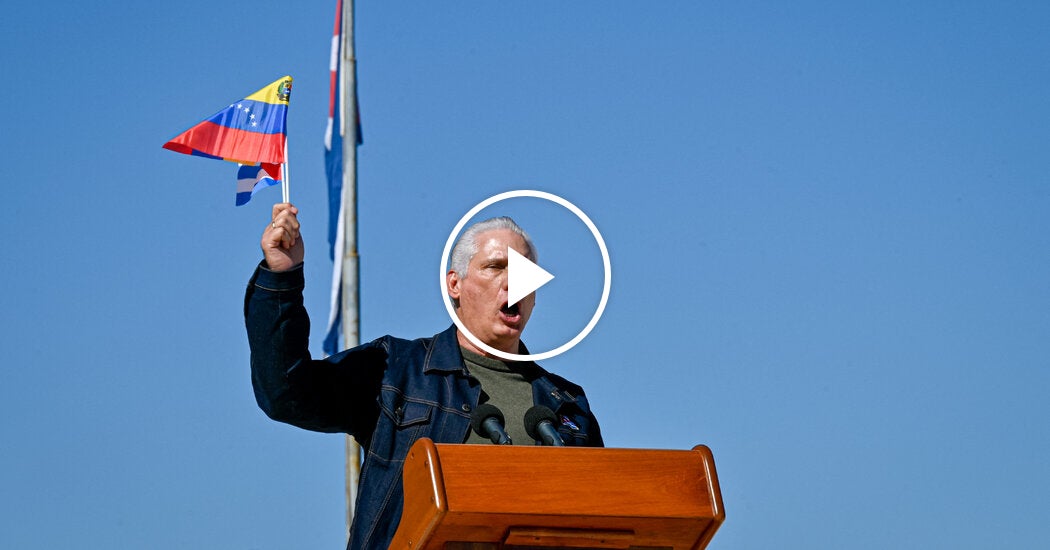
In a surprising turn of events on a humid afternoon in Havana, President Miguel Díaz-Canel took to the podium, his voice steady yet tinged with urgency, to announce that Cuba was engaging in talks with the United States. This revelation comes at a critical juncture, as the island nation grapples with a deepening energy crisis—one that has thrust日常生活 into disarray and left millions without reliable power. The crisis, exacerbated by what Cuban officials describe as an “effective oil blockade” enforced by the Trump administration, has forced the government to seek uncommon avenues for relief. Díaz-Canel, flanked by aides and under the watchful eyes of international observers, stated unequivocally that these discussions are underway, marking a potential thaw in decades of frosty relations. The admission underscores the severity of Cuba’s predicament, where blackouts have become as routine as morning coffee, and the economy teeters on the brink, highlighting how geopolitical pressures can intersect with everyday hardships in ways that defy easy resolution.
Diving deeper into the heart of this turmoil, the energy crisis isn’t just a temporary glitch but a systemic failure that has been brewing for years. Cuba’s reliance on imported oil—much of it sourced from Venezuela under past agreements—has unraveled dramatically. With Venezuela itself undergoing what some analysts call a “historic transformation” under shifting U.S. influence, the supply chain has snapped. Power plants across the island have sputtered to a halt intermittently, leaving hospitals to operate generators and schools to cancel classes mid-day. Residents in coastal cities like Santiago de Cuba speak of evenings lit only by candles, a throwback to hardships not seen since the Special Period of the 1990s. Experts from Havana’s University of Oriente point to data showing fuel shortages affecting nearly 70% of transportation, slowing down not just commerce but the very rhythm of life. This isn’t merely an inconvenience; it’s a catalyst for social unrest, with protests simmering in urban centers and rural areas alike, where farmers struggle to irrigate fields without diesel-powered pumps. The Cuban government, long proud of its self-sufficiency in the face of sanctions, now faces an intractable dilemma: compromise or confront the abyss.
At the root of this economic chokehold lies the U.S.さんは policy shift that has redefined the conflict. The Trump administration’s crackdown, often framed as an extension of its broader “maximum pressure” campaign on adversarial regimes, has tightened the screws on Cuba’s energy sector. Multiple sanctions have curtailed access to oil markets, effectively barring international suppliers from dealing with Havana out of fear of U.S. reprisals. This blockade, as Díaz-Canel termed it, has extended beyond direct oil exports to encompass financing and technology transfers, crippling Cuba’s fledgling diversification efforts. Trump’s own words, echoed in a recent speech, paint a stark picture: “As we achieve a historic transformation in Venezuela, we’re also looking forward to the great change that will soon be coming to Cuba. Cuba is at the end of the line. They’re very much at the end of the line. They have no money. They have no oil.” Such rhetoric, delivered with characteristic bravado from the White House, underscores a strategy aimed at regime change through economic attrition. Cuban diplomats have long contested these measures as extraterritorial overreach, arguing they violate international norms. Yet, the reality on the ground is undeniable—fuel prices have soared, rationing has become law, and the national grid, reliant on outdated Soviet-era infrastructure, buckles under the strain.
To appreciate the significance of these U.S.-Cuba talks, one must rewind the diplomatic tape to a relationship fraught with Cold War legacies and post-communist tensions. For over six decades, Washington has imposed an embargo on Havana, a policy born from the 1959 revolution and Castro’s alignment with the Soviet Union. Glimmers of hope emerged during Barack Obama’s tenure, with the restoration of embassies and eased travel restrictions fostering a fragile détente. But Trump’s resurgence in 2024, buoyed by a nationalist platform, rolled back much of that progress, reinstating stringent sanctions that hit like a sledgehammer. The oil blockade, in particular, feels like a proxy battle, mirroring U.S. maneuvers in Venezuela, where sanctions on Nicolás Maduro’s government have starved state oil giant PDVSA of resources. Cuban officials view these talks as a pragmatic pivot, not ideological surrender— a necessary step to stave off collapse while preserving sovereignty. Observers in Miami’s expatriate community, however, worry that this outreach could be interpreted as weakness, potentially emboldening internal opposition forces. Amid chants of “Patria y Vida” from anti-government protesters, the conversations signal a nuanced shift: economic pragmatism might just bridge ideological divides, at least for now.
The potential outcomes of these discussions carry weight far beyond Cuba’s shores, weaving into broader threads of hemispheric politics and global energy markets. If talks yield concessions, such as relaxed sanctions or even temporary fuel shipments, it could alleviate immediate pain points, allowing Cuba to maintain its flagship health system and educational programs that have long been sources of national pride. Economists at the Brookings Institution speculate that opening U.S. markets might inject much-needed capital, spurring tourism and agricultural exports that have dwindled under isolation. Yet, skeptics argue that any deal would likely come with strings—perhaps demands for political reforms or concessions on human rights, echoing past betrayals like the 2016 warming. Regionally, success could embolden allies like Nicaragua and Bolivia, challenging U.S. hegemony in Latin America. On the flip side, failure might deepen isolation, pushing Cuba further into the arms of non-Western partners like Russia or China, who have been vying for influence. As Díaz-Canel navigates this high-stakes chessboard, the talks illuminate a universal truth: in an era of intertwined economies, even sworn adversaries can find common ground when survival is on the line.
Looking ahead, the Cuba-U.S. dialogue opens a window into uncertain horizons, where hope and caution dance in delicate balance. Reports from diplomatic sources suggest preliminary meetings have touched on humanitarian aid and energy cooperation, a starting point that could evolve into substantive policy changes. For Cubans, this represents more than geopolitics; it’s a lifeline thrown amidst choppy seas of inflation and scarcity. President Díaz-Canel’s government emphasizes that these talks don’t equate to capitulation but to strategic engagement, a reminder that even nations under siege can reclaim agency. As Trump’s term winds toward 2028 elections, pressure might mount for reassessment, especially if polls show shifting public fatigue with isolationist policies. For now, though, the island endures, its people resilient in the face of adversity. This diplomatic overture isn’t just about oil—it’s a testament to the enduring quest for stability in a world where crises demand unlikely alliances, and where tomorrow’s solutions might hinge on today’s willingness to listen. As the sun sets on Havana’s historic plazas, one can’t help but wonder if this is the dawn of a new chapter or merely a glimmer in the gathering darkness.