

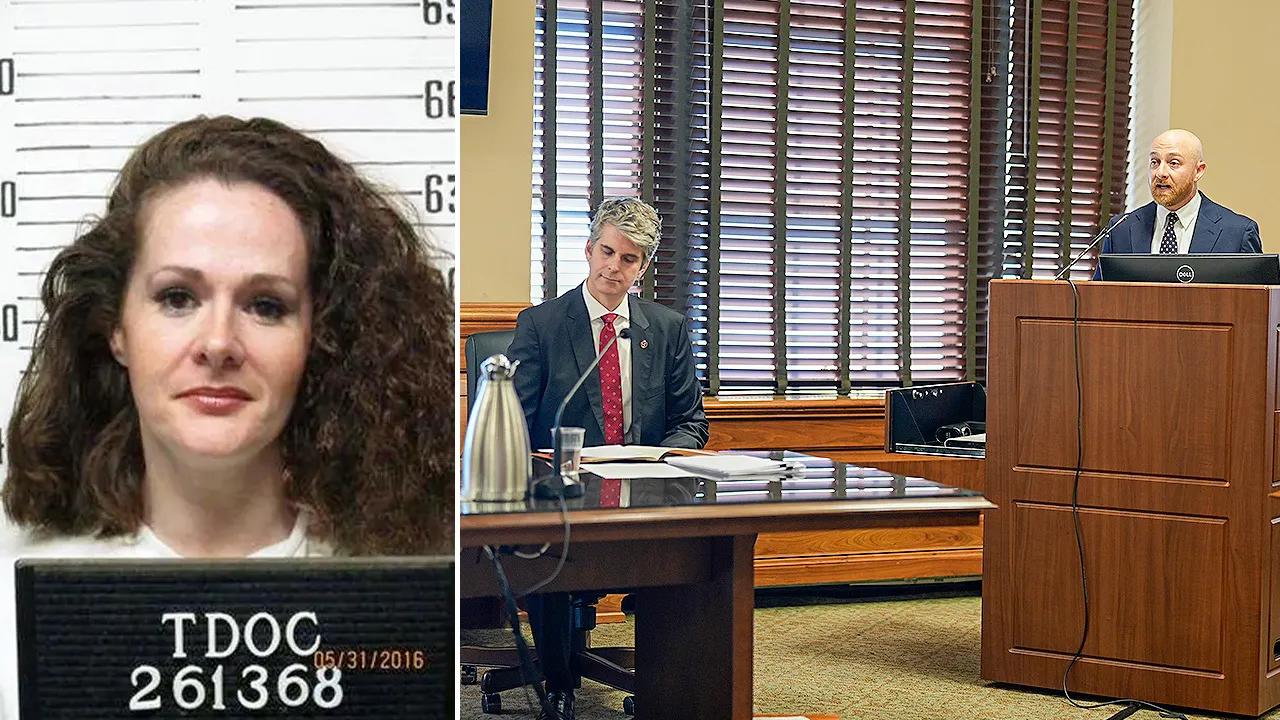
Christa Pike has returned to the prison that has held her for more than three decades, stepping out of a hospital and back into a world she knows all too well. After surviving a botched lethal injection that was supposed to end her life, Pike has been discharged and is now at the Deborah K. Johnson Rehabilitation Center, where she has been housed for over thirty years. Her attorneys made the announcement in a joint statement, explaining that Pike is grateful to the first responders and medical professionals who cared for her during what they called “extraordinary circumstances.” She is continuing to receive medical care inside the prison, and her legal team says they will keep monitoring her recovery closely. The failed execution took place on September 30, when Tennessee attempted to put her to death with two separate doses of pentobarbital. Both doses failed to kill her. Instead of dying, Pike woke up with serious medical complications: pneumonia, a blood clot, and injuries to her arms so severe that she could barely use them. The image of a death row inmate being wheeled back into a correctional facility after a state-sanctioned execution went wrong is difficult to process. She was sentenced to death as a teenager, and she has lived behind bars for nearly her entire adult life. The prison is not a home, but it is the only place she has known. Returning there after such a traumatic and surreal event is not a homecoming, but it is a return to a familiar, if grim, reality.
Her attorneys have provided only small glimpses of Pike’s recovery, but those glimpses reveal how fragile her condition remains. Stephen Ferrell, one of her attorneys, told the BBC that Pike had started walking around her hospital room, though not very far. She was able to move from her bed to the door and back, a modest achievement that felt monumental under the circumstances. But her arms are still badly injured, and she is struggling with memory problems. The physical trauma of the failed execution has left her with deep wounds, both visible and invisible. Ferrell described the state of her arms as quite serious, saying she is not able to use them very much. This is a woman who has spent decades confined in a small space, waiting for a death sentence to be carried out. Now she faces a different kind of confinement: one defined by pain, uncertainty, and the aftermath of a procedure that was meant to end her life but instead left her fighting to recover. Her legal team has been careful not to overstate her progress, but there is something quietly human in the image of Pike slowly moving around a hospital room, trying to reclaim some semblance of strength. The pneumonia and blood clot have added layers of danger to her recovery, and prison medical staff are now tasked with caring for a woman who was supposed to be dead. It is an unprecedented situation, and nobody has a clear script for how to handle it.
The emotional rollercoaster surrounding Pike’s condition reached its peak when her attorneys announced that they believed she was brain dead. For a time, it seemed as though the failed execution had achieved its goal, even if the death itself was delayed. Her legal team prepared for the worst. Then, unexpectedly, she regained consciousness. The news came like a shock wave through the small circle of people who have followed her case for years. One day she was being described as brain dead, and the next morning she was awake and talking. The exact timeline remains unclear, and her attorneys have not provided all the medical details, but the fact remains that Pike survived something that no one expected her to survive. The emotional strain on everyone involved was enormous. Her lawyers, her family, and even prison officials were thrown into a state of uncertainty. What do you do when an execution fails? How do you process the fact that a woman sentenced to die is now lying in a hospital bed, slowly recovering from the very procedure designed to kill her? The question is not just medical or legal; it is deeply human. For Pike, the experience must have been terrifying beyond words. She went into the execution chamber expecting to die, and she woke up injured, confused, and still alive. That kind of psychological trauma does not fade quickly. It lingers in the body, in the memory, in the moments of quiet when the reality of what happened begins to sink in.
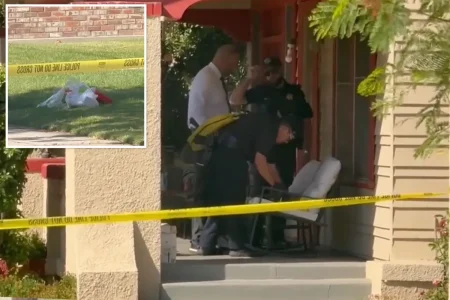
It is impossible to tell Christa Pike’s story without remembering Colleen Slemmer, the young woman whose life was brutally cut short in 1995. At nineteen years old, Slemmer was tortured and murdered in Knoxville, Tennessee, in a crime so horrific that it shocked the community and left a permanent scar on everyone who knew her. Pike was barely in her twenties when she was sentenced to death for her role in Slemmer’s death. The crime involved unimaginable cruelty, and no account of Pike’s current suffering should ever diminish the severity of what she did or the pain she caused Slemmer’s family. That is the tension at the heart of this story: a human being who committed a monstrous act is now herself vulnerable, injured, and struggling to recover. It would be easy to say that she deserves what she is going through, and many people do say exactly that. But the failed execution has forced those paying attention to look at Pike as more than just a name on a court document. She is a person with a long history, a troubled childhood, and a life that has been defined by incarceration and violence. Her former boyfriend, who has been described as a satanist, could be released from prison in five years, adding yet another layer of complexity to the story. Slemmer’s family has waited decades for justice, and the botched execution has reopened wounds that may never fully heal. No matter what happens next, nothing will bring Colleen Slemmer back. The tragedy of her death remains the foundational fact of this case, and it must always be at the center of any discussion about Pike’s fate.
The failed execution has also ignited a legal and political firestorm. A Tennessee judge has ordered the state Department of Correction to preserve all physical and electronic evidence related to the execution attempt. This is a clear sign that the courts are not willing to simply move on and pretend this did not happen. There are likely to be lawsuits, investigations, and difficult questions about what went wrong and who is responsible. Governor Bill Lee has halted executions for the remainder of 2026, a decision that reflects the seriousness of the situation. The state has effectively admitted that its execution protocol is broken, at least for now. But what happens to Pike in the meantime? She remains under a death sentence. The state has not said whether it will try to execute her again, and there is no clear legal path forward. Some legal experts believe that a second attempt would be tantamount to torture, especially given the physical harm she has already suffered. Others argue that the state has both a right and a duty to carry out the sentence that was lawfully imposed. Pike’s attorneys are likely to argue that her right to be free from cruel and unusual punishment has been violated, and that the state should not be allowed to subject her to another botched attempt. The legal battles ahead could take months or even years. Meanwhile, Pike sits in a prison medical unit, recovering from an execution that failed, surrounded by the very system that tried to kill her. It is a surreal and deeply troubling position for everyone involved, including prison staff who must now provide medical care to a woman they were prepared to watch die.
At its core, this case forces us to confront uncomfortable questions about justice, punishment, and the value of human life. Christa Pike is not a sympathetic figure; she participated in a brutal murder and has spent decades on death row. But the fact that she survived an execution does not make her any less human. It makes her more visibly human, more vulnerable, more complicated. The same state that sought her death is now obligated to care for her recovery, and that paradox is hard to reconcile. Her return to the Deborah K. Johnson Rehabilitation Center is not the end of this story. It is simply another chapter in a long, painful saga that has touched many lives. Slemmer’s family continues to grieve. Pike’s legal team continues to fight. The state continues to grapple with the aftermath of a procedure that failed in the most basic way possible. In the coming months, courts will decide whether the state can try again, and the world will be watching. But for now, Pike is alive, walking slowly around her room, receiving medical care in the same prison that has held her for thirty years. Her survival is not a miracle in any redemptive sense. It is a messy, unresolved fact, one that leaves no one feeling satisfied and many people feeling profoundly uneasy. In the end, what happened in that execution chamber on September 30 was a failure of the death penalty, a failure of the state, and a failure of the very idea that justice can be administered cleanly and without collateral damage. Christa Pike will carry the scars of that failure for the rest of her life, however long that may be, and so will everyone who watched it happen.