



Shadows Over the Mekong: How a Rare National Security Arrest in China Exposes the Fragile Geopolitics of the U.S.-China Rapprochement
The Kunming Disappearance: A High-Stakes Arrest on the Borderlands
In the early days of June, as regional tensions simmered along China’s southwest frontier, Chinese security forces quietly executed a high-stakes arrest that has sent shockwaves through the international diplomatic community. U Min Zin, a prominent political scientist, executive director of an influential Myanmar-focused policy research group, and a naturalized United States citizen, vanished on June 3 while traveling through Kunming, the bustling capital of Yunnan Province. Long a conduit for trade, intelligence, and migration between China and Southeast Asia, Kunming has recently become a highly securitized zone as Beijing intensifies its surveillance over the volatile Myanmar border. According to diplomatic sources who spoke on the condition of anonymity due to the delicate and highly sensitive negotiations currently underway, Chinese authorities have formally accused U Min Zin of “endangering national security”—a sweeping, highly opaque charge rarely leveled against American passport holders, which carries severe penalties under China’s strict judicial system. The quiet detention of such a high-profile analyst, whose life work has bridged the academic institutions of the United States with the fractured political landscape of Myanmar, underscores the deep anxieties of a Chinese state increasingly obsessed with foreign influence along its land borders. While American diplomats in Beijing and Washington have acknowledged the arrest and are pushing for consular access, the operational secrecy surrounding the detention highlights the growing risks faced by researchers, academics, and dual-heritage intellectuals navigating the increasingly contested spaces of East and Southeast Asian geopolitics.
A Collision of Diplomatic Ambitions: The “G2” Era and the Reality of Hostage Politics
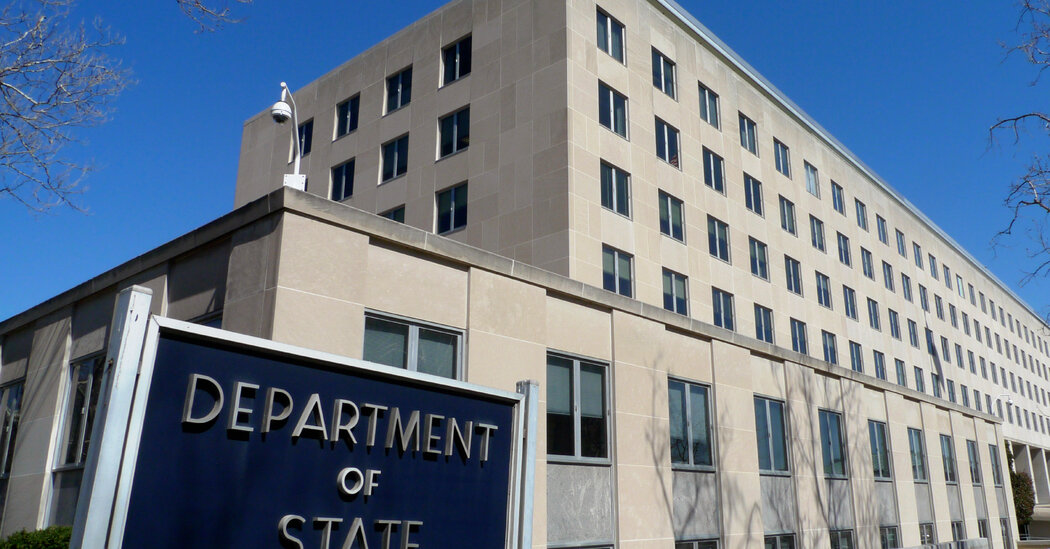
This provocative arrest has occurred at an extraordinarily inconvenient moment for Washington and Beijing, threatening to disrupt a highly orchestrated diplomatic dance between United States President Donald J. Trump and Chinese President Xi Jinping. The detention took place less than three weeks after President Trump returned from a high-profile state visit to Beijing, where he was treated to an opulent state banquet inside the Forbidden City—an event designed to signal a new era of personal chemistry and bilateral pragmatism. Following those meetings, Trump repeatedly praised Xi’s leadership, publicizing a grand vision of a “G2” partnership that would prioritize direct economic cooperation, trade deal negotiations, and stability over the long-standing, value-driven friction of previous administrations. Yet, the unilateral arrest of a United States citizen on grave state security charges serves as a sobering reminder of the structural distrust that remains deeply embedded within the Chinese security apparatus. One senior American official, speaking on the condition of anonymity, conceded that while Beijing’s foreign ministry presents a facade of wanting to build “constructive strategic stability” with Washington, the aggressive actions of China’s Ministry of State Security on the ground directly undermine those cooperative efforts. When pressed for comment, the State Department issued a carefully measured statement citing federal privacy laws, confirming they are tracking reports of a detained citizen and working to provide appropriate consular services, while the Chinese Embassy in Washington released a boilerplate defense of its domestic judicial sovereignty, declaring that “all foreigners living and traveling in China must observe Chinese laws.”
  THE GEOPOLITICAL TRIANGLE: U.S. - CHINA - MYANMAR

        [ United States ]  <=================>  [ Beijing, China ]
         (Consular Access /                      (State Security /
          "G2" Diplomacy)                         Border Hegemony)
                \                                      //
                 \                                    //
                  \                                  //
                   v                                  v
                    [ The Borderlands: Yunnan Province ]
                                    |
                                    | (Academic Scrutiny /
                                    |  Anti-Coup Research)
                                    v
                             [ U Min Zin / ISP ]
                                    |
                                    v
                            [ Myanmar / Burma ]
                       (Civil War & Junta Instability)
The Intellectual Catalyst: U Min Zin’s Academic Legacy and Critical Pen
To understand why U Min Zin may have drawn the scrutiny of Chinese intelligence, one must examine his formidable career as an independent intellectual, academic, and policy analyst. Having completed his master’s degree and pursued his doctoral studies in political science at the prestigious University of California, Berkeley from 2010 to 2016, his academic focus has centered on the complex mechanics of democratization, civil-military relations, and ethnic conflicts. As the co-founder and executive director of the Institute for Strategy and Policy (ISP) Myanmar—an independent think tank originally established in Yangon—U Min Zin dedicated his career to promoting democratic leadership, fostering civic engagement, and providing objective, data-driven analyses of his native country’s political crises. Following the disastrous February 2021 military coup in Myanmar, which saw the Tatmadaw overthrow the democratically elected government, ISP Myanmar was forced to decentralize its operations, with U Min Zin eventually steering the organization’s research from a base of exile in Thailand. Beyond his academic work, U Min Zin has been a prominent public intellectual, writing deeply thoroughly researched, critical opinion essays for major global outlets, including The New York Times and Foreign Policy. His public writings frequently analyzed the shifting alliances along the Sino-Myanmar border, criticizing both the junta’s brutality and Beijing’s opportunism, a combination of intellectual independence and Western institutional backing that likely made him a target for a Chinese communist leadership that views foreign-funded civil society research with intense suspicion.
The Borderlands Crucible: Myanmar’s Civil War and Beijing’s Strategic Red Lines
The geopolitical backdrop to U Min Zin’s arrest is the devastating, multi-front civil war consuming Myanmar, a conflict in which China has played a complex, double-faced role that has increasingly irritated regional observers. Since the 2021 coup, Myanmar has been locked in an “intolerable stalemate,” as U Min Zin prophetically argued in a June 2021 essay, wherein the military junta relies on brutal airstrikes—often utilizing advanced fighter jets and munitions supplied by China and Russia—to suppress a highly sophisticated resistance movement led by Gen Z activists and ethnic armed organizations (EAOs). Yunnan Province, sharing an expansive, porous border with Myanmar’s Shan and Kachin States, has directly felt the tremors of this conflict, enduring refugee crises, stray artillery, and disrupted trade routes. While Beijing maintains a close, formal relationship with the military junta in Naypyidaw, it simultaneously maintains deep, clandestine ties with powerful ethnic rebel armies operating along its border, effectively using them as leverage to protect massive Chinese infrastructure projects, including strategic oil and gas pipelines that cut across Myanmar to the Indian Ocean. Scholars like U Min Zin, who possess the linguistic skills, local networks, and analytical rigor to map out these sensitive illicit economies and covert diplomatic arrangements, present a distinct threat to Beijing’s desire to control the narrative. His scheduled participation at a prestigious policy and geopolitics forum in Nepal, where he was set to speak on the shifting dynamics of regional hegemony, suggests that his arrest may have been a preemptive move to silence an analyst who knew too much about the quiet compromises China makes to secure its southwestern flank.
Inside China’s Detention Machine: The Reality of Exit Bans and State Security Charges
U Min Zin’s plight highlights the broader, systemic danger facing foreign nationals and dual citizens traveling within the jurisdiction of the People’s Republic of China, where the legal system operates as an instrument of state power rather than an independent administrative body. According to John Kamm, a veteran human rights advocate and the founder of the Dui Hua Foundation, China is estimated to hold approximately 200 American citizens under various forms of state custody or restriction. While many of these individuals are held on conventional criminal charges, such as drug offenses, or are trapped by “exit bans” stemming from commercial, civil, or corporate financial disputes, a formal charge of “endangering national security” represents an entirely different tier of judicial severity. Such accusations are rarely levied against Western citizens, typically reserved for high-stakes geopolitical standoffs; historical precedents include the high-profile detention of Canadian citizens Michael Kovrig and Michael Spavor, or the case of Kai Li, an American businessman convicted of espionage who was only recently released in 2024 as part of a complex prisoner swap negotiated by the Biden administration. In China’s highly securitized political climate, where the definition of a “state secret” has expanded to encompass virtually any economic, social, or geographic data not officially sanctioned by the Communist Party, independent academic fieldwork and policy analysis are increasingly treated as forms of espionage, transforming legitimate scholarly inquiry into a dangerous, liberty-threatening endeavor.
| Detainee Name | Citizenship | Primary Accusation / Charge | Status / Resolution |
|---|---|---|---|
| U Min Zin | United States (Myanmar heritage) | Endangering National Security | Detained June 2023 (Yunnan) |
| Kai Li | United States | Espionage / State Secrets | Released in 2024 (Prisoner Swap) |
| Sandy Phan-Gillis | United States | Espionage | Expelled in 2017 (After 2+ years) |
| Jimmy Lai | United Kingdom (Hong Kong) | Collusion with Foreign Forces | Imprisoned in Hong Kong |
| Dong Yuyu | China | Espionage (Highly disputed) | Convicted / Sentenced |
The Price of Stability: The Side-lining of Human Rights in Great Power Calculations
As President Trump prepares to host President Xi Jinping for a highly anticipated reciprocal summit in Washington around late September, the diplomatic resolution of U Min Zin’s case remains highly uncertain, shadowed by a broader shift in Western foreign policy priorities. In previous decades, the detention of a prominent American academic or a high-profile ethnic intellectual would have triggered immediate, public, and coordinated condemnation from the highest levels of the United States government; however, the contemporary political landscape is increasingly defined by transactional diplomacy, trade wars, and strategic competition. Humanitarian advocates like John Kamm of the Dui Hua Foundation express deep concern that human rights, arbitrary detentions, and civic freedoms have been pushed to the absolute periphery of bilateral discussions, as Western nations prioritize trade reciprocity, intellectual property protections, and supply chain security. With other high-profile figures—such as British citizen and media mogul Jimmy Lai in Hong Kong, or Chinese independent journalist Dong Yuyu—entombed within the Chinese penal system, U Min Zin’s arrest serves as a stark warning of a new geopolitical reality: a world where intellectual rigor, independent scholarship, and the pursuit of democratic reform are increasingly sacrificed on the altar of great power stability, leaving those who study the fault lines of authoritarianism uniquely vulnerable to its reach.