





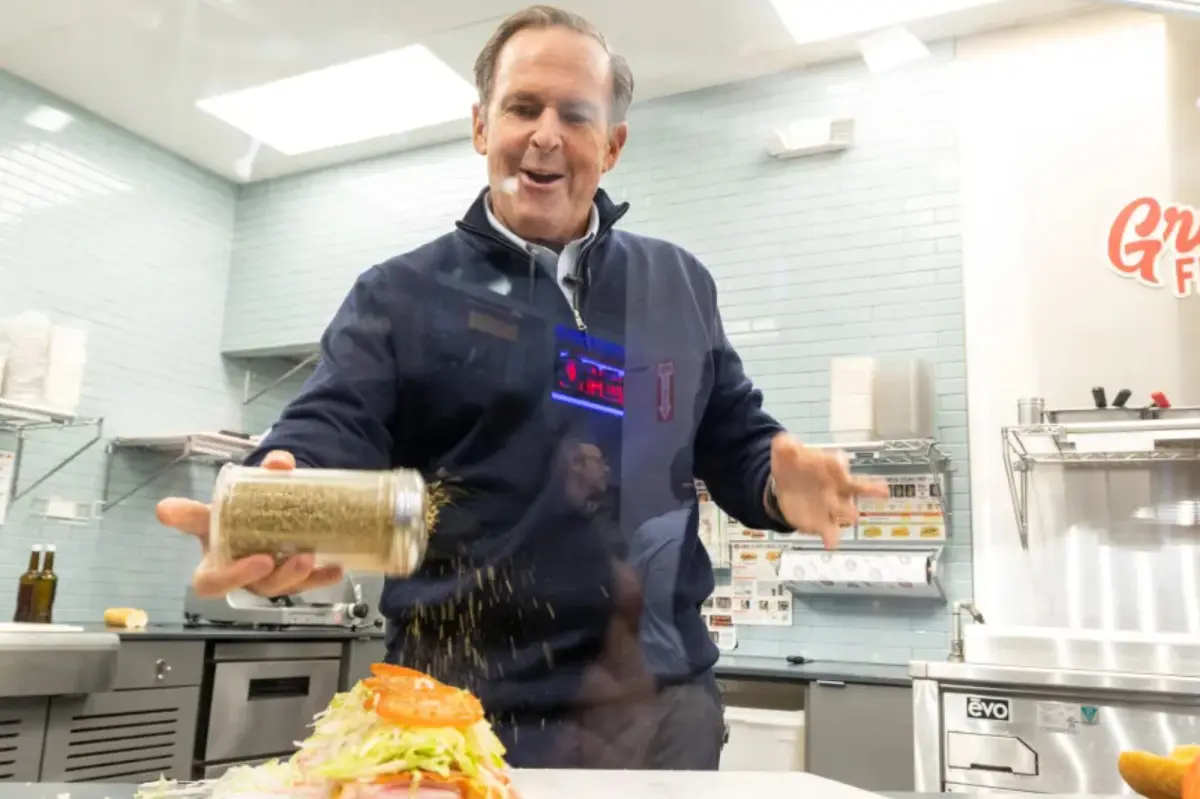
In an era defined by rapid technological shifts and changing societal values, the core essence of the American Dream is undergoing a profound reexamination. As part of a collaborative initiative leading up to America’s semiquincentennial in 2026, The Post, in partnership with the Milken Center for Advancing the American Dream (MCAAD), has been capturing the deeply personal stories of citizens who embody the diverse pathways to prosperity in this country. Among these narratives is the remarkable journey of Peter Cancro, the founder and chairman of Jersey Mike’s Subs, whose story began not in a corporate boardroom, but amidst the salt air and blue-collar hustle of the New Jersey Shore in the early 1970s. Raised in a modest home by a father who worked tirelessly as an auto mechanic and a stay-at-home mother who anchored the family, Cancro learned the values of grit, humility, and community from an early age. When he walked into the original Mike’s Sub Shop at just fourteen years old to earn some extra pocket money, he did not just find a part-time job; he discovered an environment where his young voice actually mattered, a place that functioned less like a cold commercial enterprise and more like a supportive, extended family. This foundational sense of belonging and respect sparked an entrepreneurial fire within him, demonstrating that the American Dream is often built on the simple, human desire to be seen, heard, and valued within one’s local community.
The turning point that transformed a typical teenage job into a lifelong calling arrived in 1975, when Cancro was just a seventeen-year-old high school senior. The shop’s owner announced his intention to sell the business, a decision that threatened to dismantle the tight-knit workplace community Cancro had grown to love. It was during a casual evening at home that his mother made a suggestion that would forever alter the trajectory of his life, asking her teenage son why he didn’t simply buy the shop himself. Though Cancro initially laughed off the idea and headed upstairs to bed, the proposition lingered in his mind, and by the time he reached the top of the stairs, a metaphorical light switch flipped, illuminating a path of endless possibility that he had never previously dared to consider. The next morning, fueled by a mixture of teenage audacity and raw determination, he called the owner to express his interest, securing a tight two-week window to raise the necessary funds. This moment exemplifies the spark of the American Dream: a sudden, clarifying realization that standard trajectories can be rewritten, provided one has the courage to act on an unexpected opportunity and the support of family members who believe in their potential even before they fully realize it themselves.
However, translating this sudden inspiration into reality required navigating a harsh and unforgiving economic landscape, as the American economy of 1975 was mired in stagflation, high interest rates, and widespread financial anxiety. For a seventeen-year-old high school student with no collateral, no established credit history, and only a dream to his name, walking into traditional financial institutions was an exercise in vulnerability and repeated rejection. One bank after another turned him down, viewing his business plan as the naive fantasy of a teenager rather than a viable investment opportunity. The experience was a sobering lesson in the systemic barriers that many aspiring entrepreneurs face, highlighting the intimidating nature of institutional gatekeepers who often prioritize rigid metrics over human potential. Yet, rather than letting these rejections extinguish his hope, Cancro persisted, driven by the belief that his intimate understanding of the shop’s daily operations and his deep connection to its customer base were worth more than any traditional resume or financial balance sheet.
In a twist of fate that underscores the vital role of local support networks in the American journey, Cancro’s critical breakthrough did not come from a corporate boardroom, but from a local banker names Rod Smith, who happened to be his former youth football quarterback coach. When Cancro walked into Smith’s office, the banker’s initial reaction was one of grandfatherly concern, fearing that the young athlete must have landed himself in some sort of serious trouble to warrant an unexpected visit. Once Cancro explained his ambitious business proposal, the dynamic shifted from casual concern to professional mentorship, as Smith recognized the determination, discipline, and character that Cancro had previously displayed on the athletic field. Leveraging his position at the bank, Smith agreed to champion the venture and secure the necessary loan, proving that personal relationships, trust, and community-level mentorship are often the most effective catalysts for economic mobility. This crucial alliance illustrated that the American Dream rarely functions as a purely individualistic endeavor; rather, it is nurtured through local ecosystems where established leaders are willing to take a calculated chance on the raw potential of the next generation.
Despite securing the financial backing, Cancro still had to confront a wave of skepticism from his peers and educators at Point Pleasant Beach High School, who struggled to comprehend his unconventional decision. As the president of his senior class and the captain of the varsity football team, Cancro was widely expected to follow a traditional academic trajectory, with teachers openly warning him that pursuing a career in sandwich-making would ruin his life and squander his potential to study law. Undeterred by these well-meaning but narrow definitions of success, Cancro took ownership of the business by simply showing up every single day, mastering the complexities of payroll, inventory, and customer service while his classmates prepared for college. Over the ensuing decades, this relentlessly consistent discipline laid the foundation for Jersey Mike’s Subs to grow from a single, beloved beachfront store into a global franchise powerhouse boasting nearly 3,500 locations worldwide. His journey serves as a powerful reminder that conventional academic and professional paths are not the only avenues to fulfillment, and that true success is often forged through the daily, unglamorous dedication of showing up and outworking the skepticism of others.
Ultimately, as Peter Cancro looks toward the milestone of America’s 250th anniversary in 2026, his definition of the American Dream has evolved far beyond the mere accumulation of corporate accolades and financial wealth. He believes that while the initial dream is about rising up alongside family and friends to achieve personal success, the true pinnacle of that dream lies in the capacity to share those rewards and give back to the communities that nurtured your growth. Through initiatives like Jersey Mike’s annual Month of Giving, which has raised tens of millions of dollars for local charities, Cancro has integrated philanthropy directly into his business model, demonstrating that true prosperity is defined by its social impact. His story, featured by the Milken Center for Advancing the American Dream in Washington, D.C., stands as an inspiring testament to the enduring power of community, mentorship, and generosity. In a complex and often divided world, Cancro’s life work reminds us that the American Dream is not a zero-sum game of personal accumulation, but a collaborative, multigenerational journey of lifting others up as we climb, ensuring that the doors of opportunity remain open for those who dare to dream next.