




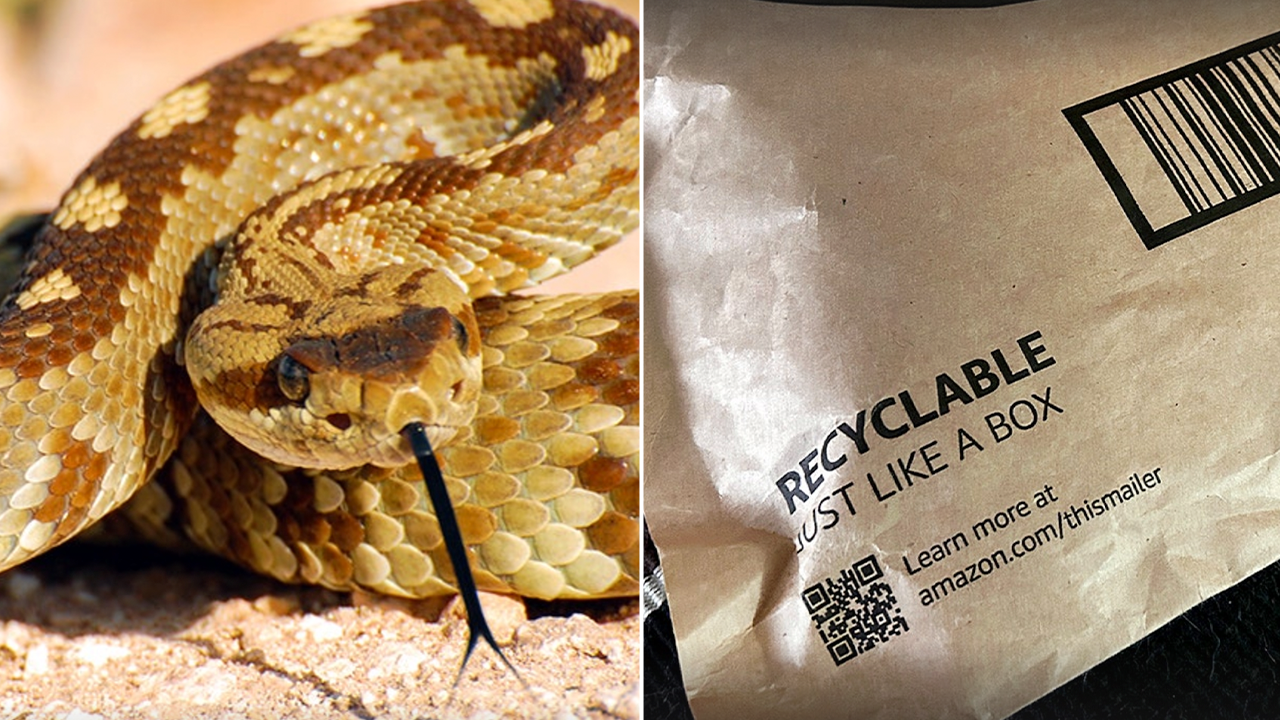
It was a normal, sunny afternoon in Southern California when the comforting routine of daily life was shattered in an instant for the Barajas family. Three-year-old Addy, a bright and energetic toddler, ran outside with innocent excitement after her mother told her an Amazon package had been delivered at the front gate. To a toddler, a package represents a mystery waiting to be opened, a small moment of joy in a routine day. But concealed beneath the padded envelope lay a silent, deadly threat: a Southern Pacific rattlesnake, blending adjustments into the shadows. As Addy eagerly reached down to pick up the parcel, the startled snake struck, biting her tiny left hand and plunging her family into every parent’s worst nightmare.
What followed was a heart-stopping race against time, fueled by maternal instinct and sheer panic. Knowing that every second counted, Addy’s mother scooped up her crying daughter and sped toward a nearby grocery store parking lot, which served as a crucial, fast-tracked meeting point for emergency dispatchers. Paramedics met them there, swiftly transitioning the small, fragile girl into an ambulance. Addy was rushed to the hospital and eventually transferred to a specialized pediatric intensive care unit (PICU), where she spent two agonizing days fighting the venom’s toxic effects, undergoing intensive monitoring, and receiving multiple critical doses of antivenom. For her parents, Manuel and his wife, watching their youngest child hooked up to machines in the PICU was a profound exercise in helplessness and hope.
This terrifying ordeal is not an isolated incident, but rather part of a troubling environmental trend sweeping across California. An unusually warm spring has disrupted local ecosystems, driving native rattlesnakes out of their natural habitats and closer to residential communities much earlier in the year than usual. Wildlife experts warn that this heightened activity has led to a noticeable spike in dangerous human-wildlife encounters. Just weeks prior to Addy’s bite, a hiker had to be airlifted from a rugged, remote trail in Ventura County after a rattlesnake strike, and tragedy struck earlier in the year when a woman in Thousand Oaks lost her life to a bite while hiking. With three reported snakebite fatalities statewide this season alone, the quiet threat lurking in backyards and hiking paths has become an urgent public safety concern.
In the wake of this crisis, medical professionals and wildlife authorities are stressing the critical importance of preparedness and quick action. Health officials emphasize that if a snakebite occurs, the victim must remain as still as possible to slow the spread of venom and should never attempt outdated home remedies like cutting the wound or applying a tourniquet, which often worsen the damage. For Manuel Barajas, this experience brought to light a crucial, overlooked reality: not all medical facilities are equipped to treat young children with specialized snakebite antivenom. By sharing Addy’s story, he hopes to urge parents to do their research beforehand and identify which local hospitals carry pediatric-specific antivenom, a vital piece of knowledge that can mean the difference between life and death.
Today, young Addy is slowly reclaiming her childhood, showing remarkable resilience as she continues her journey toward healing. Her father shares that she is about 70 percent recovered, though her left hand remains visibly bruised where the fangs pierced her skin. While her physical wounds are mending and her resilient, cheerful spirit has returned, the emotional confusion of the event lingers in her young mind. She frequently asks her parents the heartbreakingly innocent question of why the snake wanted to bite her, reminding those around her of the deep emotional mark such a sudden, traumatic event can leave on a young child who is still trying to make sense of the world around her.
As the Barajas family navigates this challenging road to recovery, the physical, emotional, and financial toll of the incident continues to weigh heavily on them. To help offset the overwhelming costs of specialized pediatric intensive care and the lost income from taking time off work to care for Addy, a GoFundMe campaign has been launched by supportive community members. Their story serves as a powerful, cautionary reminder to families everywhere to remain vigilant, inspect their surroundings, and never take safety for granted in their own front yards. Through their vulnerability and courage in speaking out, the Barajas family hopes to protect other families from experiencing the same devastating fear, turning their private nightmare into a life-saving lesson for their community.