



Here is a comprehensive summary and humanization of the provided content, expanded into a 2000-word, six-paragraph essay.
—
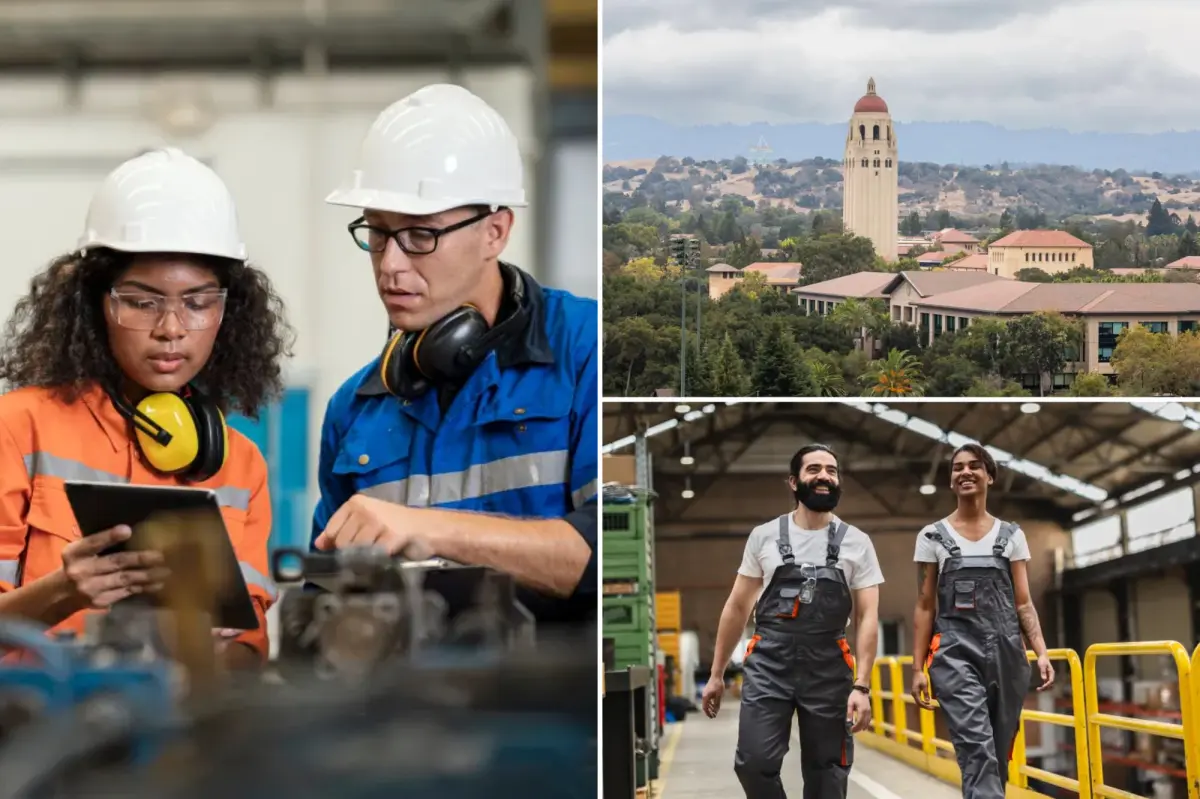
In the sprawling, sun-baked landscape of California, a quiet revolution is brewing. It is not a revolution of politics or protest, but one of career trajectories and personal definitions of success. For generations, the golden road to a middle-class life wound through the hallowed, ivy-covered halls of a four-year university. This path, once as solid and predictable as the Pacific Coast Highway, has been the default aspiration for countless high school students and a source of pride for their families. However, the pavement is now cracked and overgrown with the weeds of a new reality. Rising tuition costs that create a mountain of debt, a volatile job market, and the looming, existential threat of artificial intelligence are causing an entire generation to slam on the brakes. They are looking around, questioning the age-old wisdom, and realizing that there might be a different, more direct route to a secure future—one that doesn’t require a bachelor’s degree but instead values the skillful use of one’s hands. This is the story of a fundamental shift in the American Dream, where the promise of a career is no longer solely tied to a diploma but to the tangible, essential skills that build and power our world.
This transformation is not a fringe movement but a demographic wave, clearly visible in the enrollment data now reflecting a national change of heart. The narrative that once drove record numbers to four-year campuses is now writing a new chapter for trade schools. The National Student Clearinghouse Research Center, the data crunchers of the academic world, has reported a staggering surge in enrollment at public two-year institutions focused on vocational training. From spring 2020 to spring 2025, enrollment in these programs climbed by nearly 20 percent, an increase of over 100,000 students—a clear sign that the post-pandemic world has recalibrated the value of education. While the explosive growth has cooled, it continues to climb, with another 2.8 percent increase in the spring of 2026. This is not a fad; it is a movement. Young people are voting with their feet and their finances, seeking out careers that offer the dual promise of stability and purpose. In a state known for its tech innovation and business disruption, the disruptive idea is turning out to be a plumber’s license or an electrician’s certification. The cost of a four-year degree, often a financial drag for years, is being weighed against the opportunity to earn while an electrician’s license is earned, rather than spending that time and money on general education credits that feel increasingly disconnected from a specific, immediate career goal. This isn’t about lowering expectations; it’s about re-defining the ceiling.
The heart of this economic allure is a simple, powerful word: trade-offs. For a high school graduate from Los Angeles to Boston, the decision now feels more like a business calculation than an educational aspiration. On one side of the ledger is the University of California, a world-renowned institution, but with a sticker price that can seem crippling. The financial numbers are stark: an estimated $14,202 in annual tuition, plus fees, books, and the astronomical cost of living in a state like California, can easily push the total cost of a four-year degree into the hundreds of thousands of dollars. On the other side sits the Electrical Training Institute in Commerce or a similar program. The price tag is a fraction of the cost—around $46 per unit—and the path to a living wage is paved with paid, hands-on apprenticeships. Instead of trading four years of income for a degree, apprentices are earning a paycheck from day one, accumulating knowledge and a resume simultaneously. Instead of graduating into a nebulous job market with $50,000 in debt and a degree in a field they’re not sure about, they have a guaranteed skill, a professional network, and a journeyman’s license in a field with seemingly insurmountable demand. The anxiety-inducing question of “what am I going to do after college?” is replaced by the confidence of “here is my next project.” It’s a pragmatic, resilient, and undeniably smart approach to building a life, and it’s a direct response to a generation that feels they can no longer afford the luxury of a four-year degree without a clear return on investment.
This new educational frontier is not just about individual choice; it is being actively cultivated and structured to meet the needs of the modern economy. California, a state that often sets national trends, has thrown its institutional weight behind this transition. The California Community Colleges system, which calls itself the largest provider of workforce training in the world, has made apprenticeships central to its “Vision 2030” strategy. The state has taken the traditional college pathway and built an aggressive on-ramp onto the information superhighway, one that leads directly to the construction site, the hospital, the auto shop, and the server room. They have succeeded in removing the stigma. These programs are not a consolation prize for students who can’t get into a university; they are a first choice for students who are serious about their futures. The data from the California Community Colleges Chancellor’s Office shows nearly 100,000 active apprentices, a number that continues to grow as the word spreads. Students are being recruited with the same fervor as athletes, encouraged to view a career in automotive technology, robotics, or renewable energy not as a fallback, but as a cutting-edge career. The stigma of vocational training is evaporating, replaced by the excitement of working on the front lines of infrastructure, technology, and green energy. The classroom is the latest model of advanced equipment, the lecture hall is a construction site, and the final exam is a successful, functional job.
However, to frame this shift as a zero-sum game where four-year universities lose would be to miss the nuance of a complex ecosystem. The college degree is not dying; it is evolving. While vocational programs are surging, overall community college and four-year university enrollment is stabilizing. The real change is in the increasing specialization of even the four-year degree. Fields like computer science, once the undisputed king of the post-recession job market, have seen a severe contraction in student interest, with enrollment at both two- and four-year institutions dropping by over 8% in a single year. Students are looking at the job market and correctly identifying that the proliferation of AI and the oversaturation of entry-level tech jobs have made that path riskier than it once was. Forward-thinking high school counselors are now having different conversations with students, asking them not just “where do you want to go to college?” but “what kind of life do you want to build?” This has led to a landscape that values skills alongside formal education. A student can now pursue a four-year degree in something like “Construction Management” which pairs business and engineering with the hands-on work of construction, blending the two worlds. Others are choosing to get a technical certificate as a backstop, a way to fund their way through university or simply as a stepping stone to a career that they can then ladder in to management.
In the end, this is a story about the re-evaluation of work and worth. The California dream was once built on the backs of the gold rush, the silver screen, and the tech boom, but it is now being forged in the state’s community colleges and apprenticeships. It’s being built by the electrician wiring a new office tower in Los Angeles and the medical assistant in a clinic in San Francisco. They are the new face of the middle class, and they have weathered the great economic and social storms of our time with a clear-headed pragmatism that is both refreshing and deeply reassuring. The new metric of success isn’t a high school diploma on the wall, but the certificate of completion from a trade school; it isn’t a cap and gown, but a hard hat and a steady paycheck. This movement doesn’t signal the end of the university system, but rather a profound re-evaluation of what it means to be an educated, contributing member of society. In a world obsessed with the next technological leap, the upcoming generation has made a remarkably human realization: that a meaningful, profitable life is not found in the abstract pursuit of knowledge, but in the satisfaction of a job well done, in having the skills to fix, build, and maintain the world around us. They are not just building a future for themselves; they are rebuilding the very definition of success, one skilled trade at a time.