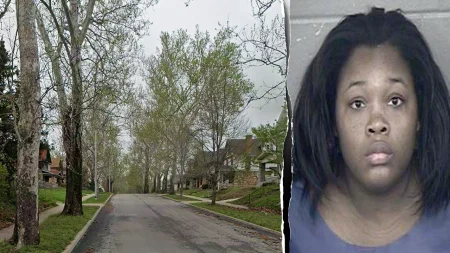





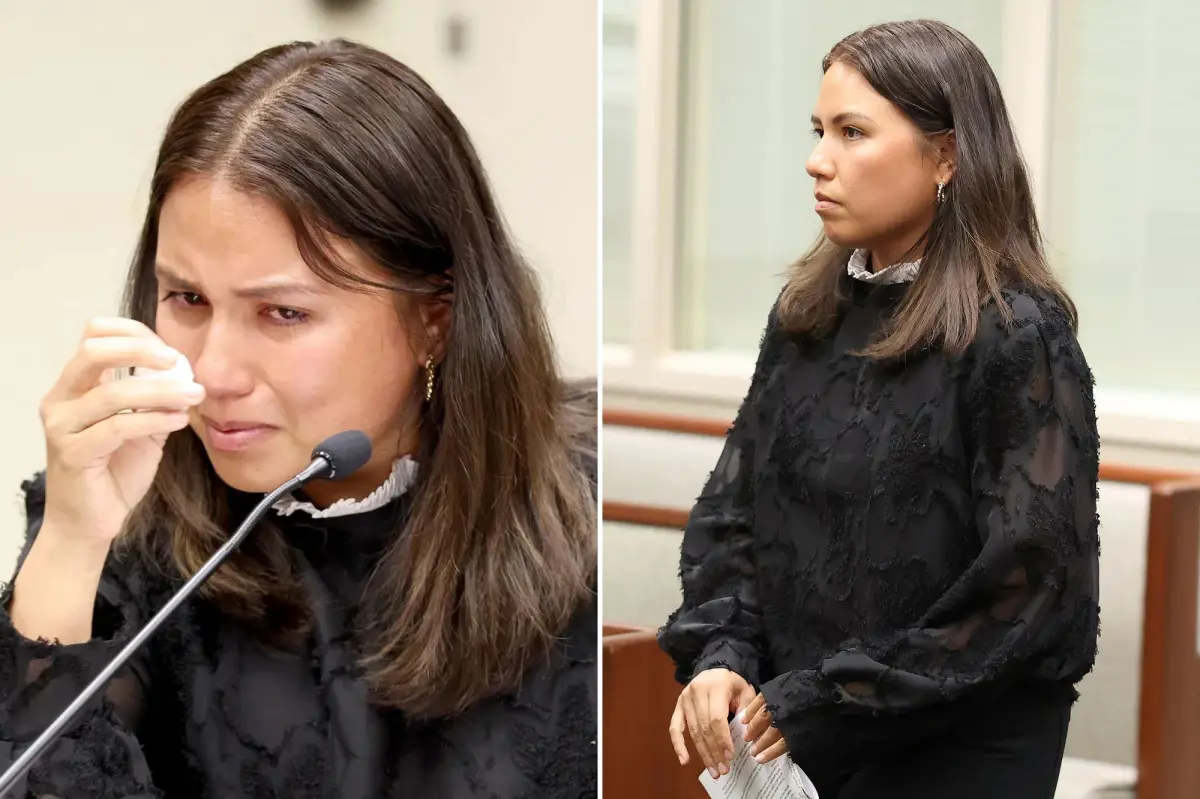
The Riverside Superior Courtroom was heavy with a grief that no sentence could fully measure. On Monday, Amanda Leigh Quinonez, a former teacher and water polo and swim coach at Eleanor Roosevelt High School in Riverside, sat in the dock and broke down in sobs as the mother of her former student recounted what she described as the horrific torment of her son—a boy who was just 14 years old whenhis teacher sexually abused him. The relationship, which began nearly four years ago, had already been legally acknowledged: Quinonez pleabed guilty in March to two counts of sexual penetration with a foreign object, one count of providing sexually explicit material to a minor, and one count of lewd acts upon a child. Yet knowing he guilt in law was very different from hearing its human cost spoken aloud in court. The mother’s words came haltingly, with tears, each memory a fresh wound. Quinonez wept at the defense table, a shattered figure in the same classroom where she had once commanded authority and trust. She had been an educator, a coach, someone whose job was to guard the boundaries of childhood—not to cross them. But she had crossed them in the most devastating way possible, and now the justice system was beginning the slow, painful process of reckoning. Her arrest had come after the relationship was discovered, ending her career and setting off a legal saga that would culminate in this sentencing hearing. For the boy’s family, however, the courtroom was not an ending but another chapter in a long ordeal—one that began with a simple trip to a baseball field and ended with a truth they could never have imagined.
The boy’s mother told the court exactly how that truth had unraveled. She described going to the baseball field looking for her son, only to be met with an unsettling silence from a coach who seemed to know more then he was willing to say. A second coach directed her back to the first, and it was only then that someone finally revealed that her son was in the administration building. Her heart, she said, had plummeted before she even knew why. When she arrived, she saw her teenage son sitting silently next to a Sheriff’s Deputy—a sight that made no sense and yet communicated everything. As the minutes passed, the dreadful details emerged: her son had been having a sexual relationship with his teacher. He eventually admitted it, and then revealed something that cut even deeper: Quinonez had told him that he needed to protect her. The adult had made the child her keeper. That single detail laid bare the predator’s manipulation—a complete inversion of responsibility, in which a grown woman convinced a vulnerable boy that her survival depended on his silence. He was fourteen years old, still a child in every meaningful way, yet he had been asked to carry the weight of an adult’s crimes. The mother’s voice cracked as she recounted her son’s compliance, and the courtroom seemed to hold its breath. This was not a seduction in any romantic sense; it was a theft—of innocence, of trust, of the ordinary adolescencent years that should have been filled with homework, teammates, and dreams, not secrets that would haunt him for decades.
The aftermath, the mother explained, had been brutal in ways that extended far beyond the abuse itself. Once the relationship became known, her son and his older brother were forced to quit the baseball team. They could not endure the ridicule from other students who had learned of the teacher’s conduct and turned it into a weapon. The boys had to transfer to a different school, leaving behind friends, coaches, and a sense of belonging. The mother fought back tears, gasping for air, as she described how her family had been uprooted by shame that was never theirs to carry. Her husband stood beside her and added his own testimony: their son had been through a lot, and that even now, long after the relationship had ended, other baseball players were still talking about the boy’s past involvement with his teacher. The talk was not sympathy but gossip—a slow, cruel bleed that kept the wound open. The father’s voice was thick with anger and sorrow as he spoke, his words a reminder that the consequences of sexual abuse by a trusted adult ripple outward, touching siblings, parents, teammates, and entire communities. The boy had lost more than his innocence; he had lost his team, his school, his privacy, and his faith in adults. And while he sat somewhere outside that courtroom, trying to rebuild his life, his family remained trapped in the aftermath of someone else’s betrayal. The mother’s testimony was not just an accounting of pain; it was an act of courage, a refusal to let her son’s suffering be reduced to a legal footnote.
Quinonez, for her part, offered an apology through tears. She admitted that she had failed as a teacher, that she had betrayed the trust placed in her by the school, the parents, and, above all, by that child. She spoke directly to the family, asking for forgiveness she had no right to expect, and trying to explain something that could never be explained. Perhaps most poignantly, she said she hoped her own daughter would not judge her by the woman she is today, but by the woman she will become. That statement hung in the air, a reminder that she, too, is a human being—a mother, a daughter, someone with her own future. But it also underscored how completely she had failed to extend that same grace to the boy she had harmed. She had not thought of him as someone’s child, as someone with a future of his own, when she crossed every line of professional ethics and human decency. Her tears, whether genuine or self-pitying, could not erase the images her victim’s mother had just painted. The contrast between her hope to be redeemed in her daughter’s eyes and the reality of what she had done to another mother’s son was almost unbearable. She had asked a 14-year-old to protect her; she had stolen his childhood and then asked him to carry her secret. Now, in court, she was asking the world to see her not as a monster but as someone capable of change. Perhaps she was. But that change, if it ever comes, would not give back the years her victim had lost, nor heal the humiliation he had endured at school, nor erase the sleepless nights his mother had suffered. Apologies, however heartfelt, are insufficient; they are only the beginning of accountability.
Legally, the next steps are now clear. Quinonez, who had been freed on a $50,000 bond after her arrest, was set to be taken into custody on Tuesday. She will be sent to state prison for a mental evaluation, and she is scheduled to return to court in November for sentencing. The evaluation may inform the court’s decision about her psychological state, her potential for rehabilitation, and the degree of her culpability beyond the charges to which she has already pleaded guilty. But for the victim’s family, the exact number of years will never feel like enough. No prison term can undo the moment when a mother walked onto a baseball field and felt her world begin to crumble. No sentence can give her son back his adolescence, his team, his untroubled sleep. The legal system will do its best to mete out justice, but justice, in cases like this, is always incomplete. It can punish; it cannot repair. It can affirm the wrong; it cannot restore what was taken. The boy’s parents will leave the courthouse and continue to live with the consequences every day—watching their son navigate friendships, school, and his own sense of self, forever aware that a teacher once told him his job was to protect her. That burden should never have been his. It should have been the adults around him—the coaches who stayed silent, the educators who failed to notice, the system that allowed a trusted mentor to become a predator. The courtroom’s judgment, when it comes, will be a necessary but insufficient balm.
Perhaps the greatest tragedy of this case is how ordinary it is. It follows a pattern all too familiar: a charismatic adult, a vulnerable child, a secret wrapped in affection, and a community that looks away or does not know how to intervene. The mother’s story—the silent coach, the delayed disclosure, the shame heaped upon the victim rather than the perpetrator—reveals how much work remains in protecting children from those in positions of authority. We want to believe that teachers are safe, that schools are havens, that a coach would never exploit a player. But when that belief is shattered, we too often blame the victim for not speaking sooner, for not knowing better, for not resisting. The boy in this case did speak, eventually, and his reward was ridicule, lost friendships, and a changed school. His mother spoke, and her reward was a courtroom of strangers hearing her pain. It should not take a mother’s desperate trip to a baseball field to uncover abuse. It should not require a child to carry the burden of protecting his abuser. Communities, schools, and families must learn to recognize the warning signs of grooming—the special attentin, the secrets, the adult who blurs boundaries and tells a child no one will understand. They must create environments where children feel safe disclosing abuse without fear of judgment, and where adults are trained to respond with belief and action rather than silence and hesitation. The coaches in that baseball field had moments to intervene; they chose silence. Their silence cost the boy years of pain. We all bear responsibility for creating cultures where children are heard, where predators are stopped, and where victims are held, not blamed. As Quinonez awaits her fate, as her own daughter grows up wondering who her mother really was, the only hope is that this family’s suffering will not be in vain—that it will remind us of the profound duty we owe to our children, and of the terrible cost when we fail them.