


Paragraph 1: The Historic Decision and Its Shadow
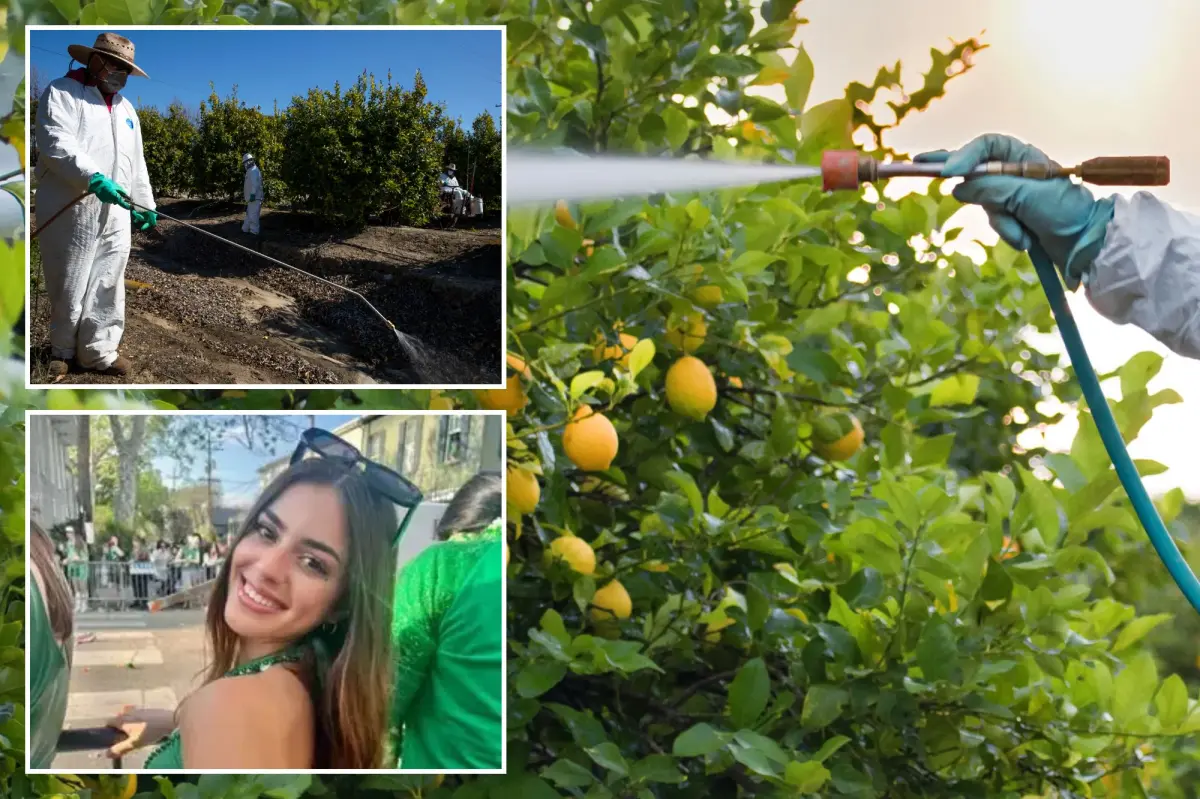
In a momentous and deeply significant move that sends shockwaves through the agricultural heart of the Golden State, California has officially canceled the final registration for paraquat, a notoriously lethal weedkiller that has been the subject of decades of controversy. The California Department of Pesticide Regulation announced this week that the last paraquat-based pesticide product would be pulled from the market, giving distributors a two-year window to sell off or destroy existing stockpiles. This is not a mere administrative tweak; it is a powerful acknowledgment that the chemical, which has been linked to Parkinson’s disease and a litany of severe health complications, has no place in the state’s future. The decision arrives amidst a crescendo of grief and fear, particularly from the affluent Orange County community of Ladera Ranch, where families are still reeling from a devastating cluster of rare childhood cancers that they believe may be tied to years of pesticide exposure. While the state’s action is framed as a regulatory victory, it is impossible to separate this bureaucratic milestone from the human tragedy that has so powerfully underscored the urgency of the debate. For the parents who have buried their children, or who are still fighting alongside them in hospital rooms, this cancellation is a bittersweet vindication—a recognition that the poison they have suspected for years is finally being expelled from their fields, parks, and neighborhoods, even if it comes too late to undo the damage already done.
Paragraph 2: The Unforgiving Nature of the Poison
To understand why this chemical has been banned in more than seventy countries, one must first grasp the sheer, unforgiving lethality of paraquat. Unlike conventional herbicides that slowly degrade or target specific plant enzymes, paraquat is a toxicological fortress. It is a heavy-duty commercial weedkiller sold under brand names like Gramoxone, Para-SHOT, and Firestorm, and it is considered one of the most lethal herbicides still approved for use in the United States. The stark reality is that there is no antidote. The Environmental Protection Agency’s own website carries a chilling, almost clinical warning: “Paraquat Dichloride: One Sip Can Kill.” This is not hyperbole; ingestion of even a tiny amount leads to a painful, progressive failure of the lungs, heart, and kidneys. But death is not the only horror. For those who survive acute exposure, or who suffer chronic, low-level exposure through inhalation or skin contact, the consequences are equally grim. Medical literature links paraquat to a horrifying array of systemic failures, including the development of various cancers, heart failure, kidney failure, liver failure, and the irreversible scarring of lung tissue. The state’s agricultural communities, particularly those in the San Joaquin Valley, bear the heaviest burden. California is the nation’s largest user of paraquat, with over three-quarters of its application concentrated in just eight counties there. This is not a chemical that stays neatly contained on the weeds it is sprayed upon. It can become airborne in the dust that blows from fields into nearby neighborhoods, seeping into the lungs of farmworkers, their children, and their neighbors. Researchers have already found that exposure in these agricultural communities correlates with elevated risks of Parkinson’s disease and thyroid cancer, making the state’s cancellation a critical, life-saving intervention for those who have been silently living alongside this poison for generations.
Paragraph 3: The Human Face of the Crisis in Ladera Ranch
While the San Joaquin Valley has long been the epicenter of paraquat’s agricultural footprint, it is the heartbreaking story of a suburban community that has finally pushed the issue into the national spotlight. In Ladera Ranch, Orange County, a reported cluster of Ewing sarcoma—a rare and aggressive cancer that primarily attacks children and young adults—has shattered the idyllic peace of an affluent neighborhood. Since 2007, roughly nine children connected to this community have been diagnosed with the disease, a number that far exceeds statistical probability. Health officials have cautiously stated that no environmental cause has been definitively identified, but the families living in the shadow of this crisis have refused to accept that answer. They have pointed to the manicured lawns, the lush green parks, and the years of routine pesticide and herbicide applications that have kept their community pristine. The toll has been devastating beyond measure. Brody Matteson, a 17-year-old with a vibrant spirit, lost his battle in March 2026 after nearly two years of grueling treatment. Lily Dalton, a bright 23-year-old who had just graduated from college, died in January 2026, her future stolen before it could truly begin. In response to the mounting fear and grief, local authorities have begun to act. The Capistrano Unified School District recently implemented a 60-day pause on routine landscape chemicals, including herbicides and pesticide sprays, while officials review their approved product list. Similarly, the Ladera Ranch Maintenance Corporation has temporarily halted certain chemical applications. These are not just administrative pauses; they are desperate, defensive maneuvers by a community that feels betrayed by the very systems meant to protect its children. The pause is a plea for answers, a moment of collective breath held in the hope that stopping the spray might stop the dying.
Paragraph 4: The State’s Reevaluation and the Ecological Toll
California’s decision to cancel paraquat was not a sudden, impulsive reaction to the Ladera Ranch tragedy; rather, it was the culmination of a rigorous, years-long reevaluation process that exposed the chemical’s pervasive dangers to both human health and the environment. This process was formally triggered by A.B. 1963, passed in 2024, which mandated that the state continue a thorough review of the herbicide. The state’s preliminary assessment, which ultimately informed the cancellation, painted a deeply troubling picture. The review identified significant risks to wildlife, including the endangered San Joaquin kit fox and the majestic Swainson’s hawk, species that inhabit the very regions where paraquat is most heavily used. Even more concerning, officials warned that the supposed restrictions designed to protect these animals were likely ineffective. Paraquat is incredibly persistent in the environment; it does not simply break down and disappear. It lingers in the soil and water, creating a toxic legacy that outlasts the immediate application. The public health findings were equally alarming, pointing to an association between paraquat and thyroid disease, as well as serious birth defects and reproductive harms. This is not just a concern for those who physically handle the chemical; it is a concern for entire communities, as the contaminated dust can drift for miles. The environmental and health reviews combined to create an undeniable case: the risks of allowing paraquat to remain in circulation far outweighed any agricultural benefits. The state’s move is a landmark precedent, signaling that regulatory bodies are finally willing to prioritize the sanctity of human life and ecological integrity over the convenience of a chemical solution.
Paragraph 5: A Stark Contrast with Federal Paralysis
California’s decisive action stands in stark, shameful contrast to the approach taken by the federal government, which continues to wade through bureaucratic quagmires while the chemical remains on the market nationwide. Environmental and public health groups, represented by Earthjustice, sued the EPA in 2021 over its reapproval of paraquat, and that legal challenge remains ongoing, ensnared in a seemingly endless web of red tape. While Vermont has already enacted the nation’s first outright paraquat ban, the EPA’s only recent move has been to announce a vague “roundtable” discussion with stakeholders to debate the chemical’s future. This glacial pace is a source of immense frustration for advocates like Nathan Donley, the environmental health science director at the Center for Biological Diversity. Donley captured the sentiment perfectly when he stated, “California and other states are taking aggressive steps to protect people from this dangerous poison, but the EPA continues to spin a web of red tape to obscure paraquat’s well-documented harms.” He powerfully asserted that “the writing is on the wall—paraquat is on its way out,” and questioned how long it will take the EPA to “start protecting people instead of the profits of pesticide companies.” The contrast highlights a fundamental dysfunction in the federal regulatory system, where chemical companies hold immense sway, and where the burden of proof falls on the victims rather than the producers. California’s proactive stance is a testament to the power of state-level action, but it leaves a dangerous patchwork of protection across the country, where a child in one state might be protected while a child in another remains exposed to a known poison.
Paragraph 6: The Escalating Political Fight and a Fragile Hope
The fight over paraquat has now escalated from the fields and parks of California to the highest corridors of federal power. The Ladera Ranch controversy has reached Washington, D.C., where First Assistant U.S. Attorney Bill Essayli has formally asked EPA Administrator Lee Zeldin to investigate whether environmental factors, including the historic use of pesticides, could be contributing to the reported cancer cases in the community. Essayli’s request is a monumental step, forcing the federal government to confront the possibility that its regulatory failures have had direct, deadly consequences for American families. It is a demand for answers, not just for Ladera Ranch, but for every community that has ever wondered if the green lawn outside their window carries a hidden price. As California pulls the final paraquat product from its shelves, the emotional resonance is profound. For the families in Ladera Ranch, this victory is achingly hollow. The cancellation of a chemical cannot bring back Brody Matteson or Lily Dalton, nor can it erase the years of anxiety and chemotherapy that other families have endured. Yet, it represents a fragile, hard-won hope—a recognition that their advocacy, their grief, and their relentless questions have forced a change. California’s move is a beacon of accountability, proving that public outcry can overcome corporate influence. But the battle is far from over. The EPA must now follow suit, and the nation must reckon with the broader legacy of chemical use that has permeated our environment. The decision in California is a testament to the power of collective grief transmuted into action, but the true victory will only be realized when the entire nation finally turns its back on these dangerous poisons, and when no more children are lost to a disease that we might have prevented.