






The Italian Paradox and the Shifting Sands of European Political Stability
Walking through the sun-drenched, ancient streets of Rome, where centuries of architectural grandeur stand as a testament to endurance, it is impossible not to reflect on how rapidly the coordinates of global political stability have shifted. For decades, Italy was the undisputed poster child of Western democratic volatility, characterized by an almost comedic turnover of prime ministers, a mountain of out-of-control public debt, and a constant, nervous vulnerability to the whims of international bond traders. Today, however, an unexpected role reversal is unfolding across the European continent, transforming Rome into an unlikely beacon of relative political predictability while its northern neighbors descend into systemic uncertainty. In Paris, a fractured parliament has burned through seven prime ministers in a mere six years, leaving President Emmanuel Macron’s administration perpetually teetering on the edge of collapse, while in Berlin, Germany’s fragile three-way coalition struggles to maintain its footing after barely a year in power. Meanwhile, across the English Channel, Britain finds itself facing the grim prospect of entering a cycle that could yield its seventh prime minister in a decade, a symptom of widespread voter disillusionment that is increasingly reflected in the volatile behavior of the international financial markets. As electorates grow increasingly hostile to the status quo, the ultimate arbiters of national economic policy are reasserting their dominance, proving that even in an era dominated by populist rhetoric, the cold, mathematics-driven sovereign debt markets still hold the ultimate veto over democratic governance.
The Return of the Bond Vigilantes and the Disciplining of Downing Street
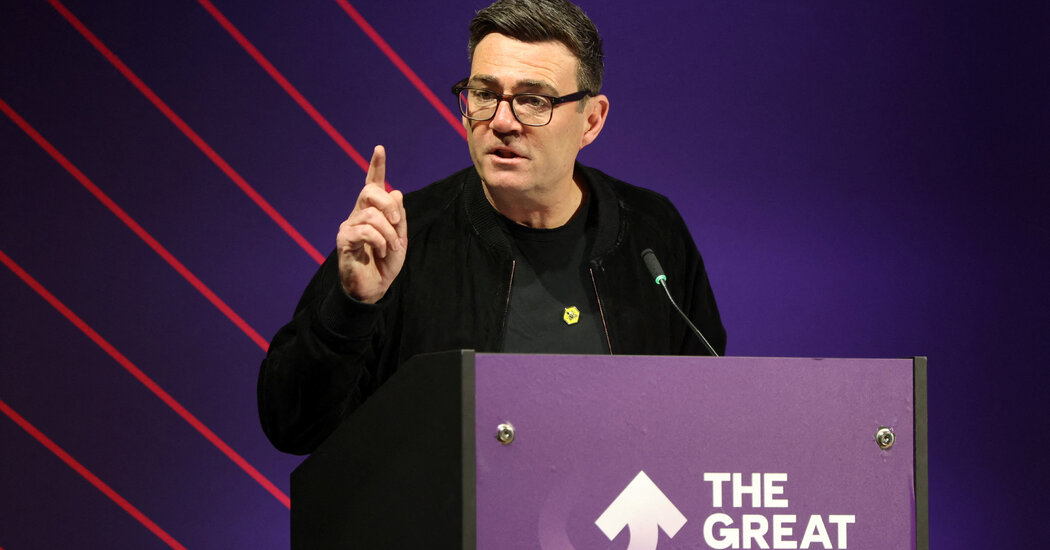
The primary battleground for this quiet constitutional crisis is currently the United Kingdom, where the tension between political ambition and market reality has reached a dramatic fever pitch. Andy Burnham, the charismatic mayor of Greater Manchester and a leading progressive voice frequently touted as a future successor to Prime Minister Keir Starmer, recently discovered the steep price of challenging the financial orthodoxies of the City of London. During a high-profile interview, Burnham candidly lamented that Britain desperately needed to move past its debilitating state of being permanently “in hock to the bond markets,” a statement immediately interpreted by anxious traders as a signal that a future Burnham administration would enthusiastically embrace debt-fueled public spending. The reaction from the financial community was both swift and merciless: a coordinated selling spree of British gilts that sent borrowing costs soaring, forcing Burnham to embark on a humiliating apologetic tour to reassure skeptical investors of his absolute commitment to fiscal discipline and the country’s self-imposed spending constraints. This aggressive market response is a classic manifestation of the “bond vigilantes”—a term coined decades ago to describe the collective power of international investors who punish profligate governments by driving up interest rates. It is a lesson that echoes throughout modern political history, famously prompting Bill Clinton’s political strategist James Carville to remark that he wished to be reincarnated as the bond market because of its unparalleled ability to intimidate even the most powerful leaders on earth, a reality also experienced by Greece during the devastating sovereign debt crisis of the 2010s and even Donald Trump during his tariff-induced market skirmishes.
The Canary in the Coal Mine: Why the United Kingdom Faces Unique Fiscal Perils
While the entire global economy is currently wrestling with elevated debt levels in the wake of the pandemic and persistent inflation, Britain has emerged as a particularly vulnerable canary in the global financial coal mine. This acute vulnerability is partially a psychological hangover from the disastrous autopsies of the Liz Truss administration, whose radical, unfunded tax cuts sent the sterling into a tailspin and forced an emergency intervention by the Bank of England, permanently damaging the credibility of British fiscal policy in the eyes of international observers. Unlike the United States, which enjoys the “exorbitant privilege” of issuing the world’s primary reserve currency, or eurozone nations, which find their sovereign risks cushioned by the formidable, Swabian-housewife-inspired frugality of Germany’s balance sheet, the United Kingdom must navigate its current economic storm without a geopolitical safety net. With a national debt hovering around 93 percent of GDP and inflation proving stubbornly sticky, economic experts like Harvard University’s Ken Rogoff warn that the post-2008 era of artificially low interest rates is officially over. For nearly fifteen years, governments worldwide accumulated historic mountains of cheap debt under the assumption that borrowing costs would remain near zero forever; now, as global yields continue their relentless march upward, the structural fragility of this debt-dependent model is beginning to show over the horizon, threatening to trigger a series of sovereign defaults that could redefine global economics.
A Fractured World: Navigating Modern Trade Wars, Cyber Propaganda, and Maritime Strife
This domestic financial instability is unfolding against the backdrop of an incredibly volatile geopolitical landscape, where the traditional pillars of international trade and national security are being systematically dismantled. In the crucial maritime corridors of the Middle East, Iran and Oman are quietly negotiating a controversial mechanism to levy transit fees on shipping vessels traversing the highly strategic Strait of Hormuz, a development that signals a significant breakdown in Western maritime deterrence and dampens hopes of a comprehensive regional peace accord. Simultaneously, the United States is intensifying its containment strategies against strategic competitors, implementing strict new travel bans on citizens from central and eastern African nations citing public health emergencies, while simultaneously utilizing aggressive technology sanctions by blocking Nvidia’s advanced artificial intelligence silicon sales to China, a move that has paradoxically incentivized Beijing to accelerate the deployment of homegrown alternatives. The digital realm has also become a highly active theater of asymmetric warfare, as intelligence agencies reveal that Russian state-sponsored actors have compromised thousands of accounts on the social media platform Bluesky to disseminate targeted anti-Ukrainian propaganda. These structural shocks are further compounded by political wildcards, such as Donald Trump’s provocative declarations regarding direct diplomatic engagements with Taiwan—a move that fundamentally challenges decades of established diplomatic protocol—and the persistent, systemic drag of China’s deeply troubled property market, where a staggering backlog of 90 million empty or unfinished apartments suggests that the world’s second-largest economy faces a prolonged period of stagnation.
Public Obsessions and Cultural Clashes: From Tragic Marine Drama to Horticultural Scandal
When the weight of these existential macroeconomic and geopolitical crises becomes too heavy for the public consciousness to bear, society frequently diverts its collective attention toward highly localized, emotionally charged cultural dramas that reveal the deeper anxieties of our age. This strange duality was vividly illustrated by the national obsession in Germany over “Timmy,” a wandering humpback whale that became a beloved media sensation after getting stranded in the shallow, brackish waters of the Baltic Sea, drawing vast crowds of onlookers and social media influencers before a privately funded rescue attempt tragically failed, unleashing an immediate torrent of public grief, mutual recriminations, and elaborate online conspiracy theories. Across the English Channel, a different kind of cultural battleground emerged at the prestigious, century-old Chelsea Flower Show, an elite London event historically synonymous with royal visits, aristocratic patrons, and polite horticultural competition. This year, the show was plunged into a raucous debate over a gold-medal-winning exhibition that utilized suggestively shaped calla lilies and carnivorous houseplants to explore raw, carnal themes, drawing furious condemnation from traditionalist groups who denounced the display as a form of naturalistic pornography. These seemingly disparate public obsessions—the collective mourning of a lost whale and the moral panic over a suggestive indoor garden—serve as fascinating psychological safety valves for a populace that feels increasingly powerless against the massive, incomprehensible economic forces dictating their everyday lives.
Defining the Modern State: Reconciling Geopolitical Borders with the Human Soul
Ultimately, the friction between cold financial imperatives and the instinctual human desire for self-determination brings us back to the fundamental, ongoing debate regarding the true nature of national identity in a hyper-globalized world. As readers from South Africa, Taiwan, Switzerland, and Sardinia have passionately observed, we are living through a profound reassessment of the concepts of statehood and nationhood, realizing that while “states” are often artificial legal constructs born from historical treaties or dynastic marriages, “nations” represent organic communities bound together by shared language, memory, and cultural heritage. This distinction was powerfully articulated by observers who reframed the fall of the Berlin Wall not merely as a victory for liberal capitalism, but as a deeply emotional nationalistic revolution aimed at reunifying a fractured culture, a sentiment that resonates deeply with minority cultures striving to preserve their distinct identities against the flattening forces of globalization. This cultural resilience is beautifully captured in the contemporary Welsh music scene, where artists like the bilingual rapper Sage Todz have reimagined traditional folk songs like “O Hyd” into modern hip-hop anthems, defiantly asserting their survival into the twenty-first century. As spelling bees, mini crosswords, and daily puzzles offer a familiar, comforting routine to citizens navigating a world in flux, the central challenge of our era remains clear: finding a way to balance the inescapable demands of the international financial markets with the sacred, irreplaceable human need for belonging, culture, and localized community.