


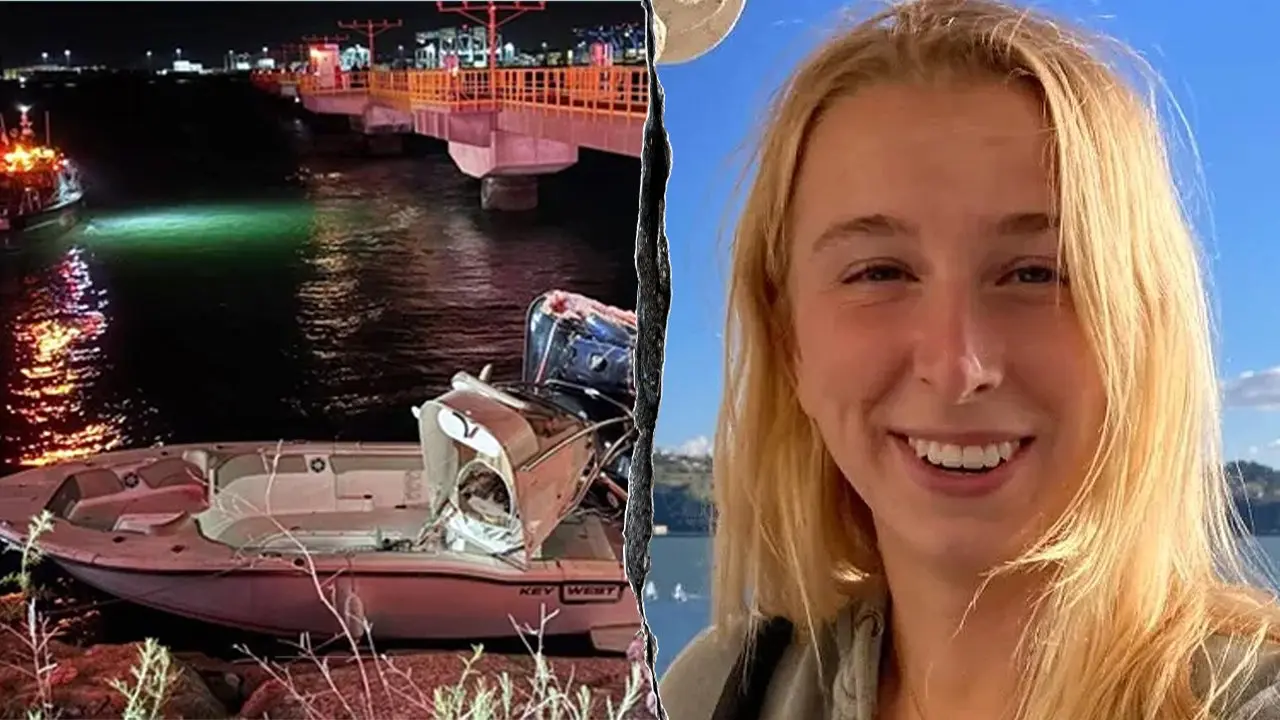
The evening of May 13 should have been a warm, carefree night on Boston’s waterfront—the kind of night young people remember for years, not the kind that haunts them forever. Elizabeth “Lizzie” Dankert, a 24-year-old former student athlete from Andover, Massachusetts, was out with friends, enjoying the kind of adult freedom that comes after college graduation. She had walked across the stage at Union College in 2024, where she had played soccer and left an impression on coaches, teammates, and professors alike. Her future stretched out before her, full of possibility. Instead, that future was violently cut short on a pier at Logan International Airport. According to prosecutors, Lawrence Shieh, 40, of Boston, was at the helm of a boat he allegedly took without authorization. He was intoxicated, dancing, and not paying attention to the water ahead. The collision killed Lizzie and left two of her friends injured. Now Shieh faces serious legal consequences: a Suffolk County grand jury indicted him on charges including involuntary manslaughter, boating under the influence causing death, two counts of boating under the influence causing serious bodily injury, using a boat without authority, and violating a Logan Airport security zone. But no indictment can restore what was lost on that dark night.
The hours before the crash paint a picture of reckless choices compounding one another. Shieh had spent the evening bar-hopping in Boston’s Seaport District, drinking at the ReelHouse and several other establishments. By the time he got behind the wheel of a boat, his blood-alcohol level had reached .20, more than twice Massachusetts’ legal limit of .08. That number alone is staggering. At that level, a person’s judgment is severely impaired, reaction times are slowed, and the ability to operate any vehicle safely is dangerously compromised. Yet Shieh allegedly found his way to a Freedom Boat Club dock, where he boarded a vessel that did not belong to him. He was a member of the club, prosecutors said, but he had no authorization to take that particular boat out. The boat had no exterior lighting, making it all but invisible in the dark. In human terms, this was not just a legal violation; it was a chain of deeply human failures. Someone saw a man who had been drinking. Someone may have noticed he was not in a condition to drive. Someone might have wondered why he was taking out a boat without permission in the dark. But no one stopped him. And Lizzie, along with her two friends, ended up on that vessel, trusting that the person steering knew what he was doing. They had no reason to expect that a fun night on the water would become a deadly tragedy.
The most painful evidence comes from the victims’ own phones. Cellphone footage, including video recorded on Lizzie Dankert’s phone, captured the final moments leading up to the crash. In those videos, Shieh can be seen at the helm, but he is not steering with care. He is dancing. He is engaging with the three young women, laughing, perhaps showing off, treating the boat like a party instead of a vehicle carrying lives. Approximately six seconds before impact, Shieh is visible with both hands off the wheel. Six seconds. For a boat moving across the water, that is an eternity. Six seconds of distraction, of inattention, of misplaced confidence. Then the boat slammed nearly head-on into Pier 4R at Logan. Data recovered from the boat’s navigation system showed it was moving at 36 miles per hour, a dangerously excessive speed for that area. The crash was brutal and unforgiving. Lizzie struck her head and suffered blunt-force injuries that proved fatal. Her two friends survived, along with Shieh, but survival does not mean escaping unscathed. The emotional and psychological wounds will remain with them for a lifetime. They will replay those six seconds over and over, wondering if anything could have been different. They will remember the sound of impact, the chaos, the helplessness. And they will carry the loss of their friend with them forever.
Lizzie Dankert was more than a name in a police report. She was a young woman who had worked hard, played hard, and earned the respect of those around her. She grew up in Andover and went on to Union College, where she played soccer and made her mark. In a statement, Union College spokesperson Phillip Wajda called her “an exceptional student-athlete who had a tremendous impact during her four years at Union College.” Those are not empty words. They speak to a person who was present, who contributed, who mattered. She was likely the teammate who encouraged others after a tough loss, the student who asked good questions in class, the friend who made people feel seen. At 24, she was just beginning to figure out who she wanted to be in the world. She had her whole life ahead of her—careers to pursue, places to visit, people to love, dreams to chase. Instead, her life ended on a pier, in the dark, surrounded by the wreckage of an avoidable accident. The grief for her family is unimaginable. Parents who raised her, who watched her grow from a child into a confident young woman, now face a future without her. Friends who shared her joys and struggles must now attend her memorial instead of her wedding. A community that celebrated her achievements is now in mourning. She should still be here, laughing, planning, moving forward. Instead, she is remembered in the past tense.
Now the justice system must try to make sense of a senseless tragedy. Shieh appeared in court, where a judge set cash bail at $25,000. He posted that bail and was released, but not without conditions. He must stay away from and have no contact with the female witnesses. He must stay away from Fan Pier and from employees of Freedom Boat Club. He is barred from the ReelHouse in Seaport, where the night of drinking began. He cannot operate a boat. He cannot consume alcohol while the investigation is ongoing. His attorney, Nick Pisegna, said his client has no criminal record and has been “diligently attending” his appointments since the incident. That may be true. But for the family and friends of Lizzie Dankert, the sight of Shieh walking out of the courthouse after posting bail must be incredibly painful. They have lost a daughter, a sister, a friend. They will spend the rest of their lives missing her at every holiday, every family gathering, every ordinary day. The legal process will move slowly, with a pretrial conference scheduled for October 8 at 2 p.m. Shieh, now facing the possibility of prison, will have his day in court. But no sentence will bring Lizzie back. No verdict will ease the pain of the people who loved her. The best that can be hoped for is accountability, a recognition that her death was not inevitable, that it was caused by choices made in a single irresponsible night.
This story is not just about one person or one family. It is a reminder of the enormous responsibility that comes with operating a boat, a car, or any vehicle. Alcohol changes people. It makes them bold, reckless, and unable to see the consequences of their actions. Speed makes everything more dangerous. Distraction turns a normal outing into a deadly one. Shieh allegedly did all of these things: he drank too much, took a boat without permission, drove too fast, and took his hands off the wheel. The result was the death of a young woman with a bright future. Her name was Lizzie Dankert, and she deserved so much better. As her community grieves, her story should be told. It should be told so that someone else thinks twice before getting behind the wheel of anything after drinking. It should be told so that friends find the courage to intervene when they see someone making dangerous choices. It should be told so that the memory of Lizzie Dankert is not reduced to a statistic or a headline. She was a beautiful, talented, loved human being. And she is gone far too soon. The water is supposed to be a place of joy, of freedom, of summer memories. For Lizzie’s family and friends, it will never look the same again. But perhaps, if her story can change even one person’s actions, her death will not be completely without meaning.