

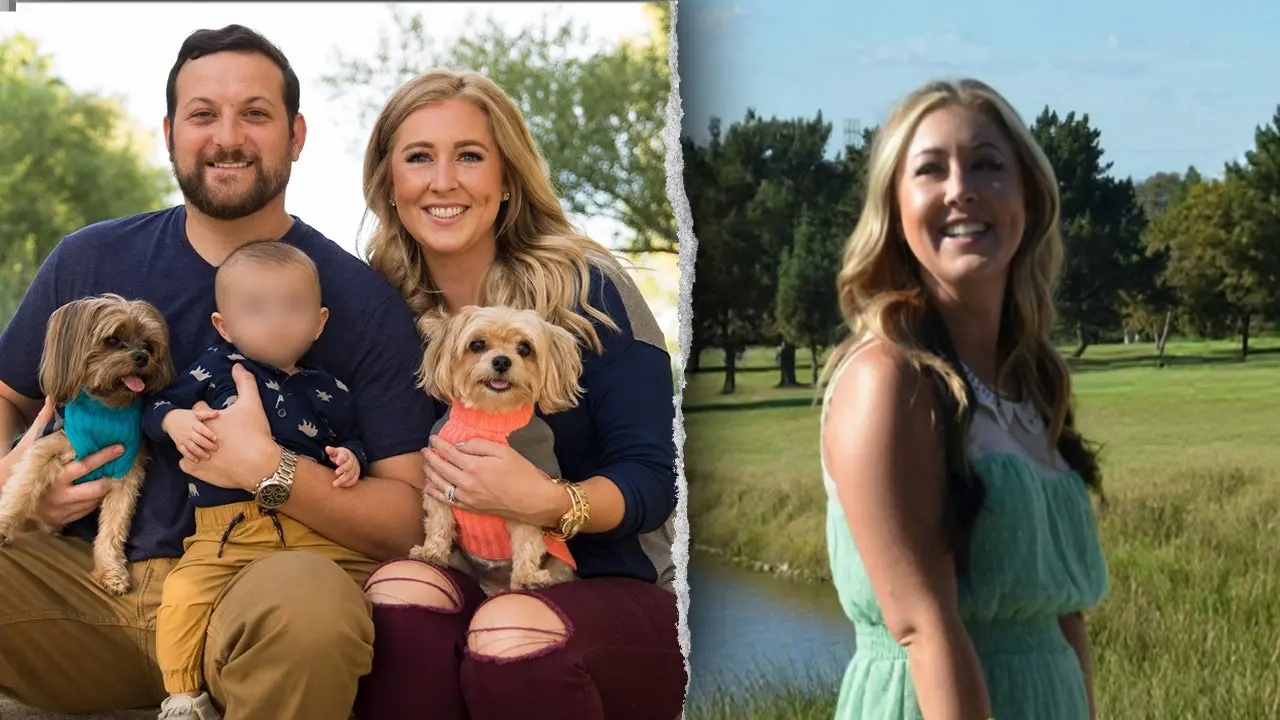
There are some stories that arrive as little more than a set of grim statistics—a police report, a court filing, a name in a headline—but behind every one of those entries is a life, a family, a home that will never be the same. This is one of those stories. In Concord, California, a quiet community in the East Bay, a 40-year-old father named Thomas John Iovenitti now sits in custody, accused of the murder of his wife, Alisha Iovenitti. She was 39 years old, a mother of three, and her life ended violently in the family’s own home on a Friday night in late October. The details are heartbreaking and infuriating in equal measure. According to the Contra Costa County District Attorney’s Office, Thomas had been arrested months earlier on charges of domestic violence, and he had been released on a strikingly low bail before this final, fatal attack. Now Alisha is gone, leaving behind 9-year-old twins and a 10-year-old son. The children are being cared for by family and close friends, but the sudden, traumatic loss of their mother—and the knowledge that their father is accused of taking her life—will shape their futures in ways no child should ever have to experience.
The events of that terrible evening unfolded quickly and brutally. Just after 8 p.m., Concord Police received a 911 call reporting a disturbance between a man and a woman, with the caller stating that the man was armed with a knife. Officers arrived at the family’s residence and made repeated attempts to contact anyone inside. When no one answered, they forced their way in. What they found inside was a scene of horror: a man and a woman, both suffering from multiple stab wounds. Despite the efforts of paramedics who rushed to the scene and did everything they could to save her, Alisha Iovenitti was pronounced dead at the home. Thomas, the man found alongside her, was taken into custody. It is difficult to imagine the fear that must have gripped Alisha in her final moments, or the chaos that neighbors may have heard through the walls. A home that should have been a sanctuary for a family of five became the site of an unspeakable crime. Emergency responders, trained to compartmentalize trauma, could not have been unaffected by the sight of a mother dying in front of them, her children not yet old enough to fully understand that their lives had just changed forever.
Perhaps the most anguishing part of this case is that it was not unpredictable. Months before Alisha was killed, Thomas John Iovenitti was arrested in connection with a prior incident. The charges were serious: assault with a deadly weapon, assault by means of force likely to produce great bodily injury, corporal injury to a spouse, and false imprisonment. These are not minor infractions. They describe a pattern of violence and control, a man accused of hurting the woman he had promised to love and protect. Yet, according to the Contra Costa County District Attorney’s Office, days after his arrest in May, a judge set his bail at just $1,000. One thousand dollars. For a man facing multiple domestic violence charges. The same judge also issued stay-away orders, barring him from contacting his wife or returning to the family’s residence. But those orders, on paper, proved tragically unable to protect Alisha in the real world. He was released from jail, and within months, the woman who had presumably begged for protection was dead. The questions are unavoidable: How is a $1,000 bail enough for someone charged with assault with a deadly weapon and spousal injury? Why was he free to walk back into her life? Did the system see Alisha as a victim who deserved protection, or as another case to be processed and released? For advocates of domestic violence victims, this case is a painful reminder that the justice system often fails the very people it is supposed to serve.
In the aftermath of the murder, attention has turned to the three children Alisha left behind. The couple’s 9-year-old twins and their 10-year-old son are now navigating a world without their mother. According to an online fundraiser created for the children, they are being cared for by extended family and close friends. The fundraiser describes a family unit working tirelessly together to give the children a stable home, counseling, and routines that feel normal again. But there is nothing normal about what they have endured. They are old enough to understand that their mother is gone, and old enough to grapple with the horrifying reality that their father is accused of killing her. They will need years of therapy, support, and love to process this trauma. The fundraiser is a small but meaningful way for the community to step in and help provide for their immediate needs—school supplies, clothes, activities, and the kind of childhood stability that money can help create, even in the midst of chaos. It is a reminder that domestic violence does not occur in a vacuum; its shockwaves ripple outward, hitting children hardest. Those children did not choose any of this. They lost their mother to violence, and in a very real sense, they lost their father too, not to death but to the consequences of his alleged actions. The community’s response, though, offers a glimmer of hope: neighbors, friends, and strangers coming together to hold up a family that has been shattered.
Now, Thomas John Iovenitti is being held in custody without bail, a stark contrast to the $1,000 bail that allowed him to walk free months earlier. He is facing a charge of murder, and if convicted, he could receive a maximum sentence of 29 years to life in prison. He is scheduled to appear in court on Thursday, where the legal process will begin to determine his fate. For Alisha’s family, this will be another painful milestone, another day in a nightmare that never ends. They will sit in the courtroom, perhaps looking at the man who was once part of their family, and they will listen as the charges are read. No verdict, no sentence, will bring Alisha back. No amount of prison time can undo the damage done to her children. But accountability still matters. It matters to the memory of Alisha Iovenitti, and it matters to every woman who fears that her abuser will hurt her again. When a judge sets bail at $1,000 for someone accused of domestic violence, the message is clear: her life was not worth more than a cheap bond. That message needs to change. Courts must take domestic violence seriously, and they must understand that the deadliest moment for an abuse victim is often when she tries to leave or when her abuser is released from custody. The stay-away order in this case was nothing more than a piece of paper, and now a mother is dead.
This tragedy is not just one family’s story; it is a warning to the rest of us. Domestic violence is a pattern of power and control that often escalates over time, and it is one of the most predictable crimes. When a partner has already been arrested for assault with a deadly weapon and spousal injury, the risk of escalation is not theoretical—it is imminent. Releasing someone like Thomas Iovenitti on a minimal bail, with a stay-away order that no one enforced, is a catastrophic failure. It is a failure of the legal system, but it is also a failure of society, which too often looks away from the signs of abuse and treats domestic violence as a private matter. Alisha Iovenitti deserved better. Her children deserved better. They deserved a mother who would watch them grow up, who would see them off to their first day of high school, who would cry at their weddings. Instead, they will visit a grave. The family has asked for privacy and support as they raise Alisha’s children, but the rest of us can honor her memory by refusing to look away. We can demand that judges take domestic violence seriously. We can support organizations that help victims escape abusive relationships. We can talk openly about the warning signs and check on the people we love. And we can hold accountable not just the men who commit these crimes, but the systems that allow them to keep their victims within reach. Alisha’s name will be added to a list of women killed by their partners—a list that should never exist. But her story, if we let it, can be a catalyst for change. Let it remind us that behind every statistic is a human being, a mother, a daughter, a friend. Let it remind us that $1,000 is never enough to buy a woman’s safety. And let it remind us that we all have a role to play in ending the cycle of violence before it claims another life.