




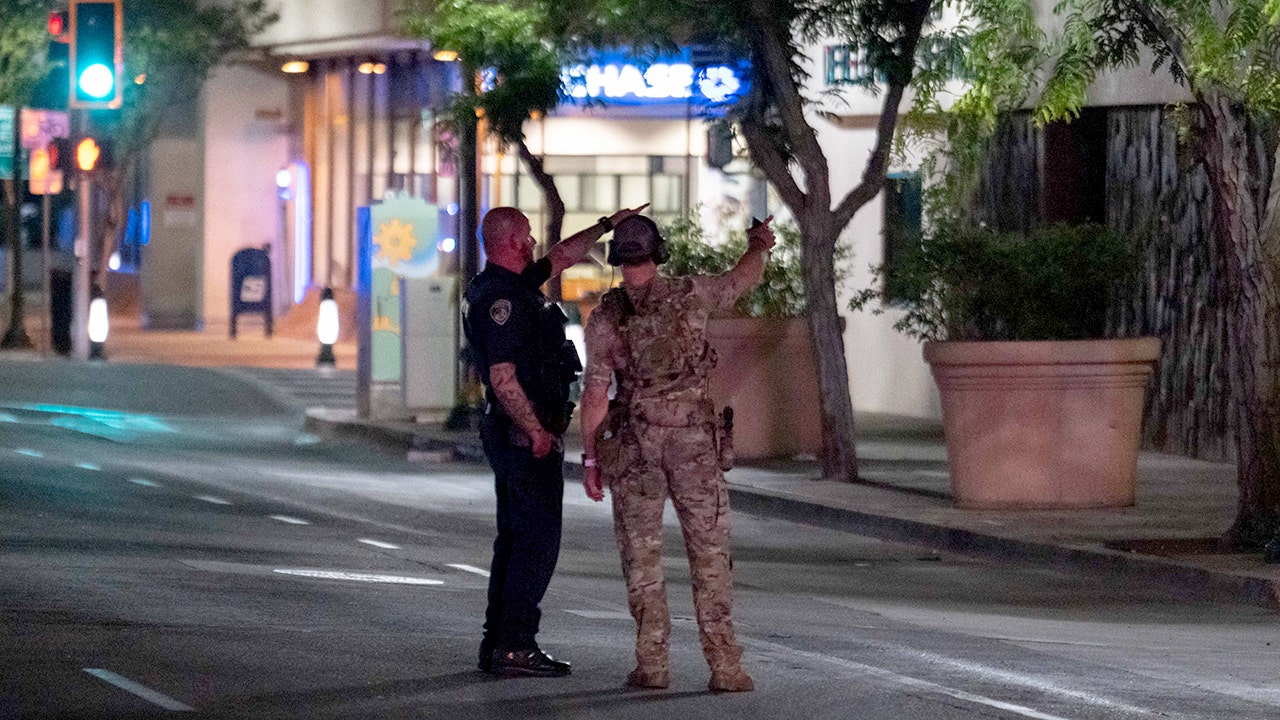
It started as an ordinary, nondescript Tuesday afternoon in Bakersfield, California, where the dry valley air typically keeps the pace of daily life at a predictable, comfortable crawl. At the bustling downtown intersection of Chester Avenue and 17th Street, the Chase Bank building stood as a familiar, sturdy cornerstone of local commerce—a place where everyday citizens walked in to deposit paychecks, chat with friendly tellers, or discuss business loans. But around 1:00 p.m., the fragile veneer of middle-class normalcy was violently shattered. A chilling phone call erupted into the dispatch center of the Bakersfield Police Department, reporting a terrifying bomb threat targeted at the bank. Within minutes, the ambient sounds of city traffic and casual conversations were utterly swallowed by the deafening, urgent wails of arriving sirens. As patrol cars screeched to a halt and officers began cordoning off the busy intersection, the true gravity of the situation rapidly crystallized. This was not a mere hoax or a fleeting scare; an adult male had actively barricaded himself deep within the physical confines of the high-rise structure. Shockingly, he was not alone. Several innocent community members, who had only moments before been going about their mundane lunchtime errands, were now trapped inside with him. In the blink of an eye, a simple trip to the bank had mutated into a claustrophobic nightmare, turning ordinary valley residents into hostages in an unfolding drama that would soon capture the anxious attention of the entire state. The surrounding streets, usually vibrant with pedestrian activity, were quickly transformed into a heavily armed tactical zone, setting the stage for an excruciatingly tense standoff that would stretch long into the dark hours of the night.
Inside the barricaded confines of the Chase Bank, the atmosphere transitioned from confusion to absolute, paralyzing dread as the reality of the situation sank in for the captive community members. Separated from their families, their cell phones likely silenced or confiscated to control communication, these individuals were forced to navigate the unpredictable, volatile whims of an armed, desperate captor claiming to possess explosive devices. The quiet, repetitive hum of the bank’s air conditioning and the sterile glare of fluorescent lights became a psychological prison, wrapping around the hostages as the hours ticked agonizingly by. In situations like this, the human mind struggles to process the sudden stripping away of basic agency, as parents, spouses, and hard-working employees find themselves suspended in a terrifying limbo where every breath, movement, and whispered word carries the potential for life-or-death consequences. They were no longer just names on a bank register or customers in a queue; they were human beings clinging desperately to the hope of survival, forced to listen to the distant, muffled commands of tactical units outside and the erratic pacing of the man holding them captive. Outside the glass walls, families of the hostages gathered behind the yellow police tape on Chester Avenue, their faces etched with a profound, agonizing grief as they stared blankly at the building, praying for any sign of movement or a reassuring text message that might never come. This agonizing disconnect between the silent, imposing exterior of the financial building and the high-pressure cauldron of panic operating just behind its glass doors came to define the initial hours of the crisis, emphasizing the raw, fragile nature of human security in the face of sudden, senseless violence.
For the first responders of the Bakersfield Police Department, the afternoon quickly dissolved into a grueling test of patience, endurance, and extreme psychological discipline, as they pivoted from traditional policing to a delicate battle of minds. Resolving a barricaded subject crisis with hostages requires an intricate, agonizingly slow dance that balances overwhelming tactical presence with soft-spoken, deeply empathetic verbal negotiation. From a mobile command center hastily established just blocks away from the intersection of Chester and 17th, specialized negotiators worked tirelessly to establish and maintain a fragile, continuous line of communication with the suspect. Every word transmitted through the telephone was meticulously weighed, analyzed, and delivered with the singular goal of de-escalating the suspect’s volatile emotional state and preventing a catastrophic outcome. The negotiators on duty carried an immense, almost unfathomable psychological burden; they were acutely aware that a single misstatement, a defensive tone, or a misunderstood phrase could trigger a tragic reaction from a desperate individual who had already crossed a dangerous threshold. Meanwhile, on the asphalt outside, tactical officers clad in heavy body armor stood as silent sentinels, holding their positions for hours on end despite the physical exhaustion settling into their muscles and the mental strain of the unknown. They stared at the bank’s locked doors, knowing that their own lives, as well as the lives of those trapped inside, hung in a precarious balance. These officers, who also had families waiting for them at home, had to suppress their own fears, maintaining absolute focus under the constant, agonizing pressure of a ticking clock, preparing for the worst-case scenario while praying for a peaceful resolution.
As the afternoon transitioned into evening, the scale and complexity of the standoff grew increasingly clear, prompting the Bakersfield Police Department to call for reinforcements from the Federal Bureau of Investigation’s Sacramento field office. The integration of federal assets marked a significant pivot in the operational landscape, introducing a massive, highly specialized array of technological resources, advanced behavioral analysis units, and seasoned hostage negotiators used to handling high-stakes federal crises. The division of labor between the local police and the FBI represented a seamless, albeit incredibly stressful, collaborative effort where egos were cast aside in favor of a singular, life-saving objective. Together, federal agents and local detectives worked feverishly behind the scenes, combing through digital footprints, searching public databases, and interviewing potential acquaintances to construct a comprehensive psychological profile of the suspect. They desperately sought to identify any trigger points, unresolved grievances, or vulnerabilities that negotiators could exploit to build rapport and lower the temperature inside the bank. Step-by-step maps of the Chase Bank building’s architecture were projected onto screens in the mobile command post, allowing SWAT teams from both agencies to run dry-rehearsals of rescue operations, constantly refining their entry points and timing down to the millisecond. This intense, multidisciplinary effort elevated the local crisis to an event of nationwide concern, highlighting the immense, quiet machinery of law enforcement that springs into action to protect municipal communities. Even with all the advanced tactical equipment, thermal imaging, and federal authority at their disposal, the core of the operation remained fundamentally human, relying on the quiet, persuasive power of human voice to pierce through the suspect’s paranoia and keep those inside alive.
The true test of human endurance arrived with the quiet, suffocating cold of the valley night, as hours of grueling silence stretched past midnight and into the early morning of Wednesday. Yet, amidst the rising exhaustion and mounting dread of the surrounding crowd, a flicker of profound hope materialized just after midnight Eastern Time, when the Bakersfield Police Department announced a major, hard-won breakthrough in their high-stakes negotiations. After what felt like an eternity of intense psychological sparring, delicate emotional appeals, and meticulous tactical maneuvering, negotiators successfully secured the release of a second hostage. The moment that terrified individual finally crossed the threshold of the bank, emerging into the crisp night air and the waiting, protective arms of emergency medical personnel, was a moment of overwhelming emotional release for everyone stationed on the cold pavement. For the desperate families waiting behind the police tape, this development was a tangible sign that the negotiators’ words were hitting their mark, offering a glimmer of proof that the suspect was still rational enough to cooperate and make life-affirming concessions. However, this hard-fought victory was bittersweet, serving as a stark, heart-wrenching reminder of the terrifying ordeal still being endured by those who remained trapped behind the bank’s thick glass doors. The newly freed hostage was quickly escorted to a secure, warm location, not only to receive critical medical and psychological evaluation, but also to provide law enforcement with invaluable, firsthand intelligence regarding the suspect’s current state of mind, the exact position of any suspected explosive devices, and the physical and emotional condition of the remaining community members. This dramatic breakthrough underscored the painfully incremental, grueling nature of hostage resolution, where success is measured not in swift, explosive physical breaches, but in the slow, agonizing salvation of one human life at a time.
As Wednesday morning dawned over Bakersfield, casting a cold gray light across the still-blocked intersection of Chester Avenue and 17th Street, the community found itself trapped in an ongoing state of suspended animation. The Bakersfield Police Department had not yet announced a final resolution to the standoff, leaving the city in a state of tense, prayerful waiting as the sun began to rise on a second day of crisis. The physical barricade at the Chase Bank building had become a symbol of a deeper, psychological barricade affecting the entire town, as citizens grappled with the realization of how quickly an ordinary public space could be transformed into a theater of terror. Neighbors hugged neighbors, local businesses offered warm coffee to the exhausted first responders, and a quiet spirit of community solidarity took root amidst the flashing blue and red emergency lights. The unresolved nature of the standoff serves as a sobering reminder of the fragile threads that hold our daily lives together, and the quiet heroism of those who stand in the gap—negotiators, police officers, federal agents, and the hostages themselves—during our darkest hours. As the standoff dragged on, the people of Bakersfield remained united in their hope for a peaceful surrender, holding onto the belief that patience, empathy, and professional resolve would ultimately triumph over chaos, and that the remaining community members would soon be safely reunited with the families who desperately awaited their return. The story of Chester Avenue is not just a police report or a headline; it is a vivid testament to human vulnerability, the exhausting pursuit of peace under pressure, and the resilient spirit of a community refusing to give up on its own.