




The Darling Harbour Serenade: How a 21-Year-Old Student Stepped Out of the Audience and Into the Spotlight of a Live Orchestra
A Saturday Night in Sydney: How a Mundane Evening Transformed into an Extraordinary Musical Ascent
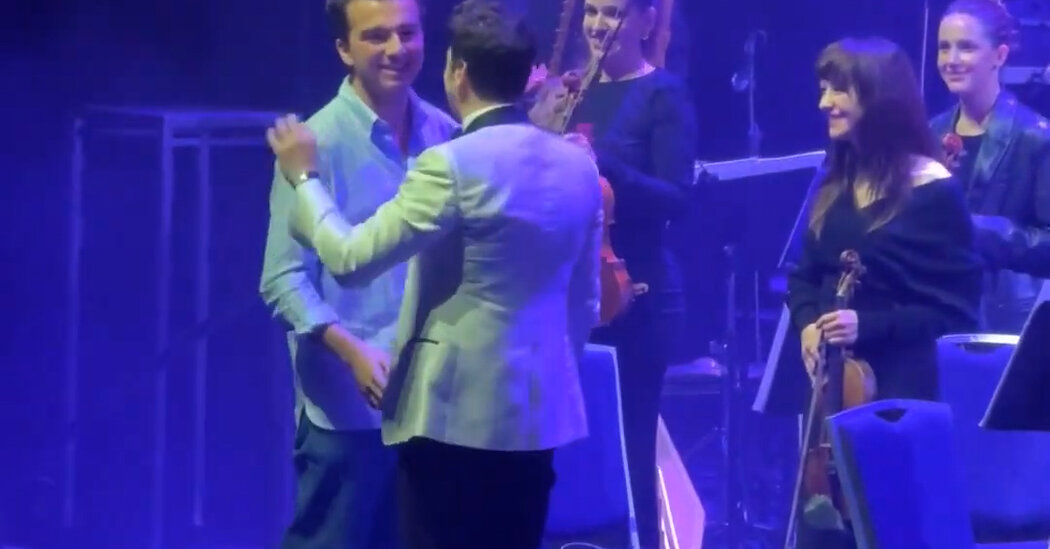
When 21-year-old Sterling Nasa woke up on what he anticipated to be a thoroughly unremarkable Saturday, he had no inkling that before the day was through, he would be standing on a world-class stage performing for an audience of two thousand people. For the most part, his afternoon had progressed with the slow, leisurely rhythm of a typical weekend: he spent several hours helping a close friend shoot a student film, ran a few mundane errands around town, and looked forward to an evening of cinematic indulgence. His destination was the prestigious Darling Harbour Theatre, nestled within the sprawling International Convention Centre in the heart of Sydney, Australia. The event of the evening was a screening of the beloved 2016 musical sensation La La Land, accompanied by a live, fully orchestrated performance of its Academy Award-winning score. Like any other modern musical enthusiast in attendance, Nasa expected to sit comfortably in the dim warmth of the auditorium, letting the cinematic love story of Mia, the aspiring actress, and Sebastian, the ambitious jazz pianist, wash over him. Instead, the boundary between the screen’s fictional pursuit of dreams and Nasa’s physical reality began to blur, initiating an evening that would completely redefine the trajectory of his young life. Reflecting on the whirlwind of overnight fame that followed, Nasa admitted he was still struggling to comprehend the sheer scale of the moment, noting that while he had clearly captured the attention of the internet’s unpredictable algorithm, he had yet to fully rationalize the extraordinary sequence of events that pushed him onto that stage.
+——————————————————————-+
| STERLING NASA’S TIMELINE |
| |
| [ Afternoon ] |
| Helped friend with student film & ran errands in Sydney. |
| |
| [ 8:00 PM ] |
| Arrived at Darling Harbour Theatre to watch “La La Land”. |
| |
| [ Intermission ] |
| Show paused. Composer Justin Hurwitz asked for a volunteer. |
| |
| [ 8:45 PM – End ] |
| Stepped onstage, read the sheet music, and played live. |
| Improvised keyboard solo on “Start a Fire”. |
+——————————————————————-+
The Intermission of Destiny: When a Live Film Orchestration Faces an Unprecedented Crisis
The unexpected drama began to unfold during the scheduled intermission, right after the conclusion of the film’s first half. For the uninitiated, a “film in concert” is an incredibly complex production that demands absolute, down-to-the-millisecond precision. The live musicians must sync perfectly with the moving images projected above them, a feat of temporal gymnastics led by the conductor’s baton. On this particular evening, the conductor was none other than Justin Hurwitz, the genius composer behind La La Land’s iconic soundtrack. As the minutes of the intermission ticked past their expected limit, a palpable sense of confusion began to ripple through the 2,000-seat theater. The house lights remained down, but the orchestra did not resume their positions. Suddenly, Hurwitz himself walked back onto the stage, not to raise his conductor’s baton, but to address the audience directly with an urgent, almost desperate appeal. He explained that one of the show’s key keyboardists had suddenly fallen seriously ill and was forced to head home immediately. To ensure the performance could continue without losing the grand, immersive texture of the live orchestration, Hurwitz asked the crowd a question that felt like the musical equivalent of looking for a doctor mid-flight: “Is anybody like an amazing sight reader?” The stakes of his request were monumental; the volunteer would have to instantly step into a professional ensemble, play highly complex jazz and classical arrangements, and perform under the absolute pressure of live synchronization with zero rehearsal time.
The Bold Push of Friendship: From a Safe Seat to the Terrifying Glare of the Spotlight
In that breathless moment of silence, a few hesitant hands emerged from the dark, but none belonged to someone with the immediate backing of an enthusiastic champion. Sitting beside Nasa in the crowd was Scarlett Pearce, the classmate and friend with whom Nasa had spent the afternoon working on the student film. Realizing that this was a moment of destiny for her friend—whose deep, albeit private, musical talents she knew intimately—Pearce bypassed all hesitation and took decisive, electrifying charge of the situation. Describing her actions later, Pearce jokingly characterized her mindset as that of a “maniac,” recalling how she began shouting at the top of her lungs into the quiet auditorium that Nasa was the exact musician the orchestra was searching for. Nasa, paralyzed by a mixture of shock and stage fright, tentatively gestured with uncertainty, trying to process the sheer audacity of the situation. Refusing to let her friend miss a truly monumental opportunity, the 21-year-old Pearce grabbed Nasa’s hand and forced it high into the air, assuring him that though he might hold a temporary grudge against her in that moment of terror, he would undoubtedly thank her ten minutes down the road. Amid the rising cheers of the surrounding crowd, Nasa slowly stood up from his seat, leaving behind the safety of the dark auditorium to descend the stairs toward the brilliantly lit stage where Hurwitz and the awaiting orchestra stood. His only conscious thought as he walked down the aisle was a simple, grounding hope: to not trip and fall on his way down.
Under the Baton of a Master: Conquering the Keys and Finding the Rhythm Under Pressure
“The Request and the Response”
┌────────────────────────────────────────────────────────────────────────┐
│ Justin Hurwitz: “Is anybody like an amazing sight reader?” │
├────────────────────────────────────────────────────────────────────────┤
│ Scarlett Pearce: [Shouting] “He’s the man for the job!” │
├────────────────────────────────────────────────────────────────────────┤
│ Sterling Nasa: [To himself] “Just try not to fall down the stairs.” │
└────────────────────────────────────────────────────────────────────────┘
The moment Nasa’s feet touched the stage floor, the reality of the high-stakes situation locked in with clinical speed. Hurwitz quickly asked for his name, offered a warm but hurried welcome, and immediately handed him over to the production’s keyboard technician. The backstage briefing was incredibly brief—amounting to less than thirty seconds of rapid instruction regarding the keyboard’s layout, patch changes, and monitor levels. Before Nasa could overthink his predicament, he found himself seated at the instrument, facing a massive binder of complex sheet music, with Hurwitz raising his baton to cue the start of the film’s second half. The initial ten minutes of the performance were an intense test of nerves, characterized by the physical struggle of having to play intricate arrangements while manually flipping his own sheet music pages without losing his place. Yet, as the melodies began to flow, the paralyzing anxiety that had gripped Nasa during his descent to the stage started to evaporate, replaced by a deep state of creative focus. He realized that this was a rare, magical alignment of circumstances that most musicians only dream of, and that he had no choice but to throw himself entirely into the performance. The defining highlight of his impromptu set came during “Start a Fire,” the upbeat track performed in the film by John Legend’s character. When the score called for a keyboard solo, Nasa chose not to simply read the notes on the page, but to confidently improvise. The bold, soulful keyboard solo resonated beautifully through the hall, sparking an immediate roar of cheers and applause from the ecstatic audience.
The Algorithm of Awe: How a Sudden Triumph Captured the Hearts of the Digital Age
              ┌─────────────────────────────┐
              │   The Live Performance      │
              │   at Darling Harbour        │
              └──────────────┬──────────────┘
                             │ Recorded by
                             │ onlookers
                             ▼
              ┌─────────────────────────────┐
              │    Viral Social Media       │
              │        Sensation            │
              └──────────────┬──────────────┘
                             │ Algorithmic
                             │ distribution
                             ▼
              ┌─────────────────────────────┐
              │  Global Recognition & High  │
              │  Self-Confidence Boost      │
              └─────────────────────────────┘
In the hours and days that followed the final curtain call, Nasa’s spontaneous triumph quickly transitioned from an unforgettable local theater event to a viral sensation across global social media networks. Videos of his unexpected walk to the stage, combined with recordings of his incredible keyboard solo, began circulating widely, gathering thousands of views and sparking lively conversations across the internet. The digital response highlighted a collective human fascination with the “underdog hero” narrative—the classic story of an ordinary person stepping out of anonymity to achieve extraordinary heights when called upon. In an era where much of the media we consume is heavily produced and meticulously staged, the raw authenticity of Nasa’s performance resonated deeply with viewers worldwide. Commentators praised not only his technical skill and sight-reading ability under extreme pressure, but also the brave, unwavering confidence of his friend, Scarlett Pearce, whose rapid-fire intervention made the entire moment possible. For Nasa, watching himself go viral was a disorienting, dreamlike experience that contrasted sharply with his quiet life as a student in Sydney. Yet, the internet’s warm embrace of his performance provided a powerful validation of his musicianship, proving that his talent could captivate not just an auditorium of local music lovers, but a global digital community of complete strangers.
Chasing the Dream: How a Chance Encounter Mirrored the Very Magic of La La Land
For Sterling Nasa, this remarkable brush with sudden fame arrived at a pivotal turning point in his life. As a final-year student at the University of Sydney preparing to graduate with a degree in international relations, Nasa stood at the classic threshold of young adulthood, contemplating a professional path defined by diplomacy, policy, and global affairs. Yet, his deepest, most enduring passion had always been music—a creative world he had loved for years but had hesitated to pursue as a full-time career due to the typical uncertainties of the creative industries. In an incredible twist of poetic irony, the events of that Saturday night perfectly mirrored the core theme of La La Land itself: a story dedicated to the dreamers who dare to take risks, chase their passions, and embrace the beautiful chaos of artistic pursuit. Holding his own alongside an Academy Award-winning composer and an elite professional orchestra proved to Nasa that his musical aspirations were not just a distant dream, but a tangible, achievable reality. The experience has given him the profound confidence to seriously consider redirection, encouraging him to step away from a conventional career path to follow his musical ambitions. As Nasa looks toward the future, his unexpected debut at the Darling Harbour Theatre serves as a powerful reminder that sometimes, the most life-changing opportunities arrive completely unannounced—requiring only the courage to say yes, step onto the stage, and play.
Key Summary of the Event
| Detail | Information |
|---|---|
| Voluntary Musician | Sterling Nasa (21, University of Sydney Student) |
| Supporting Friend | Scarlett Pearce (21, pushed Nasa to raise his hand) |
| Composer / Conductor | Justin Hurwitz (Two-time Academy Award Winner) |
| Location | Darling Harbour Theatre, Sydney, Australia |
| Film Featured | La La Land (2016 live-to-screen concert) |
| Key Song Improvised | “Start a Fire” (Originally performed by John Legend) |
| Result | Standout performance, loud audience cheers, and viral social media acclaim |