





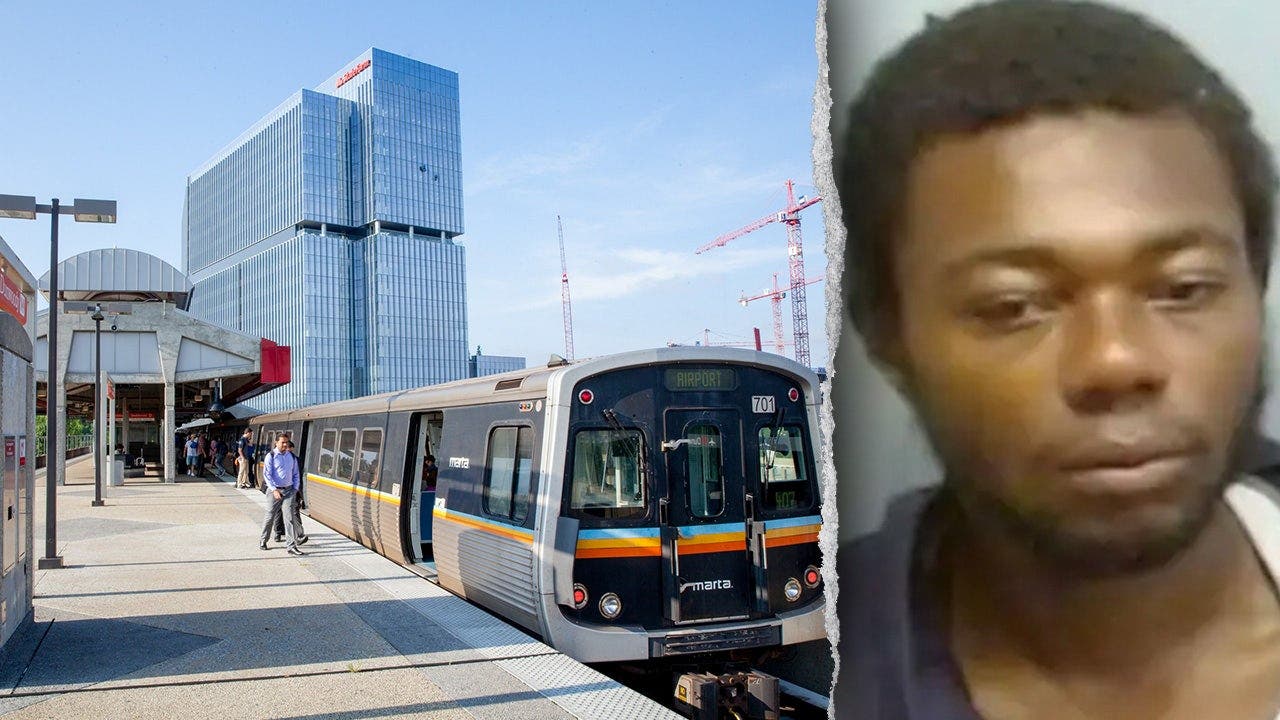
The tragedy that unfolded on a Saturday morning in late May aboard an Atlanta commuter train did not merely claim a life; it shattered the fragile, unspoken covenant of safety that millions of daily transit riders take for granted. Margaret Swan was a sixty-six-year-old great-grandmother whose life was anchored in her family and community. To those who loved her, she was a warm, irreplaceable presence, a matriarch who had earned the right to grow old in the peace of her retirement years. On May 30, at approximately 11:21 a.m., she boarded a northbound Metropolitan Atlanta Rapid Transit Authority (MARTA) train at the Lakewood station, heading toward Oakland City. She sat quietly and alone in Train Car 134, navigating a routine weekend journey that should have been entirely unremarkable. Instead, her ordinary morning became the setting for an acts of sudden, unfathomable violence that has sent shockwaves through the city of Atlanta and caught the attention of federal prosecutors determined to seek the highest measures of justice.
The terrifying sequence of events was captured in chilling detail by onboard transit surveillance cameras, which documented a rapid escalation from peaceful commute to horror. Minutes after Margaret Swan boarded, twenty-five-year-old John Elijah Matthews of Decatur, Georgia, stepped onto the very same train car. Dressed in an orange graphic T-shirt, dark gray pants, and slides, Matthews initially appeared to be just another passenger. However, the silent footage reveals a predatory shifting of posture. At 11:25 a.m., Matthews walked over to the side of the train where Swan was seated, standing mere inches away from her. Within seconds, without a word of provocation or any prior interaction, he reached into his pocket, pulled out a folding knife, and opened it. He grabbed the unsuspecting great-grandmother by the head and sliced her throat. Though Swan bravely fought back, screaming and attempting to escape her seat, her attacker held her by the arm and stabbed her approximately eighteen to twenty times in the chest and neck. The sheer brutality of the attack, occurring within a moving train car where escape was physically impossible, left the victim utterly defenseless in her final moments.
Inside the train compartment, panic erupted among the other passengers who witnessed the sheer, unprovoked savagery of the assault. Desperate to escape the violence, commuters fled to the far ends of the train car and frantically called for emergency assistance, completely helpless as Matthews threw the mortally wounded woman to the floor and stood over her body until the train finally pulled into the Oakland City Station at 11:27 a.m. As the train doors opened, Matthews stepped out onto the concrete platform, still holding the bloody folding knife in his right hand. The chaotic scene immediately drew the attention of transit security and commuters who pointed frantically toward the suspect. Armed with the warnings of terrified bystanders, MARTA Police Officer Bolton confronted Matthews on the platform. Despite orders to surrender, Matthews refused to comply, prompting a tense standoff that ended only when backup arrived to assist in wrestling him into custody. Though first responders arrived on the scene within minutes to administer emergency medical aid, the severity of Swan’s injuries was too great, and she was pronounced dead on the platform, leaving her family and the community to mourn an senseless loss.
In the wake of his arrest, details began to emerge about John Elijah Matthews, painting a picture of a young man drifting through the margins of society with no permanent address, no working phone number, and apparently no anchor to the community he terrorized. The complete lack of motive in this attack makes it all the more terrifying for the public; there was no robbery, no prior relationship, and no escalating argument to explain why a twenty-five-year-old man would choose to violently end the life of an elderly woman he had never met. This absence of reason taps into the deepest anxieties of urban commuters, highlighting the frightening reality that anyone can become a target of random violence at any time. For a community already grappled with issues of homelessness, mental health crises, and transit safety, Matthews’ profile of detachment serves as a stark reminder of the vulnerabilities inherent in public spaces. The tragedy has forced a difficult conversation about how public agencies identify and handle individuals who present a threat to public safety before their instability manifests in fatal violence.
Given the extreme cruelty of the attack and its occurrence on a public transport network, the legal system has responded with a level of severity that reflects the gravity of the crime. While Matthews originally faced state-level felony murder charges in Fulton County, federal prosecutors have stepped in to elevate the case to the federal level. John Elijah Matthews is now facing a federal criminal complaint charging him with committing an act of violence using a dangerous weapon with intent to cause death on a mass transportation system. This charge, announced by U.S. Attorney Theodore Hertzberg of the Northern District of Georgia, carries massive legal weight and places the case under the direct oversight of the federal government. Acting Attorney General Todd Blanche is personally tasked with making the determination of whether the government will seek the death penalty if Matthews is convicted. This potential pursuit of capital punishment underscores the federal government’s zero-tolerance policy toward acts of terror and extreme violence committed within the critical infrastructure that keeps American cities moving.
Beyond the courtroom and the legal battles that lie ahead, this tragedy has left a deep emotional scar on the city of Atlanta, forcing a reckoning over the safety of the public transit systems that thousands of working-class residents rely on every single day. As Marlo Graham, the special agent in charge of FBI Atlanta, pointed out, everyone who uses transit to commute, work, or visit family deserves to feel safe and protected from violence. Public transportation is meant to be an equalizer, a shared public utility built on trust, and when that trust is broken by such a horrific event, it fundamentally alters how people move through their daily lives. The memory of Margaret Swan—a beloved great-grandmother who survived decades of life only to have her story cut short on a brief train ride—remains at the heart of this tragedy. Her family’s sudden grief serves as a reminder of the real, human cost of public safety failures, and the city’s demands for accountability are fueled by a collective desire to ensure that no other family has to endure such a heartbreaking loss.