






Tragedy in South Delhi: A Morning of Terror at Flourish Stay B&B
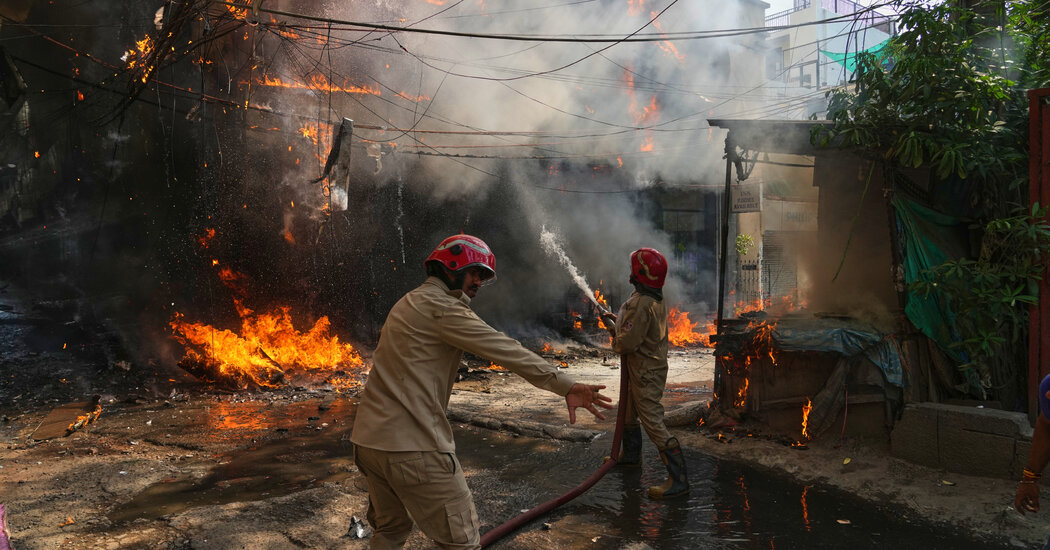
The fragile facade of a quiet Wednesday morning in South Delhi was shattered when a relentless inferno swept through a budget guesthouse in one of the capital’s most congested residential hubs, claiming the lives of at least 21 people and leaving dozens of others fighting for survival in nearby intensive care units. At approximately 8:48 a.m. local time, the Delhi Fire Service received an urgent distress call reporting a rapidly spreading blaze at the Flourish Stay B&B, a multi-story boutique lodge nestled deep within the tightly packed labyrinth of Malviya Nagar. Within minutes of the first sparks, thick, suffocating plumes of black smoke billowed from the building’s windows, choking the narrow alleyways and triggering widespread panic among residents who watched the disaster unfold in real time. Although eight fire engines were scrambled to the scene alongside local police units and emergency medical technicians, the rapid escalation of the fire outpaced initial containment efforts, trapping dozens of unsuspecting guests in their rooms as toxic fumes quickly filled the corridors. First responders put their lives on the line to launch a desperate rescue operation, ultimately using extension ladders and breaking through reinforced concrete barriers to pull more than 40 survivors out of the burning structure. While the immediate flames have since been extinguished and the survivors distributed among various local medical facilities, the exact origin of the catastrophic blaze remains shrouded in mystery, prompting municipal authorities and forensic investigators to launch a comprehensive joint inquiry into the cause of this devastating loss of life.
Anatomy of a Crisis: Eyewitness Accounts and the Desperate Window Rescue
For the tight-knit community of Malviya Nagar, the horror of the morning was marked by desperate, improvised rescue attempts before government aid could fully navigate the neighborhood’s gridlocked streets. Istkhar Ahmad, a 49-year-old local driver who has called this specific corner of South Delhi home for a quarter of a century, stood amongst a crowd of helpless onlookers at 8:30 a.m. as the first signs of disaster emerged, reporting what appeared to be a relatively small kitchen fire on the lower level of the guesthouse that went dangerously unchecked. According to Ahmad, the municipal emergency response was severely hampered, taking a critical thirty minutes to arrive on-scene, a delay that allowed the localized kitchen fire to mutate into an all-consuming firestorm that engulfed the entire multi-tiered building and cut off the primary escape routes. As the fire climbed the structure’s interior staircase, trapped residents crowded upper-story windows, screaming for help and desperately attempting to smash the durable window panes with whatever heavy objects they could find in their rooms. Realizing that time was running out, Ahmad and several other brave bystanders hurried to gather mattresses, heavy blankets, and thick quilts from surrounding homes, stretching them out on the asphalt below in a raw, frantic bid to cushion the impact of those forced to leap from the upper floors. Ahmad estimated that ten to twelve desperate individuals made the terrifying jump into the makeshift safety nets, observing that an overwhelming majority of those leaping for their lives—and indeed those residing in the building—were of Nigerian descent, shedding light on the tragic human demographic at the heart of this urban catastrophe.
The Sanctuary of Healing Shadows: India’s Vulnerable Medical Tourism Sector
The high concentration of Nigerian, Afghan, and Uzbek nationals among the victims of the Flourish Stay B&B fire highlights a highly profitable yet critically under-regulated sector of the Indian economy: the nation’s booming medical tourism industry. Over the past two decades, India has emerged as a premier global hub for affordable, high-quality healthcare, attracting hundreds of thousands of patients annually from across Africa, Central Asia, and the Middle East who seek life-saving treatments that are either prohibitively expensive or entirely unavailable in their home countries. Because major private hospitals boasting cutting-edge cardiac, oncology, and orthopedic facilities line the arterial roads surrounding Malviya Nagar, the surrounding quiet residential blocks have organically transformed into dense clusters of informal, budget-friendly guesthouses designed to cater specifically to foreign recuperating patients and their families. These international medical tourists, often operating on tight budgets and navigating complex medical regimens, find themselves residing in converted residential buildings like the Flourish Stay B&B, which yield affordable long-term lodging but frequently lack any sembalance of robust international safety standards. The horrific irony of foreign nationals escaping medical hardship in their homelands only to perish in a preventable hospitality accident in Delhi underscores the dark underbelly of this multi-billion dollar trade, where the pursuit of world-class healing is tragically compromised by third-world infrastructure and a lack of residential safety oversight.
Urban Congestion and Infrastructure: The Death Traps of Delhi’s Narrow Bylanes
The disaster at Malviya Nagar exposes the structural vulnerabilities that define many of New Delhi’s rapidly urbanized residential colonies, where unregulated architectural expansion directly compromises public safety. Like many neighborhoods in the capital, Malviya Nagar has undergone a dramatic transformation from a planned post-partition settlement into a chaotic, multi-story commercial and residential maze, characterized by narrow, winding lanes flanked by overhead webs of high-voltage electrical cabling. These narrow corridors, often less than ten feet wide, are perpetually choked with parked vehicles, commercial delivery carts, and local foot traffic, making them almost entirely impassable for modern, heavy-duty emergency response vehicles like fire engines and large ambulances. When the call for the Flourish Stay B&B fire was received, the first responding fire engines were forced to park blocks away, forcing emergency personnel to drag heavy, high-pressure water hoses over immense distances through winding alleys while precious minutes ticked away. Furthermore, many of these converted guesthouses maximize their square footage by building outwards over public rights-of-way, completely eliminating the structural setback distances necessary to prevent fire from jumping between buildings, and inadvertently creating vertical wind tunnels that accelerate the spread of smoke and heat, transforming what should have been a containable building fire into an inescapable community tragedy.
A Pattern of Negligence: Capital Disasters and the Failure of Municipal Oversight
Wednesday’s deadly blaze is not a solitary anomaly, but rather the latest installment in a troubling pattern of fatal municipal accidents that point to systemic governance failures and lax regulatory enforcement across India’s capital region. Just weeks prior, on May 30, a fatal building collapse less than a mile away from the site of the Flourish Stay B&B claimed the lives of six people, highlighting the fragile structural integrity of properties throughout South Delhi that have been illegally modified, expanded, or converted for commercial utility. Municipal corporations in Delhi have long struggled to enforce building codes, with property owners routinely bypassing critical zoning laws, ignoring fire safety guidelines, and operating commercial guesthouses without obtaining valid Fire No-Objection Certificates (NOCs) or installing basic safety features such as sprinkler systems, fire escapes, and functioning smoke detectors. This systemic culture of evasion is frequently enabled by administrative corruption, wherein under-the-table payouts protect non-compliant commercial properties from structural audits and closure orders. Until the Municipal Corporation of Delhi and local regulatory authorities transition from reactive, post-disaster finger-pointing to proactive, systemic enforcement of building and fire safety codes, the city’s built environment will remain a perilous landscape of unchecked hazards, where commercial profit is consistently prioritized over the lives of everyday citizens and visiting guests.
The Long Road to Accountability: Legal Inquiries, Reform, and the Global Impact
In the somber aftermath of the Malviya Nagar disaster, the focus has shifted toward building a comprehensive pathway toward accountability, diplomatic resolution, and deep structural reform within the capital’s hospitality sector. Local law enforcement authorities have registered an initial case of criminal negligence causing death against the owners and operators of the Flourish Stay B&B, with forensic teams diligently sifting through the charred remains to determine whether illegal gas connections, faulty electrical wiring, or highly flammable building materials exacerbated the rapid spread of the fire. At the diplomatic level, the high number of foreign casualties—particularly Nigerian medical tourists—has put pressure on India’s Ministry of External Affairs to coordinate closely with foreign embassies to facilitate the repatriation of remains and provide urgent medical updates to grieving families thousands of miles away. As New Delhi seeks to maintain its status as a safe, welcoming global destination for international healthcare seekers, this tragedy serves as a stark, urgent call to action for the Indian government to enforce strict licensing laws and shut down substandard hostels that fail to guarantee the physical security of their occupants. Only by dismantling the corrupt practices that allow these hazardous structures to exist, and by treating fire safety as a fundamental, non-negotiable human right, can Delhi hope to prevent the next inevitable tragedy and honor the memory of those who lost their lives on this dark Wednesday morning.