





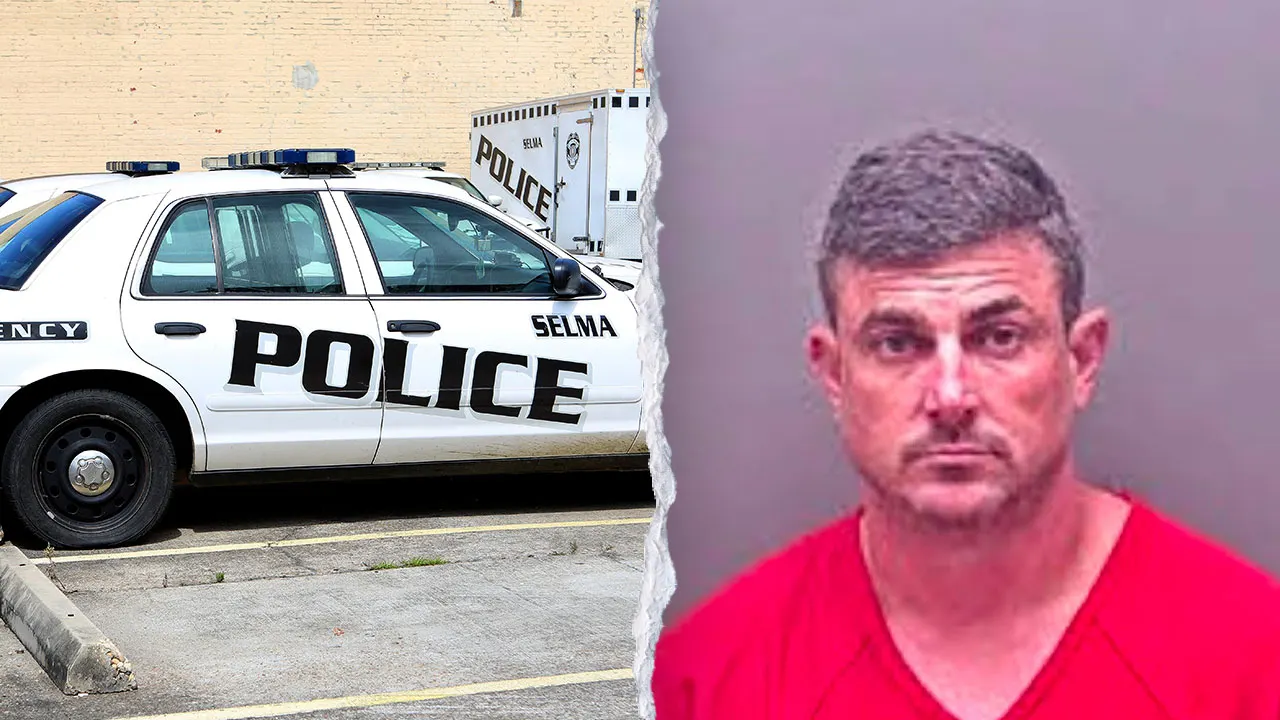
In the quiet, sun-drenched coastal community of Spanish Fort, Alabama, where the streets are lined with oak trees and the pace of life seems a world away from the gritty realities of crime, a devastating betrayal has shattered the illusion of safety. The horrific case revolves around Kent Blacklidge, a 43-year-old special agent for Homeland Security Investigations (HSI) whose entire professional existence was defined by the pursuit of those who prey on the most innocent members of society. Yet, in a dark and chilling inversion of his sworn duty, Blacklidge now stands accused of becoming the very monster he was paid to hunt. The Baldwin County grand jury has handed down a sweeping indictment against him, charging him with an appalling spectrum of sexual offenses against a juvenile girl, including first-degree rape, incest, and multiple counts of sodomy and sexual abuse. The news has sent shockwaves through the community, law enforcement circles, and victim advocacy groups alike, forcing a stark confrontation with the unsettling reality that predators can hide behind badges and credentials, embedding themselves within the very institutions designed to protect children from such abuse.
The formal charges laid out in the indictment paint a grim picture of a prolonged and deeply disturbing pattern of abuse. The legal document accuses Blacklidge of one count of first-degree rape, one count of second-degree rape, one count of first-degree sodomy, one count of second-degree sodomy, two separate counts of first-degree sexual abuse, two separate counts of second-degree sexual abuse, and a single count of incest. The breadth of these charges indicates a systematic and grave violation of a trust that should be sacred, occurring over a period that investigators have not fully disclosed to the public. The investigation into Blacklidge began on January 11, when the Spanish Fort Police Department received a report alleging the sexual abuse of a juvenile female. Realizing the gravity and sensitivity of the situation, authorities acted swiftly, placing the veteran federal agent on administrative leave almost immediately after the initial report surfaced. The investigation continued quietly for months, building a case strong enough to present to a grand jury, which ultimately found probable cause to indict. It was only on September 5 that Blacklidge, having been contacted by investigators through his legal counsel, made the decision to turn himself in, marking the official end of his tenure as an active federal officer and the beginning of his personal legal battle against a mountain of damning evidence.
Central to this narrative is the unimaginable courage of the victim—a juvenile girl who found the strength to step forward and break the silence that so often traps victims of abuse, especially when the perpetrator is a figure of authority. The psychological barriers to reporting such crimes are monumental; victims often grapple with fear, shame, self-blame, and the terrifying prospect of not being believed, particularly when the accused is a well-regarded federal agent who has dedicated his career to investigating cases just like this. Spanish Fort Police Chief John Barber recognized this profound act of bravery, offering a statement that served as both a commendation and a stark acknowledgment of the trauma involved. “It takes an unbelievable amount of courage and strength for a victim of these types of crimes to come forward,” Barber said, his voice carrying the weight of a department that sees the aftermath of such brutality far too often. “And I commend our victim for having that resolve.” This statement highlights not just the procedural success of the investigation, but the human cost at its center. The victim’s willingness to enter the grueling legal process, face her abuser in court, and relive the horrors she endured is a testament to human resilience—even as it underscores the devastating impact that Blacklidge’s alleged actions have had on a young life that should have been filled with innocence and security.
The betrayal is felt most acutely by the institutions that trusted Blacklidge and by the legal professionals tasked with bringing him to justice. Because of the complex web of his professional relationships, the Baldwin County District Attorney’s Office made a critical decision to recuse itself from the case, citing a conflict of interest given that Blacklidge was a witness in other cases the office was handling. This recusal paved the way for Alabama Attorney General Steve Marshall’s office to step in and take over the prosecution—a move that signals the case’s high profile and the intricate legal maneuvering required to maintain objectivity. In a press conference, Marshall articulated the profound sense of outrage and disappointment that rippled through the highest levels of state law enforcement. The allegations are particularly aggravating because Blacklidge’s duties with HSI involved actively investigating child exploitation cases and serving as an educator to the public about the dangers of crimes against children. “He was directly involved in child exploitation cases,” Marshall stated, the disgust palpable in his tone. “It’s why it is so profoundly disappointing and frankly disgusting to stand here today and tell you that we’ve charged him with facts consistent with what his professional responsibility was.” Marshall’s words underscore a secondary crime: the violation of the public trust and the exploitation of insider knowledge to allegedly commit and conceal the very acts he was trained to detect.
As Blacklidge navigates the pre-trial phase, the legal system is ensuring that his power and resources do not allow him to evade justice. While he has not yet been granted bond—and authorities have not confirmed whether he is currently detained—Marshall’s office has outlined strict conditions that would be imposed should he post bond. These conditions include mandatory electronic monitoring, home confinement, and a comprehensive prohibition on contacting the alleged victim or anyone under the age of 18. Such stringent terms reflect the serious flight risk and the danger he might still pose to minors, emphasizing that his alleged predatory behavior does not operate on a temporary switch. Authorities have stated that there is currently one known juvenile victim and no indication of additional victims, though the investigation remains open. Chief Barber has declined to delve into further evidentiary details, respecting the integrity of the ongoing case. Meanwhile, a spokesperson for Homeland Security Investigations has remained silent, declining to comment on the case while the legal proceedings are active. Blacklidge’s career is unquestionably over, but the legal process will now determine the rest of his life, likely resulting in a lengthy sentence in state prison if he is convicted on the multitude of charges he faces.
Ultimately, this case serves as a chilling reminder that the line between protector and predator is not always clear-cut, and that child abuse can lurk in the most unexpected places—inside the homes of law enforcement officers, within the ranks of federal agencies, and behind the facade of public service. The narrative that has unfolded in Baldwin County is not just a story of one man’s downfall, but a cautionary tale about the limits of institutional trust and the necessity of believing victims when they speak out. It forces a recalibration of how society views those who hold the badge; while the vast majority of officers are honorable, the potential for abuse of power remains a persistent threat that necessitates constant vigilance. For the victim, the long road to healing has just begun, but her courage has already redefined the trajectory of her life from one of silent suffering to one of empowered advocacy. As the case moves through the Alabama court system, the eyes of the nation are watching to see if justice will be served. It is a fragile hope, but within the darkness of this betrayal, there is a glimmer of light: a child found her voice, law enforcement acted swiftly to remove a malignancy from their ranks, and the legal system is moving toward accountability. The legacy of this case must be a renewed commitment to screening, oversight, and the unyielding support of survivors, ensuring that no other child has to endure the nightmare that this young victim has survived.