



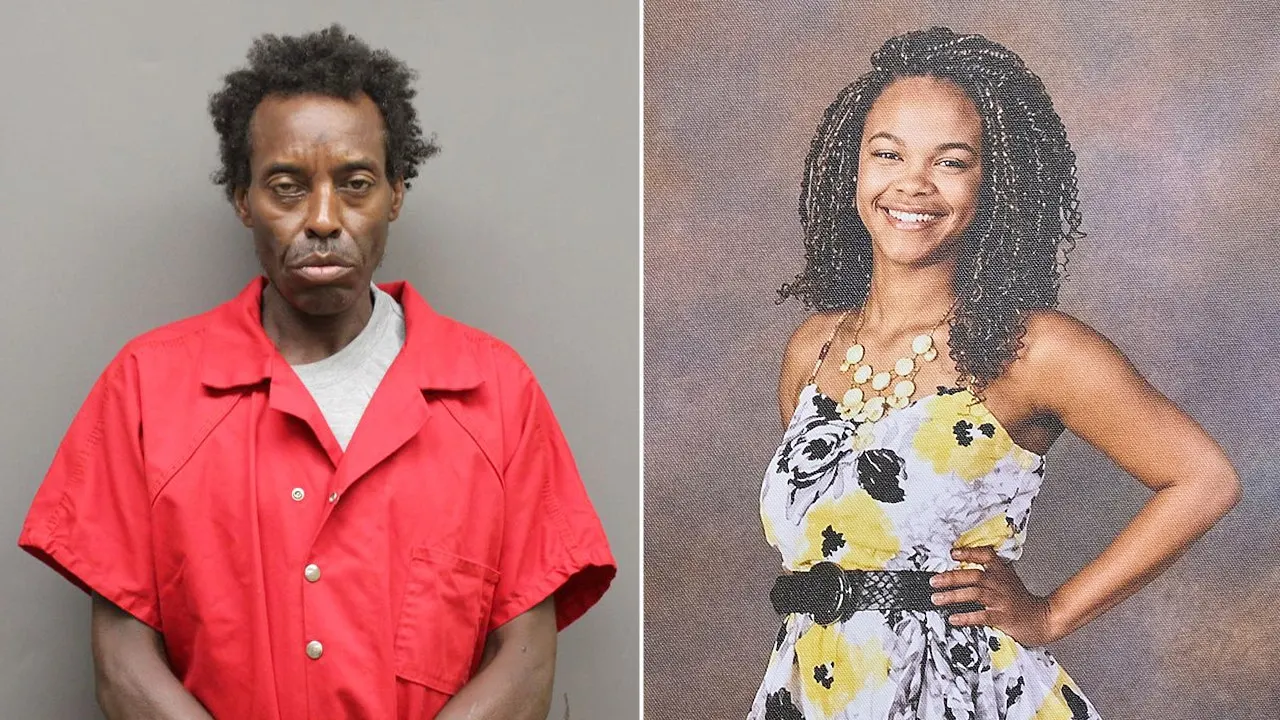
Mississippi authorities have made an arrest in a case that has haunted a family, unsettled a city, and drawn intense national attention. Jarques Ratliff, a 51-year-old Jackson man, was taken into custody on a murder charge in the death of Tasia Fortune, a 29-year-old Black mother of four whose body was found hanging from a tree behind an abandoned home in Jackson on Aug. 3. For weeks, the case had been wrapped in a painful and familiar uncertainty, especially in a state with a deep and violent history of racialized terror. Relatives, activists, and public figures had demanded answers, and online speculation had raced ahead of official facts. But law enforcement officials announced on Saturday that the investigation had reached a critical turning point: the Mississippi State Medical Examiner’s Office had officially classified Fortune’s death as a homicide late Thursday, clearing the way for arrest warrants. Jackson Police Chief RaShall Brackney said at a news conference that Ratliff was arrested without incident while walking along Capitol Street in Jackson, shortly after search warrants were executed at related properties. Brackney emphasized that the arrest was a significant breakthrough but stressed that the investigation was far from over, with additional arrest warrants expected as detectives continue to follow leads. For Fortune’s family, the arrest was a moment of relief and raw emotion, but it also opened old wounds. She was more than a headline: a daughter, a mother, a woman who had faced hard times and was working to rebuild her life. The weeks before the arrest had been agonizing for those who loved her, as they waited for authorities to determine what happened and for someone to be held accountable. Now, with a suspect in custody, the focus shifts to the questions that remain: what exactly led to Fortune’s death, what role Ratliff is accused of playing, and why the case had to move through so many layers of investigation before charges could be filed.
The investigation itself was painstaking and methodical. After Fortune’s body was discovered in the backyard of a vacant property in the 500 block of Road of Remembrance in Jackson, investigators logged hundreds of hours, interviewed nearly 15 individuals, and reviewed physical evidence to build a case. But formal charges could not be pursued until the medical examiner’s office formally ruled the death a homicide, a critical legal step that came only after weeks of forensic analysis. Chief Brackney acknowledged the immense public interest in the case and the emotional weight of its broader context. “We understand that this case has received media attention from across the globe and across the community. We understand the questions and the desire for answers given Mississippi’s history,” she said. “We understand this case is being viewed through a broader lens – a global lens – and we do not dismiss those concerns. We are taking them seriously. At the same time, we do have a responsibility to make sure that what we say publicly is supported by our evidence and the facts.” Her words were carefully chosen, reflecting the delicate balance between respecting community fears and maintaining the integrity of a criminal investigation. Brackney also moved to correct misinformation that had circulated online, stating plainly that law enforcement had never officially designated any person of interest before Ratliff’s arrest. That clarification pushed back on social media reports claiming that a 65-year-old man had previously been identified as a suspect. The investigation’s slow pace, while frustrating to the public, was necessary to ensure that the evidence collected would hold up in court. Every search warrant, every interview, and every forensic test was part of a larger effort to build a case capable of withstanding legal scrutiny. Authorities knew that any misstep could jeopardize the prosecution, and they urged patience even as tensions ran high.
The case had also become a flashpoint in a broader national conversation about race, violence, and justice. Rep. Alexandria Ocasio-Cortez, D-N.Y., had warned last week of “racial terror” and “widespread modern-day lynchings” in the United States, joining dozens of Democrats in demanding that the Department of Justice investigate the hanging deaths of Black Americans. Her comments ignited a fierce debate online, with some embracing the framing of Fortune’s death as a potential racial killing, while others urged caution and pointed to the emerging facts of the case. As more information came to light, some observers noted that the direction of the investigation appeared to tell a different story than the lynching narrative that had gained traction in some corners of the internet. The arrest of a Black suspect with a prior personal connection to Fortune complicated simple explanations and underscored the danger of drawing conclusions before all evidence was known. Still, the concern was understandable. In Mississippi, memories of racial violence are not distant history, and the image of a Black woman found hanging from a tree inevitably evoked painful associations. Community members expressed both hope and skepticism, with many saying they wanted justice for Fortune but also wanted to be sure that the investigation was thorough and transparent. Chief Brackney’s repeated emphasis on evidence over speculation was an attempt to walk that line, reassuring the public that the department would not let the case be decided by pressure or prejudice. The political attention, meanwhile, placed the local investigation under a microscope, with every development scrutinized and every announcement weighed for deeper meaning. For law enforcement, that meant operating with extraordinary care, knowing that their work would be examined not just in a courtroom but in the court of public opinion.
Behind the headlines was a life that had known both promise and struggle. Tasia Fortune grew up in Kentucky, where she was known as a bright and determined young woman. She skipped her junior year of high school, a sign of her academic abilities, and was a standout cross-country runner whose talent and discipline earned admiration. According to family members and an online obituary published in Kentucky, she was deeply rooted in her religious faith, which guided her through difficult seasons. A decade ago, she relocated to Jackson, Mississippi, carrying hopes of a new beginning. But life in Jackson was not always kind. Her mother, Christy Spivey, told reporters that Fortune had experienced homelessness in recent years, a painful reality that her family did not fully understand until after her death. Yet even in the midst of that instability, Fortune was not without ambition. She had been actively working to launch a cleaning business, saving money and making plans to stabilize her life. She wanted to build something for herself and her four children. Those dreams ended abruptly on Aug. 3, when her body was found behind an abandoned property in a residential area of Jackson. For her mother, the pain was unbearable, but the official homicide ruling confirmed what her heart had told her all along. Spivey said police promptly notified the family of the ruling and Ratliff’s arrest on Friday. She expressed gratitude for the work of law enforcement and reiterated her firm belief that her daughter did not die by suicide. “She would never take her own life,” Spivey said. It was a mother’s conviction, rooted in years of knowing her child’s strength and spirit, and it gave her a measure of hope that the truth would finally be told.
Ratliff, the man now charged with Fortune’s murder, is a Black Jackson resident who, according to authorities, had a prior personal connection with Fortune. The exact nature of that connection has not been publicly detailed, and police have not yet described the specific physical evidence linking Ratliff to the scene. What is known is that he was taken into custody on a murder charge and booked into the Hinds County Detention Center. According to Mississippi State Defender André de Gruy, Ratliff was scheduled to make his initial appearance in Jackson Municipal Court no later than Monday morning, where formal charges would be read and bond conditions set. The fact that the suspect is also Black further complicated the narrative that some had constructed around the case, reminding observers that violence within communities can take many forms and is not always defined by race alone. Still, the arrest did not end the investigation. Chief Brackney made clear that detectives were continuing to follow leads and that additional arrest warrants were expected. That suggests that Ratliff may not have acted alone, or that other individuals may face charges related to the case. The public, which had followed every twist and turn, was left to wait once again as the legal process moved forward. For those closest to Fortune, the arrest was an important step, but it was only one step. They still wanted answers to the deeper questions: why was Fortune taken from them, and how could such a tragedy have been prevented? The justice system, they hoped, would provide at least some closure, even as their grief remained fresh.
As the case moves through the courts, the broader meaning of Fortune’s death continues to resonate. Her story is not just a legal case but a human tragedy, one that intersects with issues of homelessness, poverty, family, and faith. It is also a reminder of how quickly a single death can become a symbol, especially in a country still wrestling with the legacy of racial injustice. But symbols are made of real people, and behind every narrative is a woman who laughed, struggled, loved, and dreamed. Tasia Fortune was a mother of four, a daughter who made her mother proud, a runner who pushed through pain, a woman seeking stability in a world that offered little certainty. Her death now rests in the hands of the criminal justice system, and the commitment of the officers and prosecutors handling the case will determine whether accountability is achieved. Chief Brackney’s pledge to rely on facts rather than fear was not just a procedural statement; it was a promise to the family and to the public that the truth would guide the investigation. In the days ahead, as Ratliff faces his first court appearance and new details emerge, the focus will remain on what happened in the 500 block of Road of Remembrance on that August day. For a grieving mother, for four children left without their mother, and for a community searching for meaning, the hope is that justice will be done. Nothing can bring Tasia Fortune back, but the pursuit of truth can at least offer her family the dignity they deserve. And in a story that has already generated so much heat and so many opinions, that quiet pursuit of truth may be the most important thing of all.