





The Long Arm of Justice Reaches for Pandemic Profiteers
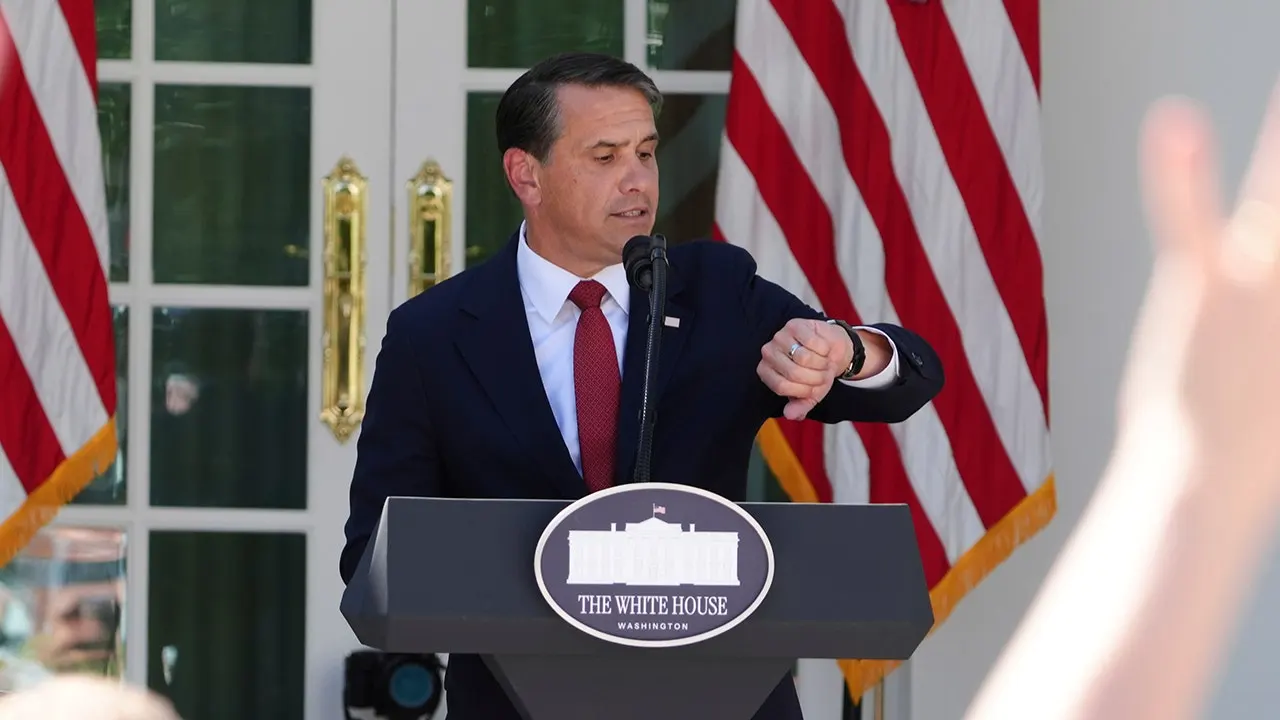
In a powerful display of federal resolve, the Justice Department announced a sweeping crackdown on individuals who exploited the COVID-19 pandemic for personal financial gain, marking one of the most significant enforcement actions against pandemic-related fraud to date. U.S. Attorney General Todd Blanche stood in the White House Rose Garden on Tuesday to deliver the sobering news: federal prosecutors had facilitated the arrests of 160 criminal defendants between mid-June and September, with approximately 80 of those individuals facing fresh charges for their alleged roles in schemes that siphoned hundreds of millions of dollars from government relief programs. The sprawling investigation, which touched multiple states including Missouri and its neighbors, uncovered losses exceeding $245 million—funds that were intended to support struggling Americans and small businesses during the nation’s darkest public health crisis. Instead, these dollars were allegedly diverted into the pockets of sophisticated fraudsters who saw the chaos of the pandemic as an opportunity for unchecked larceny on an industrial scale.
Daycare Deception: A Scheme That Betrayed Children and Taxpayers
Among the most egregious cases unveiled in this enforcement blitz, federal prosecutors in Southern California announced charges against twelve defendants who operated at-home childcare facilities, accusing them of fraudulently collecting more than $10 million in government childcare payments while providing services to virtually no children. The audacity of the scheme is staggering—these operators allegedly submitted claims for reimbursement as though they were running bustling childcare centers, when in reality their facilities were empty or nearly empty. What makes this case particularly troubling is the profile of the defendants: all twelve are naturalized citizens hailing from Syria, Afghanistan, Sudan, Iraq, and Somalia, nations where many Americans have extended compassion and welcomed refugees fleeing conflict and persecution. The betrayal here cuts deep, as individuals who were granted the privilege of American citizenship allegedly turned around and defrauded the very system that welcomed them. Attorney General Blanche, with the weight of the Justice Department behind him, delivered a clear message to potential wrongdoers: “If you knowingly break the law, you will be held accountable.” The statement was not merely rhetorical—it signaled a new era of aggressive enforcement against those who treated pandemic relief programs as their personal piggy banks.
The Astonishing Case of Turkiya Alawad: A Traveler Who Billed While Away
The details emerging from the California investigation paint a picture of breathtaking brazenness, none more so than the case of 63-year-old Turkiya Alawad, whose alleged scheme unraveled when investigators discovered she was claiming childcare payments for days she wasn’t even in the country. Court documents revealed that Alawad was outside the United States between January 1 and January 30, 2024, yet she submitted and collected childcare payments for that entire period, including the days she was abroad. The sheer audacity of submitting claims for services that physically could not have been rendered while sitting in another country demonstrates a level of contempt for the law that prosecutors say is characteristic of the broader fraud problem. This case, along with the others in the Southern California cluster, represents more than just financial crime—it represents a fundamental breach of the public trust. Parents relied on childcare subsidies to return to work during the pandemic’s economic upheaval, and these defendants allegedly manipulated that system for their own enrichment, potentially depriving legitimate childcare providers and the families who genuinely needed assistance.
A Nationwide Sweep: Beyond California to the Heartland
While the California daycare scheme captured headlines, the Justice Department’s broader operation spanned the nation, with significant activity focused in Missouri and its neighboring states, where approximately 80 defendants were newly charged. These cases represent a diverse array of fraudulent activities, from fake business relief claims to fabricated payroll records, all designed to extract money from government programs that were rushed into existence to meet the unprecedented demands of the pandemic. The sheer scale of the fraud problem has been a persistent challenge for investigators, who have had to untangle a web of shell companies, straw owners, and fabricated documentation that became the hallmark of pandemic-era criminal enterprises. The enforcement actions announced Tuesday are the culmination of months of meticulous investigation, with federal prosecutors from across the country coordinating their efforts to bring these cases to court. The collaborative approach reflects the complexity of the fraud schemes, many of which stretched across state lines and required the resources of multiple federal districts to unravel.
The Political Imperative: A Task Force Under the Administration’s Spotlight
The Trump administration has made investigating and prosecuting government program fraud a cornerstone of its policy agenda, with Vice President JD Vance chairing a dedicated fraud task force that has driven the recent wave of arrests. This political commitment has translated into concrete action, with prosecutors nationwide receiving clear direction to prioritize pandemic fraud cases that might otherwise have languished in the backlog of federal investigations. The task force’s work has been particularly crucial in identifying patterns of abuse across different programs, from the Paycheck Protection Program to childcare subsidies, and has facilitated information-sharing between districts that has accelerated the pace of prosecutions. Attorney General Blanche’s Rose Garden announcement was not merely a report on past achievements but a declaration of ongoing commitment—a signal to those who may have thought they had escaped accountability that the government’s memory is long and its determination strong. The political weight behind these prosecutions suggests that pandemic fraud will remain a focus well beyond the current enforcement push.
The Human Cost of Fraud: Victims Beyond the Government Balance Sheet
Behind the stark statistics and legal proceedings, the human cost of pandemic fraud extends far beyond the governments and taxpayers who lost billions. When childcare providers like those in Southern California filed fraudulent claims, they potentially displaced legitimate providers who were struggling to keep their doors open during the pandemic’s darkest days. When individuals submitted fake business loan applications, they may have prevented genuine small businesses from accessing funds that could have meant the difference between survival and bankruptcy. The food assistance programs in Minnesota, which saw similar fraud schemes exposed through a separate investigation involving roughly $4.6 million in claims to the Child Care Assistance Program, highlight how deeply these schemes cut into the social safety net. The fraud task force’s work has also had a deterrent effect, with potential fraudsters now knowing that sophisticated investigative techniques, including data analytics and cross-agency coordination, are being deployed to catch them. This enforcement push sends a clear message that the emergency measures enacted to protect Americans during a historic crisis will not be treated as license for criminal enterprise, and that the trust placed in government programs is not a vulnerability to be exploited but a sacred obligation to be honored.