





Japan Rattled by 6.1-Magnitude Earthquake: Seismic Jitters Shake Northern Honshu
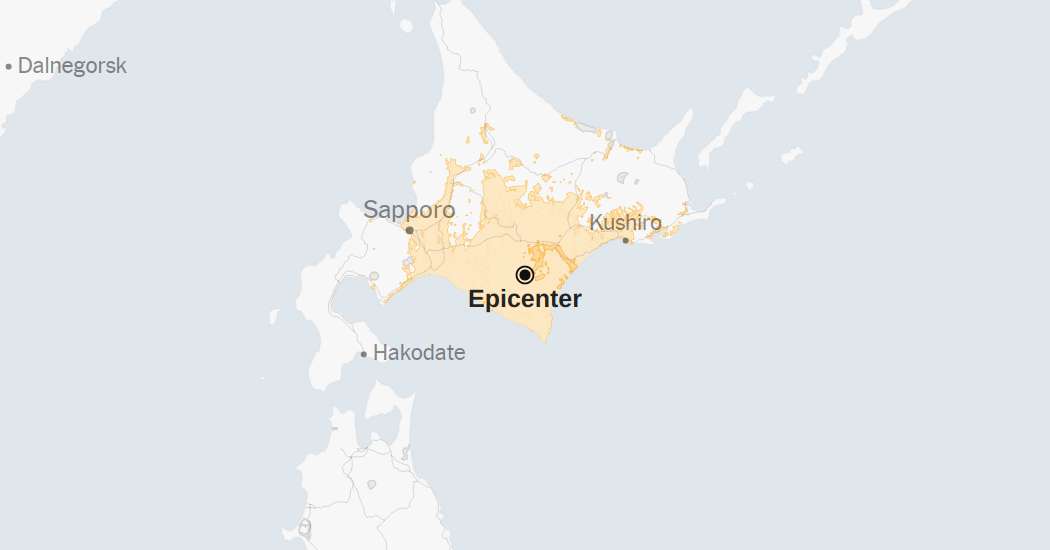
In the pre-dawn hours of Monday, Japan awoke to yet another reminder of its precarious perch on the Pacific Ring of Fire. A robust 6.1-magnitude earthquake struck approximately 11 miles west of Sarabetsu in northern Honshu, jolting residents from their slumber and sending tremors rippling through the earthquake-prone nation. According to preliminary data from the United States Geological Survey (USGS), the quake hit at 5:23 a.m. local Japan time, with its epicenter nestled in a region known for its rugged landscapes and sparse population. While the magnitude places it in the “strong” category for seismic events, initial reports suggest no immediate widespread damage or casualties, aligning with Japan’s advanced disaster preparedness. This incident underscores the country’s long-standing vulnerability to tectonic activity, where earthquakes are not anomalies but stark realities of daily life.
As seismologists pore over the incoming data, there’s a possibility that the quake’s magnitude could be recalibrated—either upward or downward—once more comprehensive analysis is completed. Such revisions are standard procedure in earthquake reporting, where initial estimates often hinge on rapid assessments before fuller waves of data arrive. In this case, scientists will likely review instrumental readings and eyewitness accounts to refine their understanding. Meanwhile, the USGS’s shake-intensity map, which visualizes areas experiencing tremors of level 3 or higher on the Modified Mercalli Intensity scale—defined as “weak” but perceptible—may evolve as new information emerges. These maps are crucial for emergency responders, helping them prioritize relief efforts in affected zones, though experts caution that these visualizations represent only a snapshot at a given time. The inclusion of aftershock data, tracked for earthquakes within 100 miles and up to seven days post-event, provides a broader picture, with all timestamps standardized to Japan Standard Time for consistency.
Historical Context and Japan’s Seismic Landscape
Japan’s history with earthquakes is as deep as its cultural heritage, marked by catastrophic events that have shaped both its infrastructure and societal resilience. From the devastating 1923 Great Kanto Earthquake, which claimed over 140,000 lives in Tokyo, to the more recent 2011 Tohoku quake that unleashed a tsunami and sparked the Fukushima nuclear disaster, the archipelago has been no stranger to subterranean fury. Northern Honshu, where Sunday’s tremor originated, sits in Hokkaido Prefecture, a vast and sparsely inhabited area dotted with forests, mountains, and coastal towns. Sarabetsu itself is a small village near Lake Saroma, a region more accustomed to natural beauties like wildlife reserves than seismic upheavals. Yet, even here, the earth’s restless plates converge, creating fault lines that periodically remind inhabitants of their fragility. Understanding this quake within Japan’s broader seismological tapestry reveals patterns of activity, such as the tendency for aftershocks to follow main events, which officials monitored closely this time.
In the immediate aftermath, local authorities sprang into action, activating alert systems that blared warnings through apps and public broadcasts. Residents in nearby towns like Wakayama and higher up in Sapporo reported feeling the shakes, though many described them as brief and unsettling rather than destructive. Japan’s Earthquake Early Warning system, a technological marvel developed after past disasters, likely bought precious seconds for people to brace themselves. Media outlets flooded social channels with updates, blending official statements from the Japan Meteorological Agency with live user reports, painting a picture of a nation that’s learned to respond with calculated calm. This proactive approach, honed over decades, contrasts sharply with less prepared regions worldwide, highlighting Japan’s investment in smart infrastructure like reinforced buildings and tsunami barriers. As dusk fell on Monday, life began returning to normal, but the event served as a poignant drill, reinforcing the importance of constant vigilance in seismic hotspots.
Expert Insights and Scientific Analysis
Seismologists and geologists have weighed in on the significance of this 6.1-magnitude quake, placing it in context with global standards. Dr. Hiroshi Tanaka, a prominent researcher at Tokyo University specializing in subduction zones, noted that such events are common along Japan’s northeastern coast, where the Pacific Plate dives beneath the Eurasian Plate. “This quake fits the profile of many in Hokkaido—moderate in scale but capable of triggering aftershocks that warrant close monitoring,” Tanaka explained in an interview. He emphasized that while 6.1 might seem modest compared to mega-thrust earthquakes, it can cause localized disruptions, especially in hilly terrains where landslides are a risk. The USGS’s methodology, which categorizes shaking on the Modified Mercalli scale, helps communicate intensity: a level 3 suggests furniture might rattle and standing vehicles sway, but no structural damage typically ensues. Data from April 26 showed shaking data updated at 4:44 p.m. Eastern Time, with aftershocks logged up to 6:55 p.m., reflecting real-time tracking that aids in predicting further activity.
Moreover, the quake’s location 11 miles west of Sarabetsu opens discussions about regional tectonics. This area, part of a complex fault network, has experienced similar tremors in the past, including a notable 5.8-magnitude event in 2019. Experts draw parallels to larger threats, like the potential for a major rupture along the offshore fault lines that could amplify impacts. Environmental scientists also point to secondary hazards, such as induced landslides in the region’s volcanic soil, which could complicate recovery if they occur. As research continues, updated maps from the USGS will incorporate these nuances, ensuring that visualizations remain accurate and actionable. This iterative process not only refines our understanding of individual quakes but also contributes to global seismic knowledge, informing efforts to mitigate future disasters.
Community Response and Broader Implications
For locals in Sarabetsu and surrounding communities, the earthquake was a brief scare rather than a catastrophe. Village mayor Akira Yamada described the morning as “a gentle shake that reminded everyone to check their emergency kits,” underscoring the community’s stoic demeanor. Schools held brief drills post-event, and businesses paused operations for inspections, all under the watchful eye of national disaster management protocols. Social media buzzed with testimonials: one resident tweeted, “Felt like a big truck rolled by— but we’re fine,” encapsulating the veiled relief mixed with routine caution. Internationally, the quake garnered attention on news wires, with outlets from CNN to BBC noting Japan’s knack for quick rebounds. This resilience stems from a culture steeped in respect for nature’s power, evident in ancient Shinto rituals that pray for seismic harmony.
Beyond immediate reactions, the event prompts reflection on broader implications for Japan and beyond. Climate change conversations intertwine with seismology, as rising sea levels could exacerbate tsunami risks—a echo of 2011 that haunts policymakers. Meanwhile, technological advancements, like AI-driven prediction models, promise even better preparedness. For global audiences, this quake serves as a case study in disaster resilience, where government drills, public education, and international collaborations converge to minimize harm. As Japan moves forward, this 6.1-magnitude reminder reinforces that in a land of earthquakes, adaptability is not just strategy but survival.
Looking Ahead: Preparedness and Predictions
With aftershock monitoring ongoing, experts advise ongoing caution. The USGS’s seven-day tracking window will likely reveal how this event unfolds, potentially debunking or confirming fears of a larger sequence. In Hokkaido, residents are encouraged to stay informed via official apps, avoiding rumors that often spread on platforms like Twitter. Japan’s model of earthquake preparedness— from mandatory building codes to national insurance systems—offers lessons for vulnerable nations elsewhere, proving that proactive measures can turn natural threats into manageable risks. As seismologists finalize their assessments, the story of this Monday morning quake evolves from raw data to a testament of human ingenuity against earth’s untamed forces. For now, Japan breathes a sigh of collective relief, ever poised for the next subterranean whisper.