



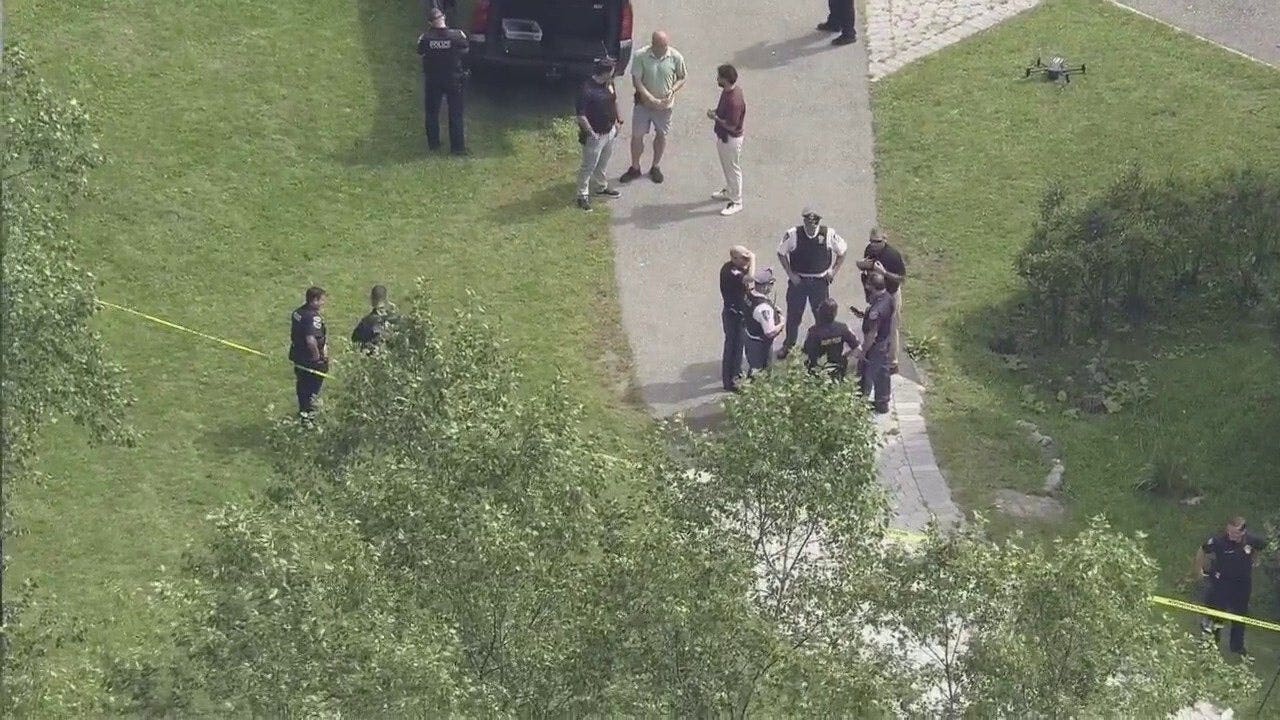
The calm of an ordinary Wednesday afternoon on the campus of SUNY Westchester Community College was shattered when reports of a stabbing sent emergency responders racing to the school. At approximately 12:40 p.m., police and medical personnel were dispatched to the Valhalla campus, just north of New York City, where they found three people suffering from stab wounds. The victims were quickly assessed at the scene and transported to local hospitals for treatment, their conditions not immediately released to the public. Within minutes, the quiet suburban campus, known for its rolling hills and stone buildings, became a hive of emergency activity. Law enforcement vehicles, ambulances, and first responders filled the parking lots and access roads as sirens cut through the afternoon air. Students and faculty who had been moving between classes, studying in the library, or grabbing lunch in the student center suddenly found themselves confronted with a reality no one is ever truly prepared for: violence on the grounds where they learn and work. Panic spread quickly through text messages and social media as people tried to confirm what had happened and whether their friends and loved ones were safe. The incident immediately captured the attention of the wider community, serving as a stark reminder that no institution is entirely immune from the threat of sudden, senseless violence. Yet despite the chaos, the initial response was swift and coordinated. Emergency personnel worked to secure the area, tend to the wounded, and bring the situation under control, all while the college community held its breath waiting for answers. In the hours that followed, official details trickled out, shaped by the caution and precision that accompany any active investigation. The three stabbing victims had been found on campus, two people had been taken into custody, and a knife had been recovered at the scene. These three facts provided a skeleton of the story, but the human weight of the event remained heavy, carried by every student, parent, teacher, and staff member who understood how close they had come to a far worse tragedy.
The Westchester County Police Department assumed the lead role in the investigation, and their early updates were focused on reassuring a frightened community while acknowledging the seriousness of what had occurred. Officials announced that two suspects had been detained, confirming that the immediate threat had been neutralized. A knife, believed to be the weapon used in the attack, was recovered by officers at the scene, according to reports from Fox 5 New York. Police were careful to state that no other suspects were being sought, which helped quell fears of a broader attack or an ongoing danger to the public. In many ways, the speed of the response was remarkable. From the initial 911 call to the securing of the scene and the detention of the suspects, the entire sequence unfolded in a matter of minutes. That efficiency likely prevented the situation from becoming even more deadly, and it was a testament to the training and readiness of the officers and first responders who arrived on campus. However, the quick apprehension of the suspects did not immediately resolve the deeper anxieties felt by those connected to the college. A stabbing, by its nature, is a deeply personal and terrifying act, and the knowledge that two people had intentionally inflicted harm on three others left many struggling to process the event. Attention now shifts to the victims, their families, and the community that has been scarred by the violence. At the same time, investigators are beginning the painstaking work of reconstructing exactly how the attack unfolded, what led to it, and whether anyone else might have been involved in any capacity. The recovery of the knife is a significant piece of evidence, but it is only one element in a larger puzzle that will require witness testimony, forensic analysis, and a thorough review of the circumstances leading up to the incident.
The three victims were transported to local hospitals, where they received urgent medical care for their injuries. As they entered the trauma bays, their families were left in a terrible state of uncertainty, waiting by the phone for any word from doctors or officials. At that point, authorities had not yet confirmed whether the victims were students at SUNY Westchester Community College, nor had they identified the two individuals in custody. This lack of concrete information created an agonizing void for the campus community. Parents who received alerts about the incident raced to check in with their children, while students tried desperately to account for their friends. The college’s administration and the police department were flooded with calls from concerned members of the public, all seeking the same basic information: who was hurt, who was responsible, and was anyone they loved among those affected. In moments like these, the human impact of violence becomes overwhelming. It is not merely a matter of crime statistics, police reports, and legal procedures; it is about real people whose lives have been abruptly altered. The victims, young men and women perhaps just beginning their educational journeys, now find themselves in a hospital, surrounded by medical staff, fighting to recover from wounds that should never have been inflicted. Their lives have been interrupted in the most violent and unfair manner imaginable, and the psychological scars may take far longer to heal than the physical ones. For their families, the trauma is equally profound, as they are forced to confront the fragility of life and the senselessness of the attack. The uncertainty surrounding the identities of the victims only magnified the collective anxiety, turning trauma into an open question that no one could yet answer.
In the immediate aftermath, the campus community was left to make sense of what had happened. SUNY Westchester Community College, often simply referred to as WCC, is a place where thousands of students pursue associate degrees, certifications, and the first steps toward a brighter future. It is a place of endless possibility, where adults return to school to change careers, where recent high school graduates begin their higher education, and where community members find intellectual fellowship. A stabbing on such a campus pierces the sense of safety that is essential for learning to take place. Students who had been in nearby buildings described a chaotic scene of lockdowns and warnings, though specific firsthand accounts had yet to be fully shared. The instinct to protect oneself and one’s classmates kicked in, and many followed emergency protocols that had been drilled in countless drills, but that no one ever expects to actually use. For some, the experience was deeply traumatizing, and counselors were likely to be made available to help students and staff process the event in the days ahead. For the wider Westchester community, the news was a jolt, bringing with it a familiar wave of grief and concern that has become all too common in American life. The attack also raised questions about campus security, mental health resources, and how to prevent similar incidents from occurring in the future. School officials and local leaders knew that they would have to address these concerns transparently while also respecting the ongoing investigation. But in those first hours, the focus remained on the victims, their recovery, and the gratitude that the situation had not been even worse.
Investigators, meanwhile, began the meticulous work of uncovering the full circumstances behind the stabbing. The Westchester County Police Department stated that the incident remained under active investigation, and every detail was being examined with care. Detectives were likely reviewing surveillance footage from the campus, interviewing witnesses who may have seen the attack begin, and analyzing the recovered knife in search of fingerprints, DNA, or any other forensic evidence that could link the suspects to the crime. They were also working to establish a timeline, determining where each person involved was in the minutes before the incident and how the confrontation escalated. A critical question loomed over the investigation: what motivated the attack? Was it a personal dispute between people who knew each other, an act of random violence, or something else entirely? Authorities did not immediately provide answers, and speculation began to spread across social media and among concerned residents. The lack of official information left space for rumors, which can be as damaging as the truth when a community is in crisis. Police were careful not to rush to conclusions, emphasizing that the full circumstances were still being pieced together. They also had to consider the legal implications of the custody of the two suspects, including what charges they would face. Depending on the severity of the victims’ injuries and the evidence collected, the suspects could be facing serious felonies, including assault and possession of a weapon on school grounds. The legal process would unfold over the coming weeks, but the investigation itself would need to be thorough enough to withstand scrutiny in a court of law. Fox News Digital reached out to the Westchester County Police Department and SUNY Westchester Community College for additional comment, but at that stage, officials were understandably reluctant to release further details while the investigation was still ongoing.
The stabbing at SUNY Westchester Community College is a tragic reminder of the vulnerability that hangs over all public spaces in modern society, especially schools. It is one of several recent incidents of knife violence on or near college and K-12 campuses across the country, each one leaving behind a trail of shattered nerves and urgent calls for change. But amid the tragedy, there are also stories of resilience. The swift actions of first responders likely saved lives. The students who helped each other, the staff who directed people to safety, and the law enforcement officers who brought the perpetrators into custody without further violence all demonstrated the strength of the community in its darkest hour. As the victims begin their long road to recovery, the rest of the campus community must also heal. That healing will not happen overnight. It will require open communication from school leaders, mental health support for all who were affected, and a renewed commitment to making the campus a place of safety and learning once again. The attack has raised difficult questions about preparedness, prevention, and the signs that might have been missed, and the community will need to grapple with those questions honestly. New Yorkers have always prided themselves on their strength and their refusal to be broken by tragedy, and that spirit will be needed now more than ever. In the coming days, residents of Valhalla and the surrounding areas will likely hold vigils, offer prayers, and extend a helping hand to the victims and their families. They will demand accountability where it is deserved and seek reassurance that such an event will not happen again. But for now, the most important thing is to remember that behind every statistic, every headline, and every police report, there are real people whose lives have been forever changed by a few minutes of violence. Their pain, their fear, and their hope for recovery must remain at the center of the story as the community moves forward.