





A Night of Tragedy in Chatsworth: News Helicopter Crash and Bus Collision Claim Lives
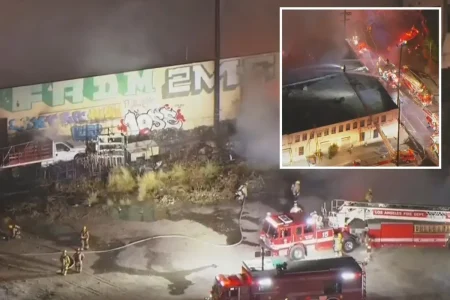
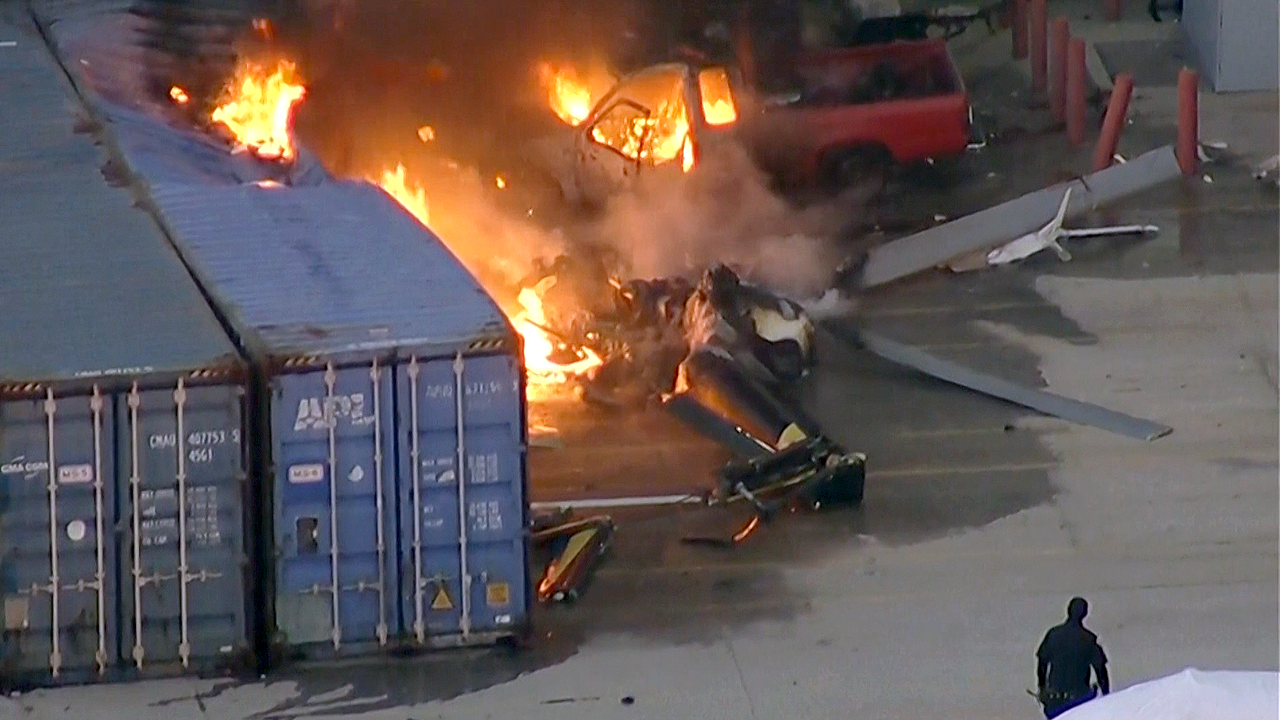
On an ordinary Tuesday evening in the San Fernando Valley, the sky above Chatsworth was a familiar, dusky Los Angeles backdrop—until it was shattered by sirens and smoke. Just before 7 p.m., the Los Angeles Fire Department received reports of a helicopter crash involving a news aircraft, and more than 70 firefighters were dispatched to the scene at 9151 N. Mason Ave., a commercial corridor caught between the quiet hum of daily life and the urgency of breaking news. The helicopter, confirmed by NBC Los Angeles as its NewsChopper4, had been flying over the area to cover a deadly crash involving a bus and an SUV. That coverage would never be completed. When personnel arrived, they found a nightmare: downed aircraft, burning wreckage, four vehicles and two storage containers engulfed in flames, and human lives already lost. Three people were pronounced dead at the scene, and a fourth was rushed to a local hospital in unknown condition. For the families who would be notified that night, for the colleagues who had watched the helicopter take off hours earlier, and for a community that had already been grieving the bus collision, the tragedy was devastating. What began as a routine newsgathering mission became a story of unimaginable loss, and the streets of Chatsworth were left with the heavy silence that always follows a disaster.
The helicopter’s role in the evening’s events is one of the most painful ironies of the tragedy. NewsChopper4 was not in the sky for thrill or vanity; it was there to inform the public, to capture what had happened in a deadly bus and SUV crash, and to provide a perspective that ground-level journalists could not. Aerial news crews have long been an essential part of Los Angeles media culture, known for their ability to reach traffic accidents, wildfires and breaking stories in a sprawling city where distance can mean the difference between a scoop and a missed update. The crew aboard that helicopter were doing exactly what they had done many times before—flying toward trouble, not away from it, so that viewers could understand what had occurred. The crash that took their lives is a reminder that the news industry’s unseen costs are paid in human currency: reporters, pilots, photographers and technicians who routinely place themselves in danger to deliver stories. The National Transportation Safety Board and the Federal Aviation Administration have promised a thorough investigation, with an NTSB investigator expected to arrive on Wednesday. But no investigation can undo the personal grief that now surrounds the aircraft’s wreckage. Behind every statistic—three dead, one hospitalized—there were names, faces, families and colleagues. For the NBC4 family, as California Governor Gavin Newsom would later express, the loss cut particularly deep. The voices that had been a familiar presence in Southern California skies would not be returning to the newsroom.
Among the victims, the tragedy struck on multiple levels. The Los Angeles Fire Department said one victim was a pedestrian in a nearby parking lot, someone whose ordinary evening was suddenly transformed into an impossible catastrophe. The other two victims were aboard the helicopter, and authorities confirmed their deaths in the moments after the crash. A fourth person was evaluated at the scene and taken to a hospital in unknown condition, leaving family and friends in a painful limbo of fear and uncertainty. The loss of a pedestrian, someone who had no connection to the news coverage or the bus accident, underscores how a disaster can ripple outward and touch innocent bystanders in the most arbitrary and devastating way. At the same time, the deaths of the helicopter crew members are a blow to the journalism community, which lost two of its own while performing a public service. The bus crash itself had already left at least two people dead and multiple others hospitalized, meaning the neighborhood of Chatsworth was forced to absorb wave after wave of grief in a single evening. Local outlets reported that several television news helicopters were in the air covering the bus collision, a routine occurrence in a major metropolitan area. When one of those helicopters disappeared from radar, the tragedy became twofold: first the original victims, then the responders and reporters who came to document their story. The human toll is not neatly counted by numbers; it exists in every household, every newsroom, every emergency room and every street corner where someone is waiting for news that has not yet arrived.
Firefighters quickly went to work under chaotic and dangerous conditions. The LAFD’s response—over 70 firefighters battling flames among twisted metal and aviation fuel—was nothing short of heroic. The fire, which had spread to four vehicles and two storage containers, threatened to escalate further, but crews were able to bring it under control before it reached any nearby structures. That no buildings were exposed to the fire is a small mercy in a night otherwise marked by loss. First responders had already been assigned to the fatal bus crash in the same area, and now they were tasked with the grim job of disentangling the wreckage of a news helicopter. It is impossible to fully understand what those firefighters and paramedics witnessed, but they responded with professionalism and determination. They searched the scene, assessed the four people found at the crash site, performed triage, transported the survivor and stayed until the flames were extinguished and the scene was turned over to investigators. For the families of the deceased, these first responders were the hands that gently guided the chaos, the voices that tried to bring order to a tragic ending, and the ones who would later stand silently as the bodies were recovered. The fact that no nearby structures were damaged is a testament to their swift action, but the emotional toll on those who responded—many of whom likely knew that this would be a story they carried with them for years—is another quiet cost of the night. Emergency work often means showing up at the worst moments in strangers’ lives, and Tuesday night in Chatsworth was no exception.
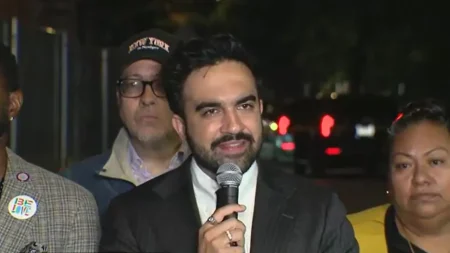
Public officials reacted with grief and deep empathy. Los Angeles Mayor Karen Bass issued a statement expressing her devastation at the loss of life in Chatsworth, saying, “I’m absolutely devastated by the loss of life in Chatsworth tonight. My heart is with the families and loved ones of those we lost in the tragic bus collision and helicopter crash.” Her words were a simple but necessary acknowledgment of a community in mourning, a reminder that government leadership is not just about policy but about shared humanity. California Governor Gavin Newsom also responded, offering condolences and gratitude: “Our hearts are with the victims and families of tonight’s devastating Metro bus and helicopter crashes in Chatsworth, and with the entire NBC4 family. Thank you to the first responders working tirelessly tonight.” The mention of the “NBC4 family” was especially poignant, acknowledging that the news organization had lost its own people, people who had been serving the public in a way that is often overlooked. Newsom’s statement also highlighted the tireless first responders, who had been stretched between two simultaneous crises. These official messages do not bring back the dead or heal the wounded, but they matter. They signal to families that their loved ones did not die unnoticed, that the community and its leaders share the burden of loss, and that the work of understanding what happened will continue. The investigation by the NTSB and the FAA is not merely a bureaucratic step; it is a promise that the causes of the crash will be examined, that safety lessons may be learned, and that the lives lost may not be wholly in vain.
In the aftermath, there is a broader reflection on the nature of journalism, the dangers of daily work, and the fragility of life. News crews board helicopters, ride fire engines, run toward chaotic scenes, and ask questions in the middle of the worst days people have ever had. They do this because a free and informed society depends on knowing what is happening. The crew of NewsChopper4 knew that when they took off. They knew the risks, perhaps, but they also knew the mission. Their deaths are not just a news story; they are a reminder of the human beings behind the cameras, microphones and pilot controls. As the community of Chatsworth begins to heal, it must do so while carrying the grief of both the bus crash and the helicopter accident. The families of all the victims will need support, privacy, and time. The injured survivor will need prayers and hospital care. The first responders will need counseling and gratitude. And the newsrooms of Los Angeles will need to grieve their colleagues while continuing to tell the story—because that is what those lost would have wanted. The sky over Chatsworth will soon return to normal, with helicopters flying overhead again, but the memory of Tuesday night will remain etched in the city’s heart. In the face of tragedy, the only response is to hold on to one another, to be kind, to be grateful for those who serve and sacrifice, and to remember that every voice in the newsroom, every flight into danger, is taken for the simple purpose of bringing truth to the people. Tonight, that purpose cost everything, and the silence where the engine used to hum is a grief that will not soon fade.