

Yellowstone National Park stands as a breathtaking monument to the untamed American wilderness, a place where bubbling geothermal wonders and vast, sweeping valleys offer visitors a rare glimpse into a prehistoric world untouched by modern civilization. However, this magnificent landscape demands a deep level of respect, as the line between awe-inspiring exploration and sudden tragedy remains incredibly thin. On a crisp, seemingly peaceful Friday morning at approximately 9:15 a.m., that line vanished near the Mud Volcano area—a popular geothermal site known for its churning, acidic mud pots, venting fumaroles, and thick, sulfurous air. A twelve-year-old child, who had come to the park to experience the magic of nature with family, was suddenly and violently injured by a bison, instantly transforming a cherished family vacation into a terrifying medical crisis. The abruptness of the attack sent shockwaves through the immediate area, instantly puncturing the serene morning atmosphere with panic and distress. Emergency park rangers and medical teams rushed to the scene to administer first aid, eventually coordinating the swift transportation of the young victim to a local hospital. This distressing event marked a somber milestone as the very first reported bison-related injury of the 2026 season in Yellowstone, casting a shadow over the park’s early tourism year and reigniting an urgent, nationwide conversation regarding the critical safety protocols required when stepping into the territory of massive, unpredictable wildlife.
The emotional weight of this incident resonates deeply with families and park enthusiasts across the country, as the thoughts of the public remain focused on the recovery of the young child, whose specific injuries have not been publicly disclosed. While Yellowstone National Park officials have chosen to keep the details of the victim’s physical trauma private to protect the family’s peace during a time of immense stress, the sheer power of an adult bison means that any direct encounter carries a high risk of life-altering consequences. In the immediate aftermath of the event, the National Park Service initiated a comprehensive investigation to piece together the exact sequence of events that led up to this unfortunate confrontation in the heavily trafficked Mud Volcano sector. These investigations are not merely administrative procedures; they are vital forensic inquiries aimed at determining whether specific environmental factors, trail behaviors, or sudden animal stressors catalyzed the charge. For the family involved, the trauma of witnessing a loved one—especially a child—being overpowered by a prehistoric force of nature is an unimaginably painful ordeal, shedding light on the vulnerability of human beings when we step outside our engineered urban safety nets and enter spaces governed entirely by raw, ancient ecological instincts.
To fully comprehend the gravity of Friday’s encounter, it must be viewed not as a freak, isolated anomaly, but as part of a persistent and troubling historical pattern of human-wildlife conflict within Yellowstone’s borders. The year 2025 served as a stark precursor to this event, recording two separate, highly publicized incidents in May and June where visitors were brutally gored after getting far too close to these massive herds. Looking back further to 2024, the park documented two additional, troubling encounters: one occurring in April, when a man was caught actively harassing a grazing herd before being injured, and another in June, where another visitor suffered injuries. Even the year 2023 was not without its casualties, recording at least one notable bison-related injury. Collectively, these statistics reveal a recurring behavioral loop where tourists, perhaps desensitized by petting zoos or deceptive wildlife documentaries, consistently fail to recognize the inherent dangers of these animals. Each of these historical incidents stands as a profound warning that went unheeded, proving that when humans transgress the boundaries of wild animals, the physical consequences are almost always swift, severe, and entirely preventable.
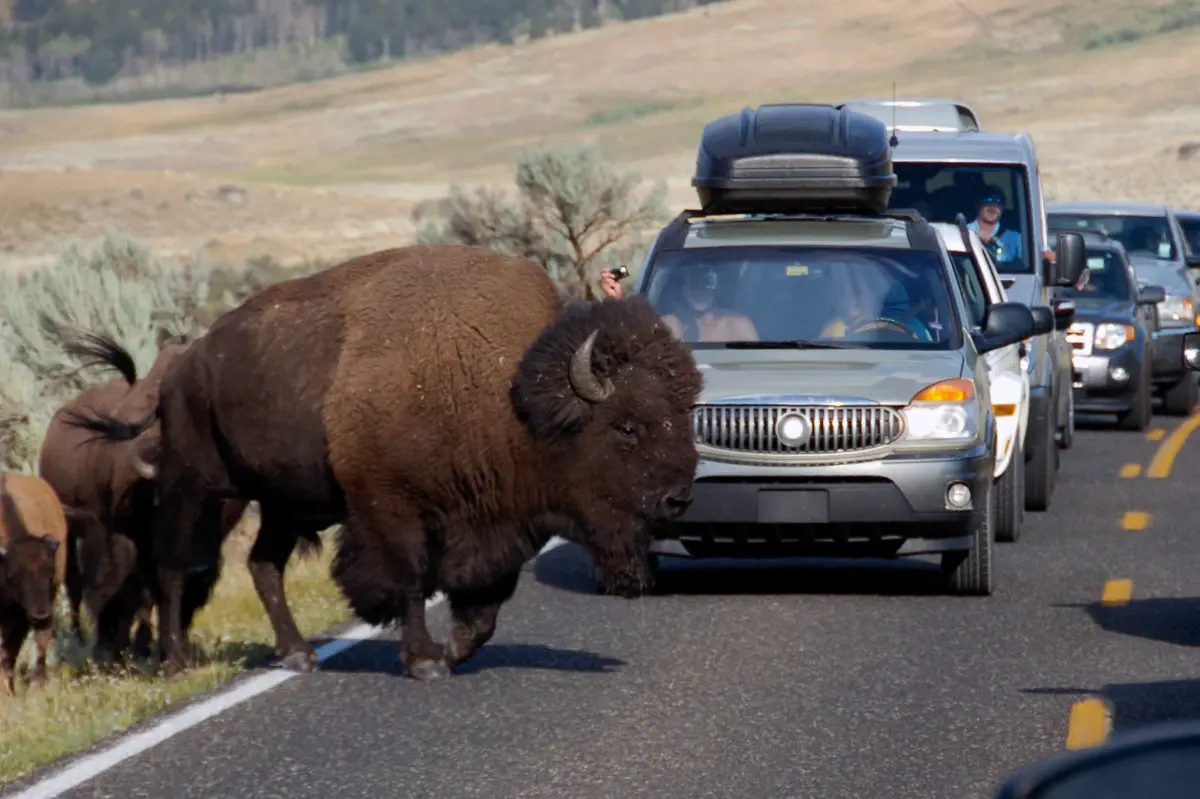
The American bison is a grand symbol of the Great Plains, a majestic, heavy-set herbivore that can weigh up to two thousand pounds and appear, to the untrained eye, as docile and slow-moving as domestic cattle. This deceptively calm exterior is precisely why park officials repeatedly emphasize that bison have injured more people in Yellowstone than any other animal, including high-profile predators like grizzly bears and gray wolves. In reality, these animals are highly sensitive evolutionary marvels, fueled by strong defensive instincts and an astonishing level of athleticism that allows them to run at speeds up to thirty-five miles per hour—three times faster than a human can sprint. They possess a keen awareness of their surroundings and will defend their personal space, their young, and their herd with explosive power when they perceive a threat. A bison does not understand the concept of a tourist taking a harmless photograph; to them, a human stepping into their immediate comfort zone is a potential apex predator, triggering an instantaneous fight-or-flight response that frequently tilts toward a devastating physical defense.
In an effort to prevent these tragic collisions of man and beast, Yellowstone National Park actively enforces a strict, non-negotiable safety zone, requiring all visitors to remain at least twenty-five yards—seventy-five feet, or about the length of two large school buses—away from bison at all times. This distance is a carefully calculated boundary designed to give the animal a sense of security while offering the human precious reaction time should the animal decide to shift its position. Unfortunately, the rise of smartphone technology and social media culture has fostered a dangerous desire for close-up photographs, often driving individuals to silently chip away at this safety buffer until they are dangerously close. Park officials urge visitors to pay close attention to the subtle warnings animals give, noting that if a bison stops grazing, stares directly at you, shakes its head, paws the ground, or raises its tail, it is actively communicating its high distress and you must immediately and calmly back away. Ignoring these non-verbal cues is a recipe for disaster, as animals do not negotiate, and a sudden step forward can instantly bridge the gap between admiration and a catastrophe.
Ultimately, the harrowing incident involving the twelve-year-old child near Mud Volcano serves as a profound, sobering reminder of our place within the natural world and the absolute necessity of practicing deep humility when visiting wild spaces. Yellowstone is not a theme park with controlled exhibits, but a sacred, living ecosystem where wild creatures must remain wild, and where human visitors are merely temporary, privileged observers. The park’s strict requirement that all negative animal interactions be reported is a vital tool for wildlife management, helping to ensure that both humans and animals can coexist without the park being forced to take drastic, often tragic measures against animals that were simply defending their territory. As the investigation into Friday’s event continues and the young victim hopefully transitions toward a full recovery, this moment must serve as a collective lesson for all future travelers: to approach these magnificent beasts not with a sense of entitlement or casual curiosity, but with a quiet, protective reverence. Keeping a safe distance isn’t just about following park regulations; it is an act of love and respect for the wild spirit of the American West, ensuring these ancient giants can roam free and unbothered for generations to come.