


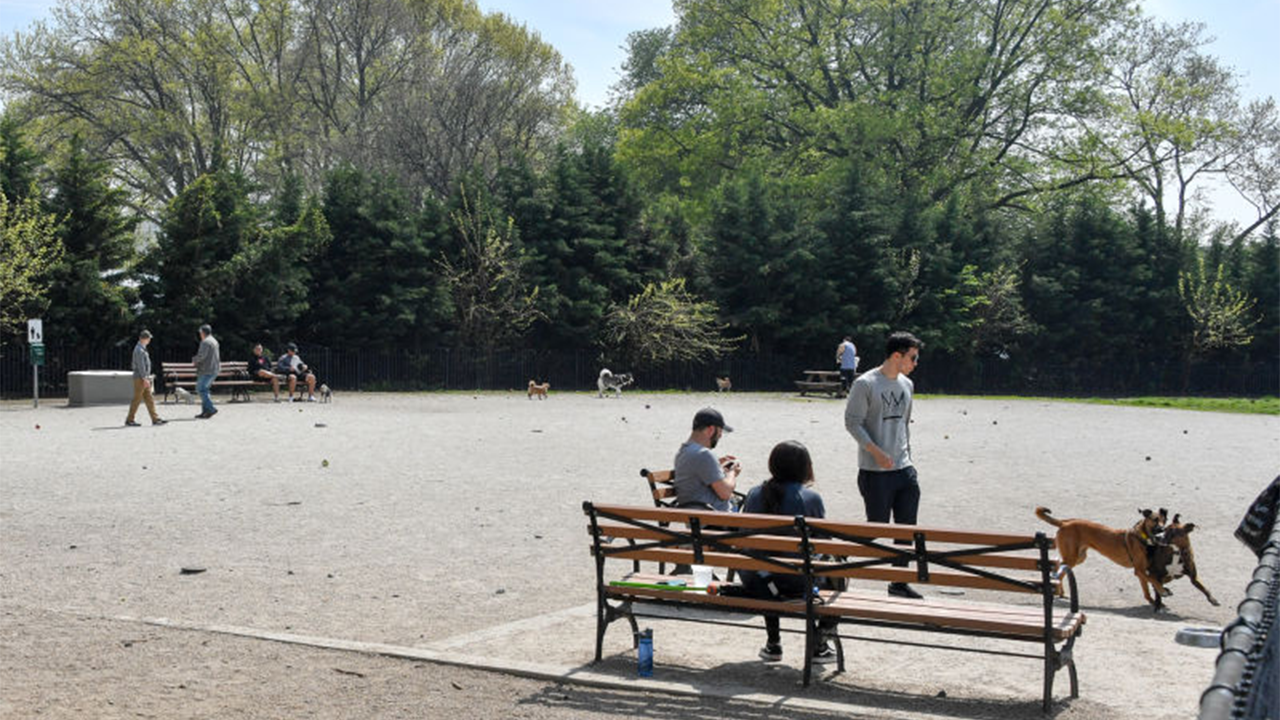
On a crisp, otherwise ordinary Saturday afternoon, the natural sanctuary of Dyker Beach Park in Brooklyn, New York, was transformed from a haven of weekend leisure into a harrowing crime scene that would forever alter several families’ lives. Under the expansive autumn sky, where local residents typically gather to escape the frantic rhythm of city life, play sports, walk their dogs, or simply enjoy the comforting embrace of green space, a devastating eruption of violence shattered the weekend tranquility. Just before the clock struck two in the afternoon, the relative peace of the surrounding neighborhood near 86th Street and 14th Avenue was abruptly pierced by the desperate sounds of conflict, followed quickly by the wails of approaching emergency sirens. For those who frequent the park, it is a place of memory-making, youth leagues, and quiet strolls—a community anchor where generations of Brooklynites have found solace and recreation. Yet, in a matter of moments, this cherished public space became the backdrop for an unimaginable tragedy, reminding a shocked community of how fragile our safe havens can be and how quickly a sunny afternoon can turn into a nightmare. As police tape began to flutter in the autumn breeze, sealing off a portion of the park’s lush grounds, the immediate reality of what had transpired began to ripple through the neighborhood, leaving witnesses and passersby in a state of stunned disbelief. The contrast between the park’s natural beauty and the sheer brutality of human violence represents a jarring disconnect, one that underscores the suddenness with which tragedy can strike in the heart of a bustling metropolis. In these initial hours, as investigators searched for clues on the grass, the collective consciousness of the neighborhood shifted from weekend relaxation to a profound, shared grief, marking the beginning of a painful process of questioning how such a dark event could unfold in a place dedicated to recreation and community life.
At the raw heart of this tragedy are two young lives violently disrupted, leaving behind a devastating path of grief and uncertainty that no official police report can fully capture. A 21-year-old young man, standing on the very precipice of adulthood, had his entire future stolen from him in an instant, his dreams, aspirations, and potential forever extinguished on a Brooklyn sidewalk. At twenty-one, life is supposed to be about beginnings—navigating the complexities of independence, forging career paths, finding love, and building a unique identity in a vast, promising world. Instead, this young man’s story was abruptly cut short, leaving his family to grapple with an agonizing, silent void that can never be filled. Alongside him, a 30-year-old man was left fighting desperately for his survival, hospitalized in critical condition as medical teams worked tirelessly to stave off death. At thirty, a person is often beginning to find their footing in life, deep in the process of establishing long-term goals, cultivating deep relationships, and contributing to their community. To have those efforts suddenly suspended by brute physical trauma is a terrifying reminder of human vulnerability and the fragility of existence. Behind these cold numbers—21 and 30—are real human beings with complex inner worlds, favorite songs, distinct laughs, and circles of friends who are now frozen in shock. The loss of a young person to violence is a unique wound to a community, a premature death that forces us to confront the stolen possibilities of what might have been. As the thirty-year-old survives on life support in a cold hospital room, the weight of his struggle is felt not just by his doctors, but by everyone who understands the precious sanctity of a human heartbeat, illustrating the deeply personal, heartbreaking cost of a single afternoon of violence.
The immediate aftermath of the double stabbing galvanized a rapid, heart-pounding response from local emergency services, highlighting the chaotic and desperate struggle to preserve human life under the most intense pressure. Following a frantic 911 call placed shortly before 2:00 p.m., officers from the NYPD’s 68th Precinct rushed to the intersection of 86th Street and 14th Avenue, where they were met with a scene of visceral horror. Paramedics and medical personnel from the Emergency Medical Services (EMS) arrived quickly, their training immediately kicking in as they assessed two men bleeding heavily from severe stab wounds to their bodies. In those critical, fleeting moments, the street corner became a makeshift trauma center, a place where the barrier between life and death rested entirely on the skill, speed, and determination of first responders. With sirens wailing through the Brooklyn traffic, both victims were rushed in critical condition to Maimonides Medical Center, a nearby institution renowned for its trauma care, where a team of surgeons, nurses, and specialists stood ready to fight for their lives. Within the sterile, bright lights of the emergency department, a frantic battle against time unfolded, with medical staff pouring all their expertise and humanity into stabilizing the two grievously injured men. Tragically, despite the heroic efforts of the doctors and nurses who refused to give up, the injuries sustained by the 21-year-old proved too severe, and he was pronounced dead, leaving the hospital corridors filled with the heavy, devastating silence that follows a lost battle. Meanwhile, the survival of the 30-year-old remained in the balance, a tense and agonizing vigil for his loved ones and the medical staff who continued to monitor his fragile state, embodying the thin line that separates life from death in the face of sudden, senseless physical trauma.
As news of the fatal stabbing spread through the tightly knit neighborhoods of Dyker Heights and Bay Ridge, a profound sense of collective sorrow and anxiety settled over the residents, illustrating how a crime of this nature wounds an entire community. In Brooklyn, neighborhoods are often defined by their shared spaces, where open parks serve as the communal backyards for families who live in apartment buildings and row houses. To have a double stabbing occur in broad daylight at Dyker Beach Park—a cherished location where children play, school groups gather, and elderly residents take their daily walks—shakes the fundamental sense of safety that people rely on to live their lives. The emotional toll of this event extends far beyond the immediate families of the victims; it touches the neighbors who heard the sirens, the parents who must now explain to their children why police tape blocks their favorite playground, and the local business owners who watch their streets with newfound caution. Furthermore, the agonizing process of withholding the deceased victim’s identity pending family notification represents a heartbreaking period of private torment. Somewhere in the city, a family was going about their Saturday, entirely unaware that their world had been shattered, while authorities worked delicately to deliver the most devastating news a parent or relative could ever receive. This quiet, terrible wait underscores the deep humanity involved in public tragedies, reminding us that behind every news headline is a mother, a father, a sibling, or a friend whose life will never be the same after the knock on the door that changes everything.
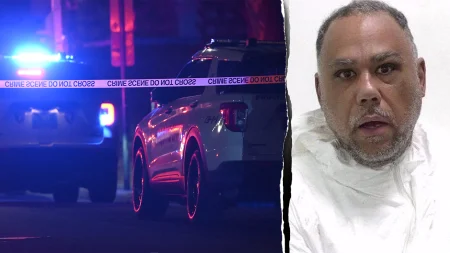
In the wake of such a senseless act of violence, the search for answers and accountability begins, as the community and law enforcement grapple with the baffling question of why this occurred. The NYPD immediately launched a comprehensive investigation to piece together the events leading up to the double stabbing, working to reconstruct a timeline of a Saturday afternoon that went horribly wrong. Detectives comb through the physical evidence left at the park, interview shocked witnesses, and search for any available surveillance footage from nearby businesses and residences that might shed light on the altercation. A glimmer of hope for justice emerged when authorities announced that a person of interest had been taken into custody, a vital step in a process that remains shrouded in uncertainty as investigators withhold their identity and seek to determine their exact role in the incident. Yet, even as the legal and investigative machinery grinds forward, the lack of an immediate motive leaves a frustrating, hollow space where understanding should be. Communities naturally crave explanations in the face of tragedy—we want to believe there is a logical reason, a discernible cause, or a systemic failure we can fix to ensure such horror never happens again. When no motive is readily apparent, we are forced to confront the unsettling reality of random, impulsive violence, a concept that is deeply terrifying to a society built on the promise of order and mutual respect. The ongoing investigation is not just about compiling legal evidence; it is a vital part of the healing process, a necessary journey toward truth that helps a bruised community regain its footing and assert that violence will not be met with silence or indifference.
Ultimately, the tragedy at Dyker Beach Park serves as a somber invitation to look beyond the cold statistics of urban crime and recommit ourselves to the values of empathy, compassion, and community solidarity. It is easy to become desensitized to reports of violence in a major metropolitan area, viewing them as inevitable background noise of city life rather than the profound human catastrophes they truly are. To humanize this story is to remember that a twenty-one-year-old man had a name, a favorite meal, a family that loved him, and a lifetime of unwritten chapters that have now been permanently lost to violence. It is to hold space for the thirty-year-old still fighting his battle in a hospital bed, offering our collective hopes for his physical and emotional recovery. As Brooklyn mourns this loss and seeks to heal from the trauma of a violent Saturday afternoon, the path forward must be paved with a shared commitment to safeguarding our public spaces and looking out for one another. We must reclaim our parks not as symbols of fear or vulnerability, but as the vibrant, inclusive sanctuaries they were always meant to be—spaces where community bonds are strengthened and where peace is actively cultivated. By coming together to support the grieving families, demanding accountability, and fostering environments where conflict can be resolved without bloodshed, we keep the memory of those lost alive and build a safer, more compassionate city for everyone. In the face of darkness, the enduring strength of the human spirit lies in our ability to unite, comfort the brokenhearted, and strive continuously for a world where every young life is protected, valued, and allowed to reach its fullest potential.