


1. The Unlikely Arrival of a Culinary Hot Spot
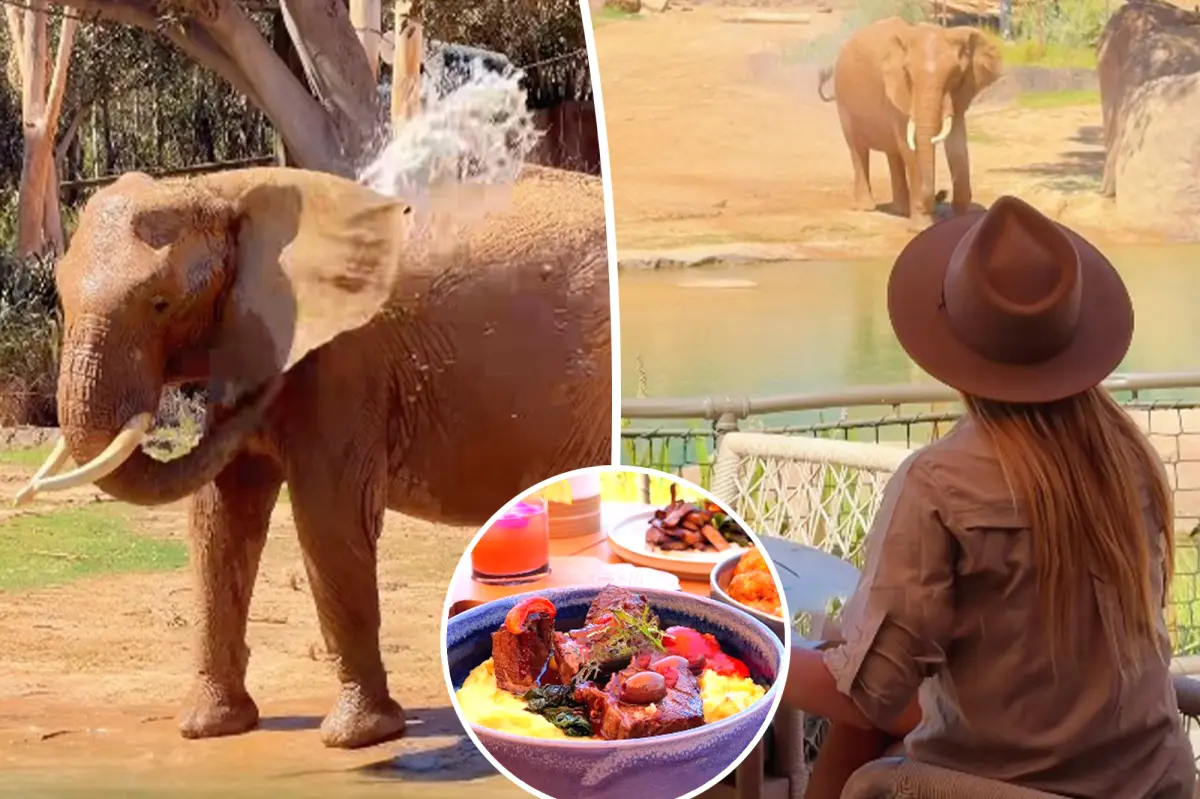
Let’s be honest: when you picture a day at the zoo, your mind probably goes to overpriced hot dogs, limp french fries, and the faint smell of popcorn mixed with animal enclosures. Nobody ever said, “I can’t wait to have a fine dining experience next to the giraffes.” But the San Diego Zoo Safari Park has completely flipped that script, and the result is one of the most talked-about lunch reservations in California. Tucked inside the park’s brand-new Elephant Valley is Mkutano House, a two-story restaurant that opened in March and has somehow become an unlikely culinary destination. The reason? It’s not just the food, though the menu is seriously impressive. It’s the view. Diners who are lucky enough to snag a table on the outdoor patio are treated to something no Michelin-starred restaurant in the world can offer: enormous African elephants wandering freely just steps away, wading into a shimmering lagoon, and doing what elephants do, while you cut into a $42 ribeye. The contrast is almost surreal. One minute you’re sipping a crafted cocktail; the next, you’re watching a giant pachyderm cool off in the water as if you’d stumbled into a nature documentary. It’s lunch and a show in the most literal sense possible, and apparently, Californians absolutely cannot get enough of it.
The restaurant has reportedly nearly sold out its weekend bookings through the end of the year, which is kind of wild when you remember that diners first have to pay admission to the Safari Park just to get in the door. That means a casual lunch for two can easily run into the hundreds of dollars once you factor in park tickets, parking, appetizers, entrées, and maybe a glass of wine. And yet, the crowds keep coming. The demand has been so intense that securing a reservation feels less like booking a table and more like winning the lottery. Even the restaurant’s own executive director, Pat McTigue, seems a little amazed by the success. He told SFGATE that running a dining establishment where the wildlife is the main draw comes with some very unusual challenges. “It definitely comes with some different operating parameters,” he said. But at the end of the day, the mission remains simple: the elephants always come first. “The wildlife is at the heart of everything we do,” McTigue emphasized. “We want to make sure that we keep our herd at the forefront of our thoughts.” And that careful balancing act, between world-class hospitality and animal welfare, is exactly what makes Mkutano House so fascinating.
2. A Space Designed to Feel Like a Gathering
The name Mkutano House isn’t just a random exotic label. In Swahili, “mkutano” means “gathering,” and the entire design concept is built around that idea. From the moment you walk in, you’re meant to feel like you’ve entered a warm, communal space that celebrates both African culture and the natural world. The centerpiece of the interior is a massive faux “Heritage Tree” that sprawls across the ceiling, its branches reaching out as if sheltering the entire dining room. It’s a stunning visual anchor, but the details are what make it truly special. The tree is adorned with handcrafted beadwork created by Kenyan female artists, each piece adding a layer of authenticity and storytelling to the space. It’s not just decoration; it’s a tribute to the communities and cultures that share the elephant’s homeland. The two-story layout also gives the venue a sense of occasion. Downstairs, the main dining room buzzes with energy, filled with families, couples, and safari-goers who managed to book ahead. Upstairs, a more relaxed lounge offers a different vibe entirely. But no matter where you’re sitting, the design keeps pulling your attention toward the big glass windows and the sweeping views of Elephant Valley beyond.
There’s something almost theatrical about the setting. The restaurant is perched right at the edge of Denny Sanford Elephant Valley, the Safari Park’s massive new 13-acre elephant habitat. This isn’t just a little enclosure with a few trees; it’s an $80 million project that took more than three years to build and debuted in March after years of careful planning. The goal was to create a space where visitors could feel startlingly close to the herd, and in some spots, guests are only about 15 feet away from elephants who weigh several tons. For the diners at Mkutano House, that proximity is the whole magic trick. You’re not watching elephants through a screen or from a distant observation deck; you’re sharing the same air, listening to the same sounds, and occasionally catching a whiff of the same earthy, grassy scent that follows the herd around. It’s immersive in a way that no aquarium brunch or rooftop bar can match. And because the elephants are free to roam, swim, and interact on their own schedule, every single visit is completely different. You might catch a baby elephant splashing in the lagoon during your appetizer, or you might watch a matriarch slowly stroll past your table while you’re deciding between the short ribs and the cod. There’s no script, no guarantee, and that unpredictability is part of what makes it so thrilling.
3. Goodbye, Zoo Food; Hello, Real Cuisine
Let’s talk about the food, because this is where Mkutano House really separates itself from any standard zoo concession stand. The menu reads like something you’d expect from a trendy restaurant in the middle of Los Angeles, not a dining venue tucked inside an animal park. Gone are the days of sad, soggy burgers and frozen treats. Instead, the kitchen is turning out dishes that could hold their own in any serious culinary scene. Current offerings include $23 koji-marinated chicken wings, which are slathered in a sweet-and-savory agave glaze that gives them a glossy, caramelized finish. There’s a $27 vegan spicy rigatoni that’s clearly not an afterthought, featuring a rich, heat-forward sauce that even meat-eaters might find themselves craving. For something more substantial, there’s a $38 broiled black cod served with coconut curry and a mango chili sauce that balances creamy, fruity, and spicy flavors in every bite. And if you’re in the mood for comfort food with a fine-dining twist, the $41 braised beef short ribs are exactly what you want, tender, slow-cooked, and deeply flavorful. Even the cornbread, which you might expect to be a simple side, is a $12 production in its own right. This is not your childhood zoo meal. This is a proper restaurant that happens to have an elephant enclosure as its backyard.
The prices are definitely on the higher side, but that hasn’t stopped diners from flocking in. In fact, the restaurant currently holds a solid 4.7-star rating on OpenTable, which is no small feat for any establishment, let alone one that just opened its doors. Part of what makes the dining experience so appealing is that the food and the scenery work together. You’re not just paying for a meal; you’re paying for an experience that engages all the senses. The sight of elephants moving through the valley, the sound of their occasional rumbles and trumpets, the taste of a perfectly executed dish, the feeling of warm California air if you’re on the patio, it all combines into something memorable. And while the food is undeniably good, most people would admit that the scenery is the real draw. You could serve a mediocre sandwich on that patio and people would still book months in advance, because the opportunity to watch elephants live their lives while you enjoy a leisurely lunch is genuinely once-in-a-lifetime material. But the fact that the kitchen is actually delivering high-quality, ambitious cuisine makes the whole package feel almost too good to be true. It elevates the occasion from a novelty to a legitimate dining destination, one that people will happily drive hours to experience.
4. The Elephants Come First
Of course, operating a restaurant in the middle of an elephant habitat isn’t exactly easy. The Safari Park’s executive director, Pat McTigue, was candid about the unique challenges that come with this unusual venue. Running a kitchen is already a high-pressure job, but when you have a herd of enormous, sensitive animals living right outside your window, every decision has to be made with them in mind. There are safety protocols to follow, noise considerations to think about, and a deep responsibility to ensure that the elephants are never stressed or disturbed by the presence of hundreds of curious diners. McTigue stressed that the wildlife is absolutely at the heart of everything the Safari Park does, and that extends to the restaurant. “We want to make sure that we keep our herd at the forefront of our thoughts,” he explained. That means carefully managing the flow of people, maintaining respectful distance where needed, and always being ready to adapt if the elephants need space or show signs of discomfort. It’s a delicate dance between hospitality and conservation, and so far, the park seems to be handling it beautifully.
There’s also something deeper going on here, beyond just the logistics. By placing diners so close to these animals, the Safari Park is tapping into a powerful emotional response. It’s one thing to read about elephant conservation or watch a documentary; it’s another to sit just a few dozen feet away from a matriarch and her family, to see the wrinkles on their skin, the intelligence in their eyes, the gentle way they interact with one another over a shared lagoon. That kind of proximity creates empathy, and empathy is often the first step toward caring about conservation efforts. The hope is that guests who leave Mkutano House after a memorable meal will also leave with a deeper appreciation for elephants and a stronger desire to protect them in the wild. The restaurant becomes more than just a place to eat; it becomes an ambassador for the species. And in a world where so many animals face habitat loss and threats from human activity, that kind of connection is priceless. So while the $42 ribeye and the $12 cornbread might seem luxurious, there’s an argument to be made that the real value is in the awareness and wonder that diners carry with them long after the meal is over.
5. The Quest for a Table and the Consolation Prizes
If you’re hoping to get a table at Mkutano House, you should probably start planning now. Weekend reservations are reportedly nearly sold out through the end of the year, which means the window for popping in on a whim has long closed. But even if you can’t secure that coveted spot on the patio, there are still ways to experience the magic of Elephant Valley while enjoying a bite to eat. Upstairs, the Ona Lounge offers a more relaxed alternative, serving cocktails and small bites in a setting that still provides the same incredible views. It’s the kind of place where you can grab a drink, settle into a comfortable seat, and watch the sun move across the valley while the elephants go about their day. For those who want something even more casual, a quick-service window serves food that can be taken to nearby seating, allowing visitors to enjoy a more budget-friendly meal without sacrificing the experience. But let’s be honest: if you’re the type of person who wants the full dining flex, there’s only one table that matters, and it’s outside. The patio tables are the crown jewels of Mkutano House, offering the closest, most direct view of the lagoon and the herd. They’re also the hardest to get, which only adds to their allure.
The whole situation feels a little like trying to get reservations at a trendy New York hotspot, except instead of hoping to spot a celebrity, you’re hoping to spot a baby elephant taking its first swim. The scarcity of those prime tables has turned the restaurant into something of a status symbol, at least in certain circles. People are showing off photos of their lunches next to elephants the way they might post from an exclusive rooftop bar in Dubai. And sure, there’s a certain amount of indulgence in paying $40-plus for a meal inside a zoo, but the experience is genuinely unlike anything else out there. It also speaks to a broader trend in the hospitality world, where people are increasingly seeking out immersive, memorable dining experiences over just a good meal. You can get excellent steak anywhere; you can’t get excellent steak while a family of elephants splashes in a lagoon just beyond your table. That uniqueness is what drives the bookings, the excitement, and the willingness to pay the premium. It turns a lunch into a story, a story into a memory, and a memory into something you retell to everyone you know.
6. More Than Just a Meal
At its core, Mkutano House is about something bigger than food or even elephants. It’s about the human desire to connect with the world around us in meaningful, surprising ways. We live in an era where so much of our time is spent staring at screens, and the moments that truly stick with us are usually the ones that pull us away from our digital lives and drop us directly into nature. This restaurant is a celebration of that pull. It’s a place where you can gather with friends, family, or strangers and share a moment of collective awe as a massive creature ambles into view. It’s a reminder that the world is still full of wonders, and that sometimes, the best seat in the house is the one with a view of something real, something wild, something that doesn’t care about your reservation time or whether you ordered dessert. The animals don’t perform. They just exist. And that honesty is refreshing in a world that often feels overly curated and staged.
For the San Diego Zoo Safari Park, Mkutano House is a bold statement about the future of zoos and wildlife parks. It shows that conservation and entertainment don’t have to be at odds; they can coexist in a way that enriches both the animals and the visitors. The revenue from the restaurant and lounge helps support the park’s mission, while the experience inside those walls helps build a community of people who care about elephants and the broader natural world. It’s a virtuous cycle, and one that other parks and aquariums are likely to watch closely in the coming years. But for now, the real draw is simply the joy of being there. It’s the sound of laughter mixed with elephant calls. It’s the taste of a perfectly cooked bite while you watch a giant gray silhouette move through the golden afternoon light. It’s the feeling of being small in the best possible way, reminded of the majesty of the animal kingdom. Mkutano House may be a restaurant in a zoo, but the experience it offers is so much more. It’s a gathering, a celebration, and an invitation to be present in a moment that feels both timeless and fleeting. And that, more than any ribeye or black cod, is what keeps people coming back, planning months ahead, and counting down the days until they can once again raise a glass to the elephants.