


Imagine this: you’re walking down Main Street, U.S.A., the smell of popcorn hanging in the air, and a beloved character steps out to greet you. Instead of the usual cheerful hello and a photo, this character stops, looks you in the eye, and asks about the beach vacation you took last summer. It recalls the story you told it years ago, references your nervous laugh, and then—on the spot—sings a little song about how much you love your grandmother’s apple pie. It sounds like the kind of magical encounter every Disney fan has dreamed of since childhood. But according to two new patents quietly filed by Disney Enterprises, that future is no longer just fantasy. Disney has been granted patents for AI-powered animatronic characters designed to form genuine bonds with guests through interactive communication. These are not just moving robots that repeat pre-recorded lines. They are machines built to listen, remember, respond, and even create original art in the moment. The patents describe a system where a guest shares a personal memory, the animatronic searches its internal memory bank for a matching story, and then generates a heartfelt, context-aware response. If no match exists, the character invents a new memory and stores it for future visits. The second patent goes even further, allowing the character to compose and perform a song, poem, or dance based on the guest’s shared memories. This is Disney’s boldest step yet toward a world where the line between automation and genuine human connection becomes beautifully, and perhaps uncomfortably, blurred.
The mechanics behind these patents are as fascinating as they are eerie. At its core, the system is designed to make guests feel heard and known. You tell the animatronic something meaningful—maybe a childhood trip to Disney World, a beloved pet, or a funny mishap at work—and the character responds with something that feels personal and spontaneous. It might say, “That reminds me of the time I helped a lost little duckling find its mother,” and then launch into a story that somehow mirrors your own. If the robot doesn’t have a matching memory, it creates one, adding it to its growing collection of experiences. Over time, the character could build a rich, simulated inner life, one shaped by every guest it has ever met. It’s easy to see why Disney would want this. For decades, the company has worked to create immersive worlds where guests can escape reality. A character that remembers you by name, recalls your favorite ride, and jokes about your fear of roller coasters would make the magic feel astonishingly real. But there is also something undeniably strange about the idea. We are used to sharing our memories with friends and family, with people who have their own lives, feelings, and consciousness. Sharing them with a machine—even one wearing a fluffy mascot costume—raises questions about what we are really connecting with. Are we bonding with a character, or with a sophisticated algorithm designed to mimic empathy? And if a robot remembers us better than some humans do, does that make the connection more meaningful or more hollow?
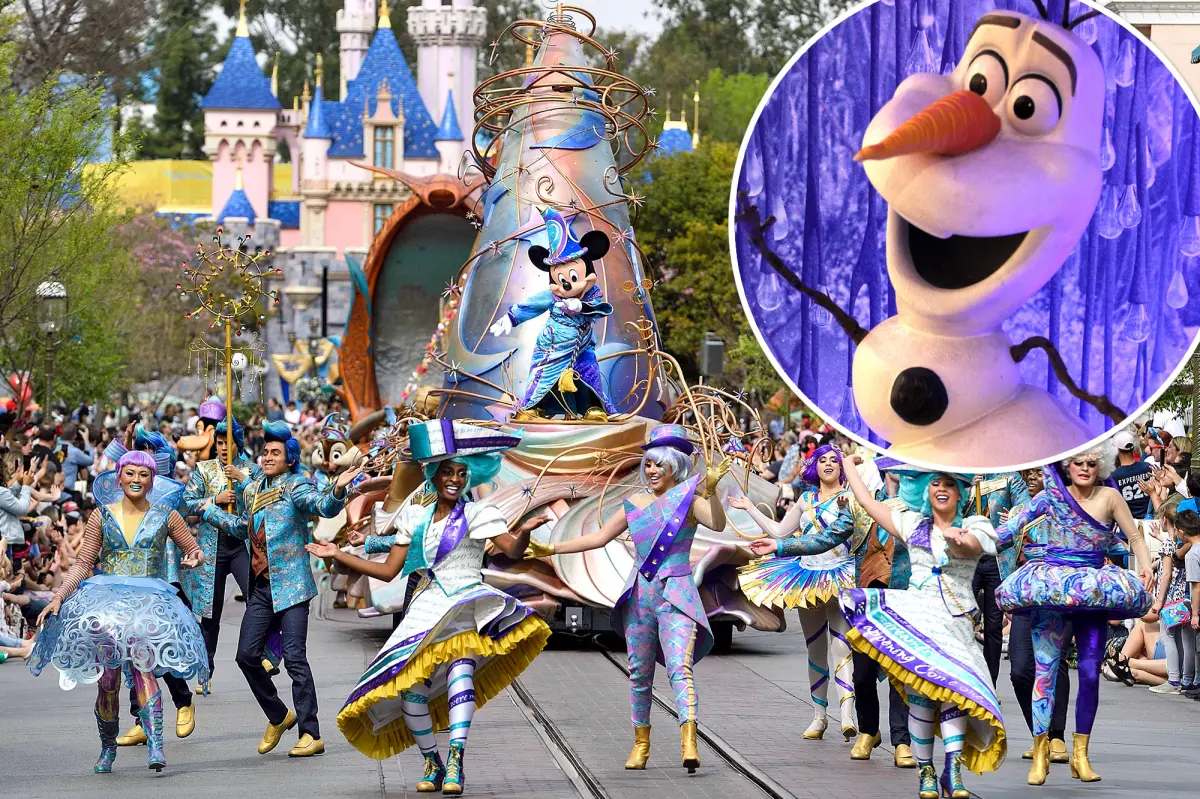
Disney’s timing is no accident. The company has been pouring resources into advanced animatronics for years, and this latest patent is part of a larger push toward automation and personalized experiences. Earlier this year, Disneyland Paris introduced a free-roaming Olaf animatronic, a snowman robot that could wander through the park, interact with guests, and bring the magic of Frozen to life without a human performer inside. Disney called it its “latest brand-new innovation,” and it went viral—but not entirely for the right reasons. In March, the robot malfunctioned in front of a crowd, powering down mid-sentence and toppling backward onto the ground. The moment was caught on camera and shared across social media, sparking both laughter and concern. It was a reminder that even the most advanced technology can be fragile, and that a glitchy robot is not exactly the image of timeless enchantment Disney hopes to project. Around the same time, Disney also revealed its first-ever audio-animatronic of Walt Disney himself, the company’s founder. The lifelike figure was meant to be a tribute, but many fans found it unsettling, saying it didn’t quite capture the real man’s warmth and spirit. These moments capture the double-edged nature of Disney’s technological ambitions: every breakthrough brings wonder, but it also risks crossing into the uncanny valley, where things look and act almost human but feel deeply wrong.
As news of the AI character patents spread across the internet, fans found themselves deeply divided. The comment sections were quickly flooded with passionate reactions, ranging from excitement to outright dread. “This is inevitable, & I hate it!” one person wrote. “AI sucks and I’m tired of it in everything,” said another. Many of the concerns centered on the human beings who bring Disney’s characters to life every day. Cast members in character costumes are more than just employees; they are the heart of the parks, improvising conversations, offering hugs, and responding to the unpredictable emotions of children and adults alike. One social media user worried that the new technology was “basically trying to eliminate having cast members playing the characters,” noting how some guests treat those workers poorly. Another wrote, “Why do I see somewhere down the road Disney ends up firing majority of the cast members who work at the parks in support of having AI garbage to work the rides, work the food stands and of course play the characters that roam around the park.” These fears are not baseless. Disney has already invested heavily in automation, including a recently granted patent for automatically detecting and removing background crowds from photos, making guest photos cleaner without any human editing. The pattern is clear: Disney is leaning into technology wherever it can improve efficiency, reduce costs, or create experiences that were previously impossible. But for many fans, the soul of Disney is found in human connection, and no robot can replace the genuine warmth of a performer who laughs with you, comforts you, and makes you feel like the most important person in the world.
There is also a deeper, more philosophical side to this story. The idea of animatronics that remember us touches on something primal. As children, many of us talked to our toys, believed they had feelings, and imagined they came alive when we weren’t looking. Disney has always tapped into that childhood wonder, creating characters that feel real even though we know they are imaginary. Now, with AI, those characters might actually seem to remember us, to care about us, to hold a piece of our story within their memory banks. That is a powerful and potentially beautiful thing. But it also raises uncomfortable questions about privacy, manipulation, and authenticity. When you share a personal memory with a robot, where does that memory go? How is it stored, and how long is it kept? Disney has not publicly detailed the data-handling practices behind these patents, but the idea of a company using our most intimate stories to sell us magic is troubling to some. There is also the question of whether a machine-generated song or poem can ever be truly meaningful. When a robot composes a lullaby about your childhood dog, is it expressing creativity, or just rearranging patterns based on millions of other songs? The magic lies in the illusion, but knowing it’s an illusion doesn’t necessarily make it less enjoyable. We watch movies, read novels, and play video games, knowing full well that the stories are fictional, yet they still move us. Perhaps AI characters will be no different—artificial, yet somehow capable of touching something real inside us.
In the end, this is a story about the future of wonder itself. Disney has always been a company that uses the latest technology to create magic, from early audio-animatronics to immersive 3D projections and now artificial intelligence. The patents for AI-powered characters are not proof that robots will replace every costumed performer tomorrow. Many patents never make it past the idea stage, and Disney is known for protecting its intellectual property with an expansive portfolio of speculative filings. But they are a clear sign of the direction the company is heading. The challenge will be finding the balance between innovation and humanity, between the convenience of automation and the irreplaceable warmth of a living, breathing performer. If Disney uses these technologies to enhance the work of its cast members, giving them tools to create even more personalized and magical moments, fans may embrace the change. If instead the company uses AI to cut costs and replace people, it risks destroying the very thing that makes the parks special. The next time you stand in line for a ride, look at the animatronics around you. They might not just be moving and talking anymore. They might be listening, remembering, and waiting for you to tell them your story. And whether that feels like a dream come true or a privacy nightmare, one thing is certain: the future of Disney is about to get a lot more personal. We can only hope that, in chasing that future, Disney remembers what truly matters—not just the magic, but the people who make it real.