





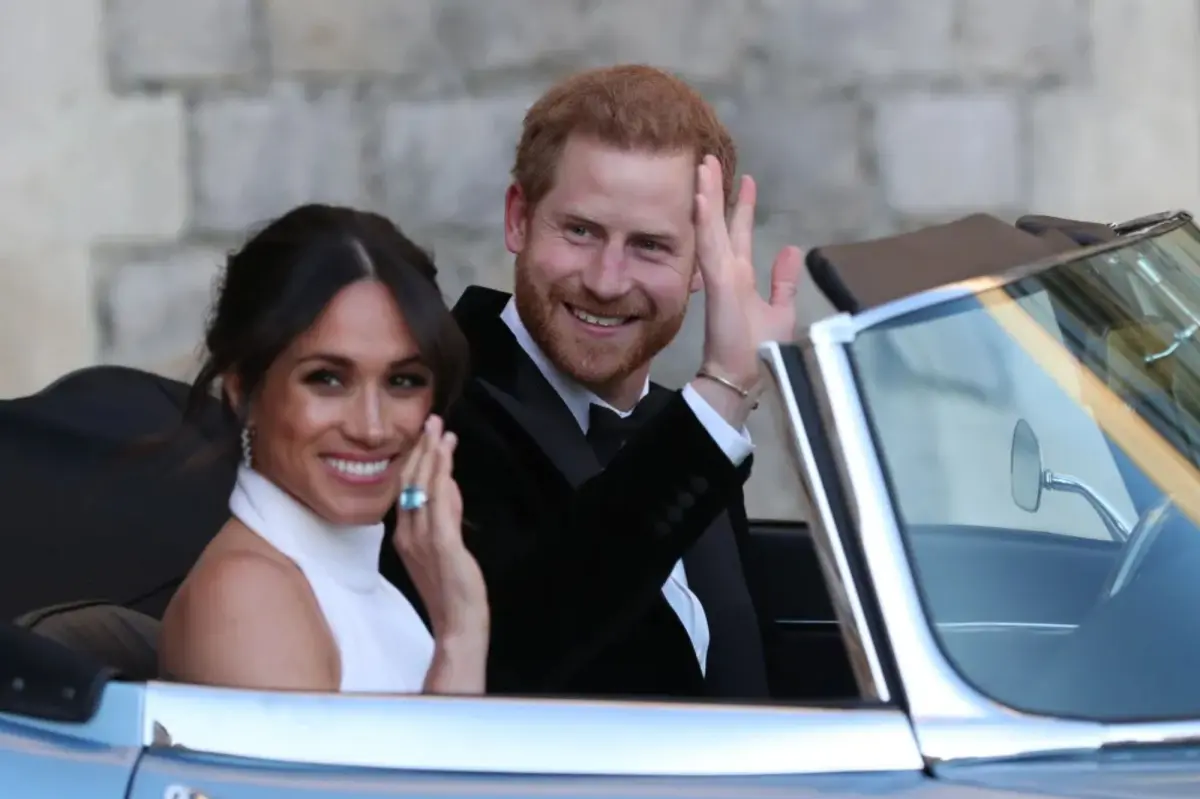
They have landed. Not with a triumphant fanfare, but quietly and a little awkwardly, as if they half-hoped the British weather would obscure the arrival. Prince Harry and Meghan Markle are back in the United Kingdom, trading 5,000 miles of Californian sunshine for a grey, uncertain welcome. The tabloids have been sharpening their knives for weeks. The broadsheets have filled their comment pages with speculation. The rumour mill is running at fever pitch. Will they buy a home in the Cotswolds, that effortlessly pretty, celebrity-filled corner of rural England where organic farms and 17th-century inns provide a perfect backdrop for a fresh beginning? Is Meghan, the actress who long ago stopped acting, quietly considering a return to the small screen? And what of the children? Will Prince Archie and Princess Lilibet finally have a proper, unhurried reunion with at least one of their grandfathers, away from the cameras and the lawyers? Perhaps. Perhaps, perhaps. With the Sussexes, everything is carefully teased, elegantly stage-managed, and ultimately unresolved. But underneath all the spin, there is something unmistakable: this is not a victory lap. It is a return of the prodigal pair, or at least a pair hoping the UK hasn’t entirely given up on them. And no amount of carefully curated “sources” can disguise the awkwardness of that. It takes courage, or desperation, or perhaps both, to come back to a place where you know every headline will be scrutinized, every expression decoded, every rumour treated as fact. They are not stupid; they must have known how cold the reception would be. Whatever you think of them, that much deserves recognition. This is not an easy homecoming. It is a chill one, and they feel it.
Let’s be honest: no amount of spin can rescue this narrative. The so-called Megxit was sold as liberation, a flight from a cruel and outdated institution, a brave new world of financial independence and global impact. The reality has been messier, smaller, and less flattering. There were the multi-million-pound deals with Netflix and Spotify that produced far less than promised. There was the celebrity lifestyle brand with its jars of jam that some struggled to move off the shelves. There was the image of the Duke and Duchess of Sussex sitting in Row 8 at a New York Knicks playoff game, as the cameras swept past them as if they were just another couple who had been given corporate tickets. For people who once commanded stadiums and headlines, it was a humbling symbol of how far their star had fallen. In America, it seems, the initial fascination is fading. In Britain, resentment never really went away. It would be all too easy, then, to join the pile-on. It has become something of a national sport, after all. We can point out the hypocrisy, the tone-deafness, the way they seem to want royal privilege without royal constraints. We can sneer at the unsold jam and the carefully leaked “privacy” stories. We can take sides in the endless feud between the Sussexes and the Waleses, and we can do it with the smugness of people who have never had to live their lives under the glare of a million judgmental eyes. But I won’t. Not because they don’t deserve criticism — they do, and plenty of it — but because a flat-out rejection, a refusal to forgive, misses the bigger picture. The monarchy needs Harry and Meghan, not as pampered celebrities, but as people who can still connect, shake things up, and remind an increasingly indifferent public why the Crown matters. Hating them is easy. Understanding what their return actually means is harder — and far more important.
Because the British monarchy, let’s face it, is not in great shape. It has been battered by scandal after scandal, and it has responded with the energy of an institution that has grown too comfortable with its own survival. It took far too long to decisively remove Prince Andrew from the scene, after his friendship with Jeffrey Epstein and the unspeakable crimes associated with that friendship caused incalculable damage to the royal name. The institution defended him, shielded him, and only reluctantly let him go when public disgust became impossible to ignore. That is not the behaviour of a healthy institution; it is the behaviour of a family that has lost its moral compass. Meanwhile, the current king is a committed, well-meaning man, but he is also an ailing one, already carrying the crown at an age when most men might expect to slow down. Around him, his siblings are dutiful but dull, rarely inspiring much beyond polite applause. And then there are William and Kate. They remain popular, of course, but they have struggled to escape the reputation of being work-shy, of treating royal duties as something to be squeezed in between school runs, family holidays, and the careful cultivation of their own image. Prince William, in particular, can often make royal life seem like an inconvenience, a part-time job that gets in the way of what he really wants to be doing. That may be unfair — the man has a young family and a great deal of pressure on his shoulders — but perception matters, and the perception is increasingly that the Windsors are coasting. Into this vacuum step the Sussexes. Love them or loathe them, they have charisma. They have the ability to generate attention and to make people care. The problem is that charisma, without purpose, is just celebrity; and celebrity, without loyalty, is just noise. But if the monarchy is willing to look past its wounded pride, it might find in Harry and Meghan a jolt of energy it desperately needs.
For many Britons, the hardest part is that Harry’s betrayal feels personal. We watched him grow up, after all. We have etched into our national memory the image of a forlorn 12-year-old boy walking behind his mother’s coffin in 1997, his face a mask of grief so raw that it still has the power to stop a television documentary. That boy was one of us. We invested in him. We cheered for him when he chose military service, when he carried himself with his mother’s warmth and mischief, when he seemed to be carving out a role that would make Diana proud. Even now, memories of his redeeming features linger. He has Diana’s people skills, her ability to walk into a room and make the least powerful person feel seen. He showed, through his work with the Invictus Games and his recent involvement with The HALO Trust — the landmine charity that built so directly on his mother’s legacy — that there is a meaningful, even vital role for him in public life. That understanding of suffering, that desire to serve, is real. It has been drowned out in recent years by the noise of books and interviews and feuds, but it has not gone away. The tragedy of Harry in California was that so much of that potential was wasted. He was reduced to a cameo in Meghan’s Netflix lifestyle show, a smiling accessory in her carefully designed world, a guest at Kris Jenner’s 70th birthday party. The man who had once danced on the beaches of Invictus, who had walked through minefields, who had comforted wounded soldiers, seemed to have been replaced by a Hollywood extra. And yet — and this is the thing — that earlier Harry is not dead. He is buried, perhaps, under layers of grievances and defenses, but he is still there. We saw him bury his mother, and we watched him try to build a life that would honour her. If this return to the UK can stir something in him, if he can remember who he was and who she wanted him to be, then redemption is possible. It would not be easy, and it would not be quick, but it would be real. We should not close the door on it.
Then there is the uncomfortable business of William and Kate. The Sussexes’ return will have cast a very dark cloud over their summer at Balmoral, where photographs of Kate’s tight, fixed grin fooled no one. The relationship between the two couples has never been a simple story of sibling rivalry; it has always been a power struggle, conducted with carefully chosen words, strategic leaks, and the occasional petty squabble that should have been below them. We have heard, over the years, about disputes over bridesmaid tights, about borrowed lip gloss, about who said what at a dress fitting. It all sounds absurd, and in a way it is absurd, but it is also a marker of something deeper. From the beginning, the notoriously controlling Prince William seemed resentful of his younger brother’s determination to forge his own path — particularly with a strong, ambitious woman who was never going to obey the royal script. William is the heir, the future king, and he has always understood that his brother’s role is supposed to be secondary. Harry, however, wanted more. He wanted to be not just a supporting character but a leader in his own right. And Meghan? For all her flaws, she is a slick public performer, polished, articulate, and instinctively glamorous. Before it all turned sour, she seemed entirely capable of upstaging her in-laws. That cannot have been easy for William and Kate, who were not just visiting; they were preparing not only for a job but for a destiny. The resentment may be understandable, but it has also become corrosive. It has turned a public institution into a soap opera, and it has distracted from the real work of service. None of this excuses the behaviour on either side, but it explains why every homecoming is so fraught. The return of the Sussexes should be a wake-up call. If the Waleses want to win the battle, they need to stop playing the game and start raising their own game. More importantly, they need to remember that this feud, left to fester, will damage the monarchy far more than any single scandal. The crown is not a trophy to be guarded. It is a responsibility to be shared.
So what happens now? The easy answer is to say that the Sussexes should be treated with coldness, that they have made their bed, that they are not to be trusted. The easy answer is also the wrong one. No one is asking for the red carpet. No one is suggesting that Harry and Meghan should be instantly welcomed back with all their old privileges, as if nothing happened. But a flat refusal to forgive, even for the most ardent royalist, is a refusal to recognize how much is at stake. The monarchy needs people who can breathe life into it. It needs to demonstrate that it is not just a museum of ancient rituals, but a living, breathing institution capable of change. It needs Harry’s charisma and his instinctive connection to the public. It needs Meghan’s poise and her ability to command attention. It needs William and Kate to look at their rivals and realise that duty is not a burden to be endured but a privilege to be embraced. And if that requires some uncomfortable conversations, some humble apologies, some genuine — not manufactured — reconciliation, then so be it. Families are complicated. This family happens to be royal, and its dramas are played out before the world. But the underlying truth is no different. People make mistakes. People lose their way. People say terrible things to each other. The question is whether they can find a way back. Harry has a chance to build a new role for himself, one that honours his mother’s legacy and earns back the trust he squandered. Meghan has a chance to show the British public — and, perhaps more importantly, her children — that she is not simply a celebrity in search of a stage, but a partner in a larger enterprise. And William and Kate have a chance to prove that they are not as dull and defensive as they sometimes appear. That would be a far better outcome than another decade of exile and recrimination. It would be a story of redemption, and the British monarchy, of all institutions, could do with a little hope. After all the egos have landed, perhaps the most human thing left is the possibility of a genuine landing. Not a victory lap. Not a surrender. Just a family, trying again. Let’s not make that harder than it already is.