





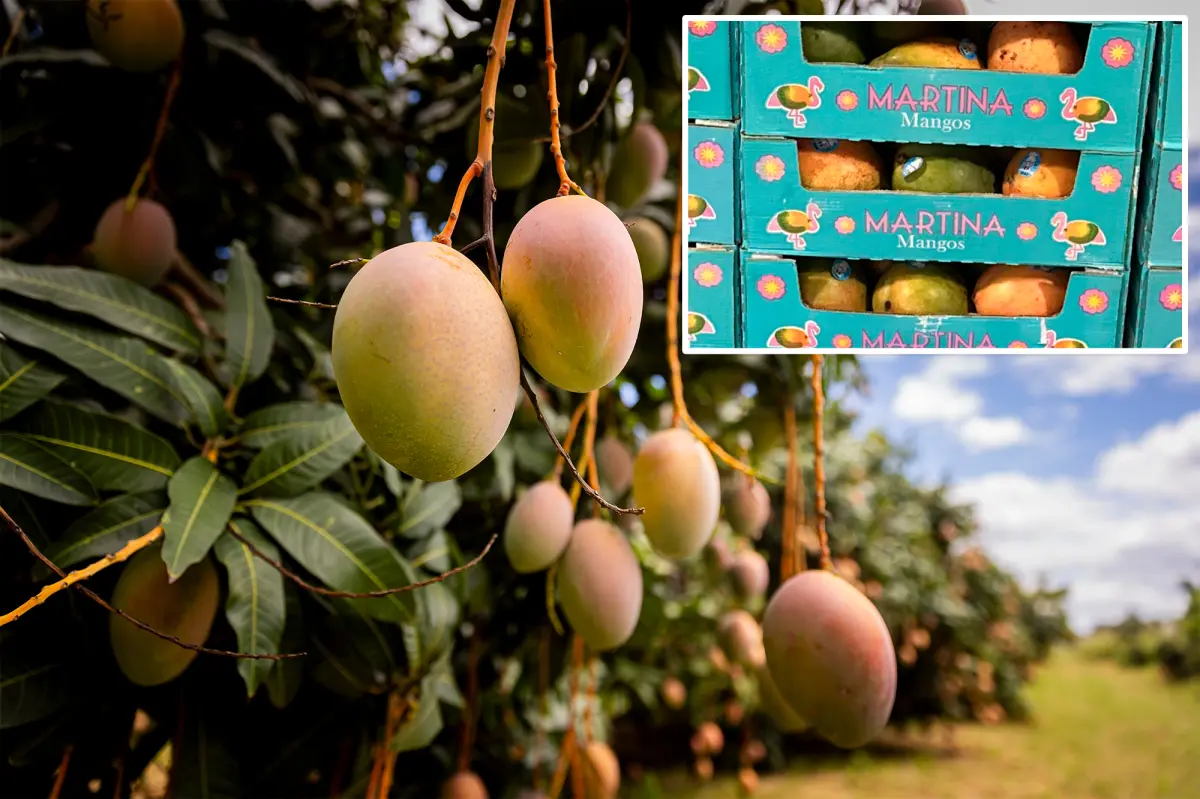
Let’s face it: there are few things more delightful than bringing home a bright, fragrant bag of mangoes from the grocery store. You picture the sweet, juicy cubes in a summer smoothie, the tangy salsa for taco night, or simply slicing it right over the sink and letting the golden juice run down your chin. But a quiet, unsettling piece of news broke late last week that has thrown a wrench into that delicious daydream for shoppers in the Northeast. Federal regulators have announced a recall of hundreds of boxes of mangoes sold specifically at Walmart stores, and the reason is the four-letter word that no one wants to hear in connection with their produce: Salmonella. It’s enough to make you pause next time you’re rolling your cart past the tropical fruit display. The recall specifically targets Martina-brand mangoes, which came in large nine-count boxes, and they made their way to store shelves in the tri-state area and beyond. If you’ve shopped recently in certain parts of New York, New Jersey, Pennsylvania, or Connecticut, and you have a bag of these in your kitchen right now, you’ll want to pay very close attention. This isn’t a vague warning; it’s a straight-up request to check your fridge, because your summertime treat might have become an unwelcome health risk.
Let’s dig a little deeper into the how and why of all this, because it can feel alarmingly random. The recall was initiated by a produce distributor called Panorama Produce, operating fully in lockstep with the U.S. Food and Drug Administration (FDA). The rather curious—and frankly, a bit reassuring—part of this story is the precise nature of the testing that triggered this entire mess. The FDA did not find Salmonella on the exact mangoes that were sitting on Walmart’s shelves in those specific states. Instead, their routine testing regime turned up the pesky bacteria on mangoes that were grown on the same farm in Mexico. Now, for the uninitiated, this might sound like overcautious behavior, but in the world of food safety, it’s a very big deal. It’s about the concept of “shared source.” If the soil, the irrigation water, the packing facility, or even the hands of the harvesters on a particular farm have been compromised, every single batch that leaves that property is viewed with extreme suspicion. It’s a bit like knowing your neighbor has a leaky roof—you might have a dry house, but you’re still both under the same storm clouds. So, while the specific fruit that tested positive never actually crossed the border into the United States, the fact that they share a genetic and environmental lineage with the ones that did make it to Walmart was enough. Panorama Produce made the tough, responsible call to pull hundreds of boxes off the market, characterizing it as a precautionary move to protect public health before any potential outbreak spirals out of control.
Now, here is the part that requires a little bit of detective work in your own home. You need to determine if the mangoes sitting in your crisper drawer are the ones that need to be evicted immediately. This isn’t just about buying any mango; it’s about buying a very specific, identifiably labeled product. First, look for the sticker. The affected mangoes bear a light blue or pale blue “Agrofepac” sticker. If you don’t see that brand, you’re probably in the clear for this specific recall. But don’t stop there—you need to flip that little label over and look at the digit string. The PLU number, which is the code cashiers use, must be 4584. That is the specific varietal and size code for these large mangoes. Additionally, the universal product code (UPC) on the main packaging should read 075030619480. Finally, you’re looking for distribution dates—specifically fruit that arrived at the stores between August 10th and August 21st. If you happen to have these mangoes, the advice from the FDA and the company is blunt: do not eat them, do not cut them, don’t even taste a little piece to see if they’re okay. The bacteria don’t have a taste or a smell, so your senses won’t save you. Instead, you have two options. You can safely discard them in a trash bag that is sealed tightly to prevent animals from getting into them, or you can take them back to the Walmart where you bought them. They should issue you a full refund without any fuss, because a recall of this nature voids the “no returns on perishables” policy. It’s a small hassle, but a few minutes of your time and a couple of wasted dollars are infinitely preferable to a week spent in agony glued to the bathroom floor.
Speaking of the bathroom floor—let’s talk about what Salmonella actually does to the human body, because it’s important to understand why the regulatory agencies are treating this with such gravity. The infection, technically called salmonellosis, is a nasty gastrointestinal roller coaster. Usually, symptoms kick in anywhere from six hours to six days after you consume the contaminated food. You can expect the classics: a sudden fever, stomach cramps that feel like your insides are tying themselves into knots, diarrhea (which can be bloody), nausea, vomiting, and a general sense of extreme exhaustion. For a healthy adult, this is generally a miserable 48 to 72 hours, and your body will likely fight it off on its own as long as you stay very hydrated. However, the real danger lies with the most vulnerable among us. For young children—especially those under five—the dehydration can become life-threatening very rapidly. Similarly, frail or elderly individuals may not have the immune reserve to battle the infection. And for anyone who is immunocompromised, whether due to chemotherapy, HIV, or organ transplant medications, a simple bout of Salmonella is a medical emergency that often requires hospitalization and intravenous antibiotics. Even worse, in those fragile populations, the bacteria can stop being merely a stomach bug. It can breach the intestinal wall and enter the bloodstream. Once that happens, it becomes a systemic infection that can seed dangerous conditions like arterial infections, endocarditis (an infection of the heart’s inner lining), and even severe reactive arthritis that can last for months or years. So, while the “healthy people will be fine” caveat exists, the risk calculation is simply not worth it.
It’s also worth taking a moment to humanize the company behind this recall, rather than painting them as faceless corporate villains. Recall the fact that Panorama Produce is doing this voluntarily. In a world where companies sometimes try to negotiate or hide behind legal battles to avoid the financial hit of a recall, wading in and pulling product preemptively is a sign of a company that is trying to do the right thing. Food safety in the modern era is a complicated web. A farm in Mexico relies on natural water sources that might be shared with local wildlife. Birds can fly over fields and drop contaminated droppings. A wash station can get clogged and leave a residue on the fruit. It is rarely a case of negligence; it is a case of invisibility. The fact that the FDA testing caught this trace, and that the company swiftly activated its traceability system to pinpoint exactly where those boxes went, is a testament to the safeguards we often take for granted. For consumers who have questions, Panorama Produce has opened a direct line of communication. Anyone with concerns can reach out to them via email at information@panoramaproduce.com. They have pledged to staff that inbox Monday through Saturday, specifically from 9 a.m. to 7 p.m. Eastern Time. So, if you are scared or confused, don’t hesitate to reach out—real people and customer service representatives will be there to walk you through the process.
Finally, let’s zoom out and look at the bigger picture, because recalls like this are far more common than the nightly news might suggest, and we shouldn’t panic every single time we buy fruit. In fact, you could argue that the frequency of these alerts is actually a sign that our food safety net is actively working. Think about it: the FDA routinely tests random samples from international and domestic growers. They are checking pesticide residue, microbial contamination, and heavy metals. When they find a “hit,” they don’t wait for people to get sick—they act immediately. This recall is a warning shot across the bow, prompting you to audit your produce drawer. So, as you go forth, let this serve as a gentle reminder about basic kitchen hygiene. Always wash your hands before and after handling fresh produce. Even if this recall doesn’t affect your specific stash, it’s good practice to wash the skins of fruits like mangoes and melons thoroughly before cutting them; since you run a knife through the skin, the bacteria on the outside can transfer to the juicy flesh on the inside. And don’t forget to clean your countertops, cutting boards, and knives with hot, soapy water after prepping raw proteins (especially chicken) to avoid cross-contamination. In the end, a mango is a beautiful, nutrient-packed gift of nature, and we shouldn’t let one bad batch ruin it for us. Just check your labels, heed the warning if you have the affected fruit, and perhaps choose to support a local vendor for your next tropical craving. Stay safe, look out for your neighbors who might be more fragile, and keep enjoying your fruits—just with a keen eye toward where they came from.