







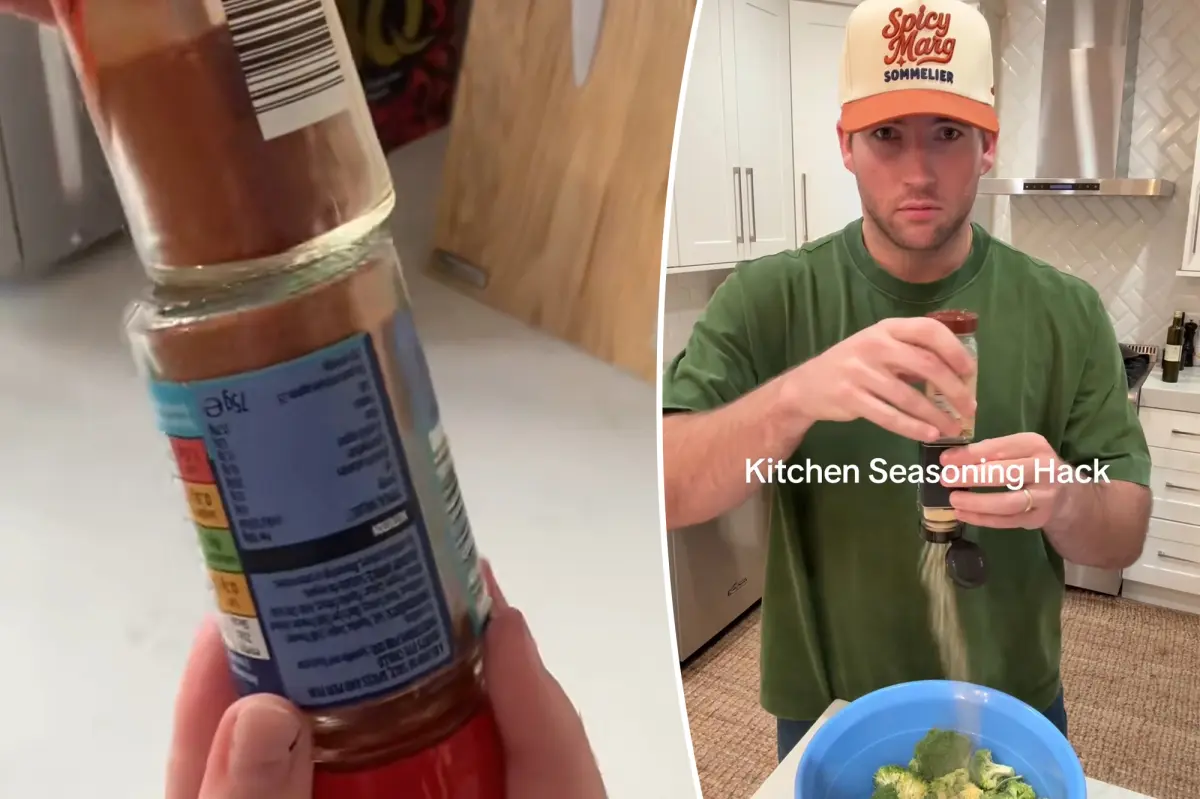
Picture this: you are standing at your stove, nurturing a beautiful, bubbling marinara sauce or a perfectly sizzling pan of fajitas. The aroma is filling the kitchen, but you realize it needs just a tiny hit of garlic powder or a vibrant dash of paprika to make the flavors truly pop. You reach into your spice cabinet, pull out the jar, position it confidently over the steaming pan, and shake. Nothing happens. You shake it harder, but still, your efforts yield only a pathetic, microscopic speck of seasoning. Frustrated, you begin aggressively tapping the side of the glass bottle against the palm of your hand, only to watch the fine powder remain stubbornly fused into an immovable, rock-hard block at the bottom of the container. We have all been there, and it is easily one of the most quietly infuriating, momentum-killing experiences in the modern kitchen. You find yourself trapped in a ridiculous battle of wills against an inanimate glass jar, sometimes resorting to violent thumping on the edge of the kitchen counter—a dangerous tactic that risks shattering the glass, bruising your knuckles, or accidentally causing the entire plastic sifter lid to pop off, dumping a ruinous mountain of seasoning directly into your dinner. It is a universal domestic headache that has plagued amateur cooks and seasoned chefs alike for generations, leaving people feeling inexplicably defeated by a simple blend of ground herbs and spices that refuses to do its one job.
Fortunately, a mind-blowing realization is sweeping across social media, saving home cooks from their spice-induced existential crises and demonstrating that the perfect solution has been literally right in our hands all along. A viral kitchen hack has revealed that you do not need any specialized tools, sharp implements, or displays of physical force to coax your stubborn seasonings out of their glass chambers; you simply need to work smarter, not harder. To execute this remarkably clever trick, all you have to do is turn your stubborn, clumped-up spice jar completely upside down over your food, grab a second glass spice jar from your pantry shelves, and rub the textured bottoms of the two bottles together in a smooth, circular motion. The secret to this unexpected magic lies within the intentional structural design of the glass packaging itself. Most mass-produced spice bottles are manufactured with a ring of raised, bumpy glass ridges designed around the circular perimeter of their bases. While most consumers naturally assume these little glass ridges are merely aesthetic details or perhaps traction mechanisms meant to keep the bottles from sliding around on slippery countertops, they actually function as an ingenious, built-in clump-shattering device. When you grind these two textured, ridged glass surfaces against one another, the friction creates an intense, rapid, high-frequency vibration that travels directly through the glass walls. This localized resonance acts as a miniature seismic event inside the bottle, instantly liquefying the packed-down powder and forcing it to cascade smoothly and elegantly through the plastic sifter holes without a single pinch of struggle.
To appreciate why this vibrational trick feels so miraculous, it helps to understand the underlying physical and chemical science of why our pantry staples turn into miniature bricks of concrete in the first place. Spices, by their very chemical nature, are highly hygroscopic substances, meaning they possess an incredibly strong affinity for water and will actively absorb moisture from the surrounding atmosphere at any given opportunity. This becomes a major issue during the actual cooking process because of our collective habit of shaking spices directly over an open, steaming pot of food. As delicious, fragrant steam rises from your boiling pasta water or simmering chili, invisible microscopic droplets of warm water vapor rise with it, effortlessly sneaking past the plastic sifter holes and invading the dry, cool interior of your spice jar. Once inside, this moisture acts as a binding agent, causing the tiny, dehydrated powder particles—particularly those high in natural sugars and starches, like garlic powder, onion powder (which are notorious culprits), and ground ginger—to bind tightly together, forming solid, stubborn physical links. Simple vertical shaking does nothing to disrupt these cohesive bonds because the force is distributed too globally across the container. However, the high-frequency vibrational energy generated by rubbing the ridged bottoms of the jars together targets these moisture bonds on a microscopic scale, destabilizing the crystalline bridges between the stuck-together particles and instantly restoring the powder back to its free-flowing, powdered state.
The viral emergence of this clever trick has sparked a massive wave of energetic commentary, disbelief, and comedic self-reflection across social media platforms like TikTok and Instagram, where videos of astonished cooks testing the hack have garnered millions of views. The collective reaction of the internet has been a hilarious mix of profound gratitude and genuine embarrassment, with many users admitting they felt downright foolish for never figuring it out themselves. One amazed viewer openly declared that learning this trick made them feel like they had been “living a giant lie” for their entire adult lives, while another dramatically confessed that they used to simply throw away expensive bottles of hardened onion powder in sheer, wasteful frustration because they assumed the spices were permanently ruined. Other commenters shared painful accounts of their old, desperate methods, which often involved unscrewing the lid and cautiously stabbing a butter knife, a metal skewer, or a toothpick directly into the jar to manually break up the rock-hard block—a dangerous maneuver that could easily result in a slipped hand and a nasty kitchen injury. “How on earth did I not know this sooner?” one bewildered viewer lamented, while another jokingly complained, “Why isn’t this life-saving practical knowledge taught in high school, but I was forced to learn trigonometry instead?” The consensus among home cooks is that digital social spaces operate as an invaluable “modern university” for practical life skills, proving that even the simplest, most mundane daily frustrations often have elegant, built-in design solutions waiting to be unlocked.
Of course, you might occasionally find yourself working with smooth-bottomed glass bottles, modern plastic containers, or antique ceramic spice jars that lack those magical, built-in vibration-inducing ridges. If you find yourself in this situation, do not panic, as there are plenty of other highly effective, resourceful household methods you can utilize to rescue your seized-up seasonings from the trash bin. If your spice has consolidated into a singular, impenetrable mass, you can easily restore its powdery texture by transferring the block to a high-speed blender, a clean coffee grinder, or even reclaiming the ancient, satisfying culinary art of grinding it manually with a heavy-pressed mortar and pestle. For mid-sized clumps that are slightly softer, you can try pressing the seasoning firmly through a fine-mesh metal kitchen sieve with the back of a large spoon, or even using a microplane or a box grater to shave down hardened blocks of garlic or onion powder back into a delicate, dust-like consistency. Additionally, another clever thermodynamic rescue technique involves spreading the hardened spices evenly across a dry paper towel and popping them into the microwave, heating them in ultra-gentle, ten-second intervals while stirring thoroughly in between each burst. This targeted heat application gently extracts the trapped moisture from the particles, causing the damp, microscopic bonds to dissolve and leaving the powder perfectly dry, loose, and completely ready to be transferred back into its shaker.
While knowing how to rescue clumped-up seasonings is a fantastic skill to have in your back pocket, the ultimate goal for any organized home cook is to prevent the moisture problem from ever occurring in the first place through proactive, mindful pantry management. To keep your dry seasonings flowing smoothly from day one, you must reconsider where you store them, resisting the temptation to keep your spice rack mounted directly above the stove, next to the boiling kettle, or right above the kitchen sink where steam and humidity constantly saturate the air. Instead, store your spice collection in a dedicated, cool, dark cupboard or deep pull-out drawer that is situated far away from heat-generating appliances, ensuring a dry and stable climate. Furthermore, rather than using the traditional trick of adding raw white rice grains to your shakers to absorb moisture—which can sometimes backfire by slipping through the larger holes of your plastic sifter lids and falling directly into your food—try adding a few dry, raw, and completely clean beans, such as black beans or kidney beans, to the bottom of the container. These larger legumes act as highly effective, natural, and completely food-safe desiccants that effortlessly tumble around inside the jar, soaking up ambient moisture and physically breaking up minor clumps before they can solidify, ensuring that every cooking session remains completely stress-free, expressive, and wonderfully flavorful.