






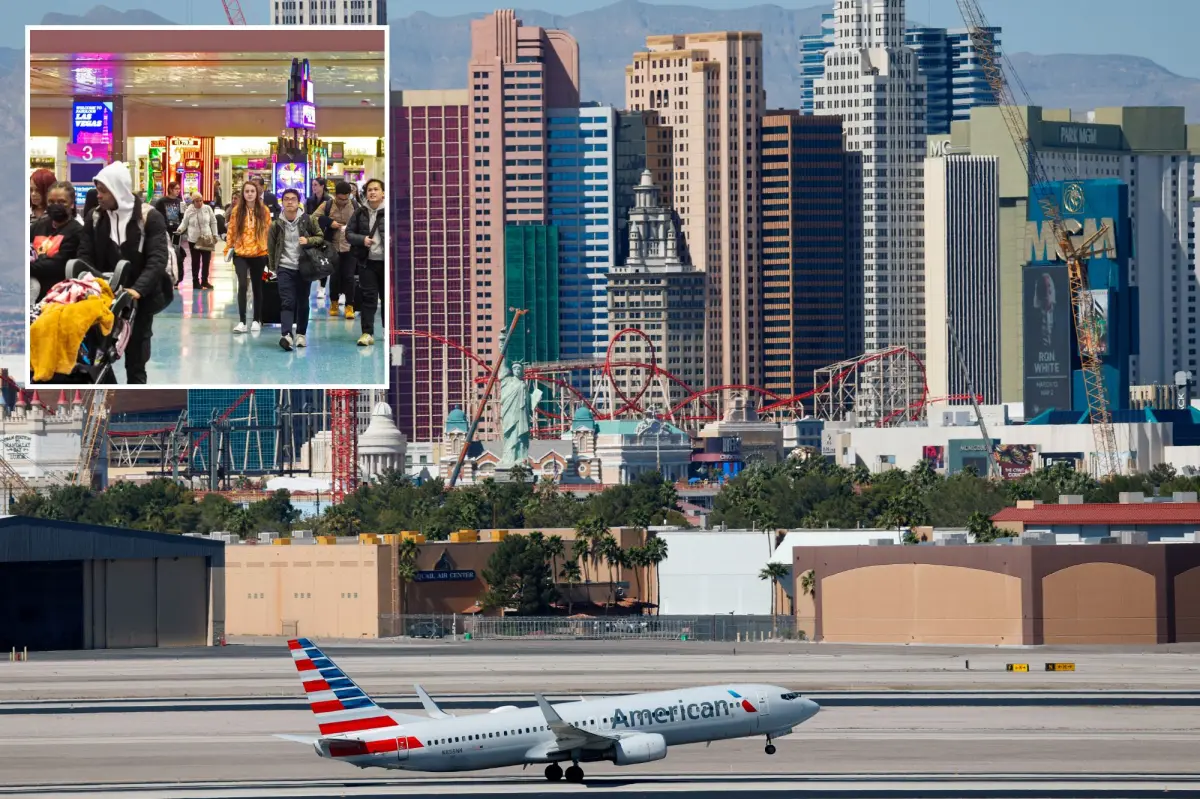
For travelers arriving at Las Vegas’s Harry Reid International Airport over one blistering midsummer weekend, the legendary gamble of Sin City took on an entirely new, highly unexpected dimension. Instead of risking their hard-earned money on neon-drenched casino floors, thousands of weary passengers found themselves holding winning tickets of a completely different sort: direct financial payouts of up to $2,500 just to step off their scheduled flights and stay exactly where they were. The sudden windfalls were born of desperation as a record-breaking desert heatwave descended upon southern Nevada, sending temperatures soaring to a punishing 114, 113, and 112 degrees Fahrenheit from Friday through Sunday. Inside the terminal, the atmosphere shifted from typical holiday excitement to an anxious, claustrophobic waiting game as the relentless heat effectively crippled air travel, leading to more than 580 delayed flights over the three-day stretch. On Friday alone, one of the hottest days on record, nearly one-third of all scheduled departures were disrupted, leaving tarmac workers, gate agents, and travelers trapped in a slow-motion logistics crisis. To salvage their flights and lift off into the shimmering, superheated air, airlines had to quickly shed weight, forcing them to appeal directly to passengers’ pocketbooks. The result was a surreal scene where gate agents assumed the roles of high-stakes auctioneers, dangling lucrative travel vouchers in front of sweating crowds, turning the frustrating modern ordeal of air travel into an impromptu financial negotiation.
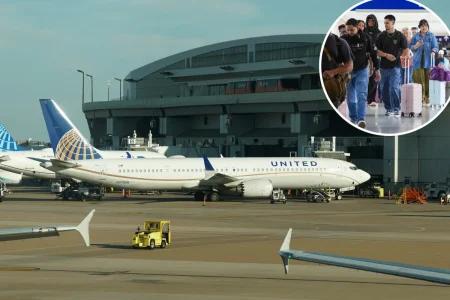
The sheer human scale of this aviation crisis became vividly apparent through the personal stories of passengers who found themselves caught in this invisible meteorological trap. A traveler named Trish recounted arriving at the airport at the peak of Friday’s furnace-like heat at 1:00 p.m., only to embark on a grueling, multi-hour saga that would not see her return home until 8:00 a.m. the following morning. While waiting to board her United Airlines flight, she watched in disbelief as agents announced that nearly half of the passengers would need to voluntarily give up their seats due to critical weight restrictions caused by the external elements. Trish and her fellow passengers were stunned when the airline offered a staggering $2,500 cash equivalent to anyone willing to walk away from the boarding gate—an unprecedented sum that transformed a routine commute into an existential choice between time and money. Meanwhile, at an adjacent American Airlines gate, a video captured by a passenger went viral, showing a clearly stressed gate agent pleading over the intercom for a whopping fifty volunteers to step forward and surrender their boarding passes. On another American Airlines flight bound for Texas the following afternoon, thirty-two passengers who had already successfully boarded the aircraft and buckled their seatbelts were asked to gather their belongings and disembark. Passenger Jared Guynes captured the collective sense of shock, describing the situation as sensational and crazy, noting the tense reality that either thirty-two individuals had to voluntarily alter their travel plans, or the entire flight would remain permanently grounded on the roasting concrete.
To understand why a few degrees of temperature can so easily paralyze a multi-billion-dollar global industry, one must look to the delicate physics of modern aviation. When air temperatures climb to extreme levels, the ambient atmosphere undergoes a physical transformation, becoming significantly less dense as the air molecules spread far apart in the intense heat. This thin air presents a double threat to departing aircraft: it severely reduces the amount of upward lift generated by the wings as the plane speeds down the runway, while simultaneously lowering the performance of the jet engines, which require dense, cool oxygen-rich air to produce maximum thrust. Consequently, a fully loaded jet under normal conditions can suddenly find itself aerodynamically incapable of taking off safely on a scorching afternoon because it requires far more runway than physically exists to reach lift-off speed. Even at Harry Reid International Airport, which boasts one of the longest runways in North America at 14,835 feet, the Laws of Thermodynamics remain absolute; when the air is exceptionally hot and thin, even nearly three miles of concrete is not enough for a heavy plane. Beyond pure physics, modern aviation safety protocols dictate strict weight limits based on worst-case scenarios, such as an engine failure immediately after takeoff. As a retired Air Force lieutenant colonel and current Boeing 737 captain explained on social media, while a heavy plane might technically be able to fly under normal operation in 114-degree heat, pilots must ensure they have enough power to safely clear the high terrain surrounding Las Vegas even if an engine fails, a non-negotiable safety margin that prevents them from “rolling the dice” with human lives.
Faced with these rigid physical limitations, airline operational centers had to execute rapid, high-stakes triage to get their fleets off the ground. When a plane is deemed too heavy to fly safely in extreme heat, airlines have only a handful of levers they can pull to reduce weight: they can dump fuel, sacrifice commercial cargo, or remove passengers. Sacrificing fuel is a double-edged sword, as it often forces the aircraft to make unplanned, highly expensive refueling stops along its route, which throws downstream schedules into disarray and incurs heavy airport fees. Removing lucrative commercial cargo can breach long-term corporate shipping contracts, leaving passenger displacement as the most immediate and controllable variable in the weight equation. This operational reality is what drove the airlines to offer such astronomical payouts, calculating that paying out tens of thousands of dollars in travel vouchers on the spot was far cheaper than canceled flights, stranded crews, and the cascading operational nightmare of disrupted networks across the country. For the regional managers and gate agents on the ground, the situation became a masterclass in human psychology and crisis communication, as they had to balance the corporate bottom line and FAA safety mandates against the rising frustration of passengers who had already spent hours navigating crowded terminals.
This chaotic weekend in Las Vegas highlights a much larger, more systemic issue that is quietly beginning to threaten the global transportation sector: the increasing vulnerability of our infrastructure to a changing climate. For decades, airport runways, aircraft engines, and operational flight plans were engineered based on historical weather patterns that are rapidly becoming obsolete. As global temperatures continue to shatter records, airports located in historically hot regions—such as the American Southwest, the Middle East, and parts of Southern Europe—are finding themselves on the front lines of an invisible crisis where the very air they rely on is losing its structural integrity. This is no longer an isolated, once-in-a-decade anomaly; rather, it is a preview of a new normal where summer travel will increasingly require lighter planes, fewer passengers, and frequent, costly delays. The thermal expansion of the atmosphere is forcing a fundamental reevaluation of how aircraft are designed and how schedules are built, suggesting that future travelers may have to become accustomed to seasonal weight limits, midday ground stops, and the very real possibility of being rationed off flights during peak summer afternoons.
Ultimately, the great Las Vegas travel disruption of 2024 serves as a powerful reminder of nature’s absolute veto power over human technology and ambition. Throughout the ordeal, the passengers who opted to stay behind with their valuable vouchers and those who chose to endure the long delays were united by a shared, humbling experience that highlighted the limits of human engineering. For those like Trish, who traded a night of sleep for a significant payout, the weekend was a memorable, albeit exhausting, lesson in the hidden mechanics of flight. For the rest of the passengers who watched the desert landscape recede through their cabin windows after hours of uncertainty, the successful takeoffs represented a quiet triumph of science, safety, and strict operational discipline. As the travel industry continues to adapt to an increasingly volatile climate, the extraordinary events at Harry Reid International Airport remind us that a safe journey remains the ultimate jackpot, one that is worth every dollar, every delay, and every careful calculation made under the hot desert sun.