



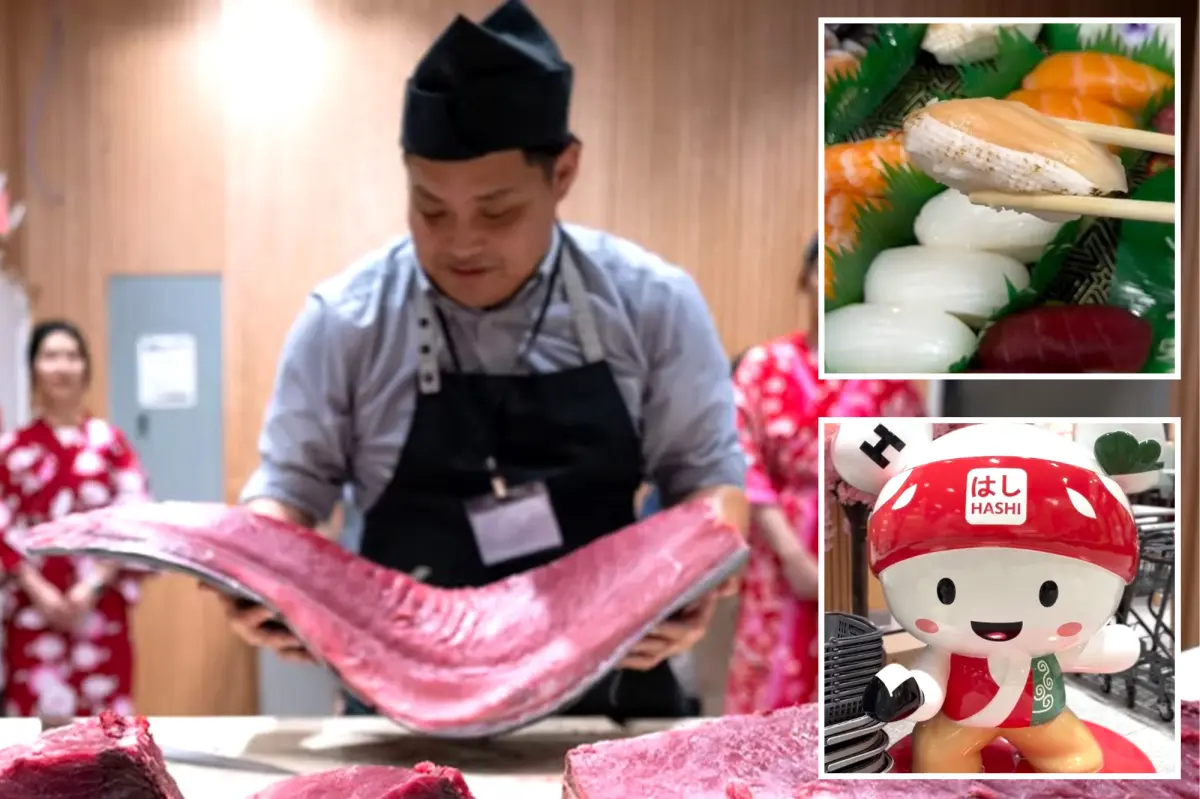
On a Friday morning in Cupertino, a new kind of grocery store will open its doors, and for anyone who has ever wandered through a Japanese market with a rumbling stomach, it will feel like a small miracle. Hashi Market, a New York City–born grocery chain, is making its first brand-new West Coast home at 20558 Stevens Creek Boulevard, taking over a space that once housed a Sprouts. The store is big—20,000 square feet—but it’s not the size that matters most. What matters is what happens after the sun goes down. Hashi Market will operate daily from 8 a.m. to 11 p.m., and every single piece of sushi on the premises gets a 30 percent discount after 8 p.m. Think about that for a second. You can wander in at night, when most grocery stores are dimming their lights and sighing through the final hours, and find fresh nigiri, colorful rolls, and neatly packaged rice bowls waiting for you at a friendlier price. It’s the kind of move that turns a routine errand into a late-night ritual. For night owls who have always believed the best decisions happen after dark, this is not just a grocery store; it’s a reason to adjust your schedule.
Walk through the doors during the day, and you’ll quickly understand why Hashi has built a following in New York before ever touching California. The shelves are stocked with things you don’t see every day: imported Japanese snacks, neatly arranged bento boxes, onigiri with crisp seaweed wrappers that feel like a promise, teriyaki skewers glistening under warm lights, katsu curry that could cure a bad day, and baked salmon that smells like comfort. There are housemade sausage buns and cheese breads, soft and pillowy, made on-site in a way that makes the whole store feel alive. But the market doesn’t stop at food. There are Japanese cosmetics, delicate home goods, and pop-culture merchandise that will make anime fans linger a little longer. Hashi operations director Justin Li described the vibe to the San Francisco Chronicle as feeling like a younger store—an Erewhon, he said, referencing the Los Angeles luxury grocer known for its pricey, Instagram-friendly goods. That comparison makes sense: this isn’t just a place to pick up a carton of milk. It’s a place where even the act of browsing feels deliberate, curated, a little bit exciting. Every aisle seems designed to make you stop, pick something up, and wonder whether your life would be better with it in it.
For Li, the real treasure hunt lives in a particular corner of the store: the Hokkaido section. Hokkaido is the northern Japanese island famous for its dairy, its chocolate, and its almost mythic status in the world of Japanese sweets. It’s where ROYCE Chocolate comes from, and Li doesn’t hide his devotion to it. “I grew up on ROYCE Chocolate, like that’s my thing. Any of the chocolates are good. If it’s not good, you can find me,” he told KRON4 with a laugh. It’s a small quote, but it says a lot about what Hashi is trying to do. This isn’t a store that just throws products on a shelf and hopes for the best. There’s a personal connection, an emotional pull, a sense that someone who grew up loving these flavors is now putting them in front of you. The Hokkaido section brings candy and chocolate that might be hard to find anywhere else nearby, and for people who grew up in Japan or spent time there, walking into that aisle can feel like opening a door to an old memory. But the indulgence doesn’t stop there. The market also carries premium sake, sushi-grade fish for people who like to slice their own at home, and crown muskmelons—those impossibly elegant, gorgeously packaged melons that in Japan are often given as gifts. They’re not cheap. They’re not meant to be. They’re a symbol of care, a way of saying “I went out of my way for you” without saying a word.
The decision to open in Cupertino was no accident. Hashi chose the Silicon Valley city because it fit a particular profile: affluent, heavily Asian, and already deeply familiar with sushi culture. “Cupertino has a profile that we target,” Li told the Chronicle. “There is a culture of sushi there and H Mart and T&T Market also opened relatively close, in San Jose.” The timing makes sense, too. The Bay Area has become a fascinating battleground for Asian grocery chains. Tokyo Central opened its doors in Emeryville in January, drawing crowds eager for its mix of Japanese snacks and prepared foods. Korean giant H Mart arrived in Dublin in March, bringing its famously enormous produce sections and food courts. And T&T, the Canadian Asian supermarket behemoth, turned heads this summer when it opened in San Jose with sprawling seafood displays and baked goods. In that crowded field, Hashi has carved out its own personality: smaller than some, scrappier than others, and deeply focused on the Japanese shopping experience. For Cupertino residents, the new store is another sign that the neighborhood is a destination, not just a bedroom community. For Hashi, it’s a statement that the company believes in the Bay Area’s appetite—both literally and culturally—for what it’s selling.
Hashi is not content with just one showpiece, either. The company was founded in 2024, and it has already grown to six locations in New York City. This Cupertino store is its first brand-new West Coast location, and the team has bigger plans. “We’re expecting to roll out 10 more stores by early 2027,” Li told the Chronicle, naming Colorado, Massachusetts, and Washington state as future targets. That kind of ambition can sound like corporate chatter, but in a grocery store it usually translates into something more tangible: investments in fresh product, better staff training, and a real commitment to getting the details right. To celebrate Friday’s grand opening, Hashi is planning a ribbon-cutting ceremony, and guests throughout the weekend will be treated to giveaways. It’s the kind of opener that invites you in, makes you feel like you’re part of a special moment rather than just a customer walking through a sliding door. There’s an energy to opening weekends, and anyone who’s ever picked up a free tote bag or sampled a strange, delicious snack from a clipboard-carrying employee knows that feeling. For a store that has so much heart tied up in places like Hokkaido and the late-night sushi counter, the celebration feels fitting.
In the end, Hashi Market is more than a place to buy groceries. It’s a cultural bridge between Japan and Silicon Valley, a place where someone who has never been to Tokyo can taste a chocolate from Hokkaido, and someone who grew up in Osaka can find a familiar melody in the aisles. The after-8 p.m. sushi discount is the kind of small generosity that makes a business feel human. It’s not just about clearing out trays of food; it’s about building a community of people who love good food at reasonable prices, who work late, who crave something fresh when the rest of the world is closing down. The shelves are stocked with imported snacks and premium melons, but the real product here is discovery. Every visit offers a chance to stumble onto something new: a strange candy, a cute mug, a perfectly folded onigiri. Hashi’s arrival in Cupertino is a reminder that even in a region obsessed with technological innovation, the simplest pleasures still matter. A good meal can make a bad day better. A familiar chocolate can make you feel at home. And a 30 percent discount on sushi after 8 p.m. can turn an ordinary night into something worth staying up for. So welcome, Hashi Market. The Bay Area has been waiting for you.