


The Big Apple Triathlon Returns: A Comeback Story of Grit, Tides, and Triumph
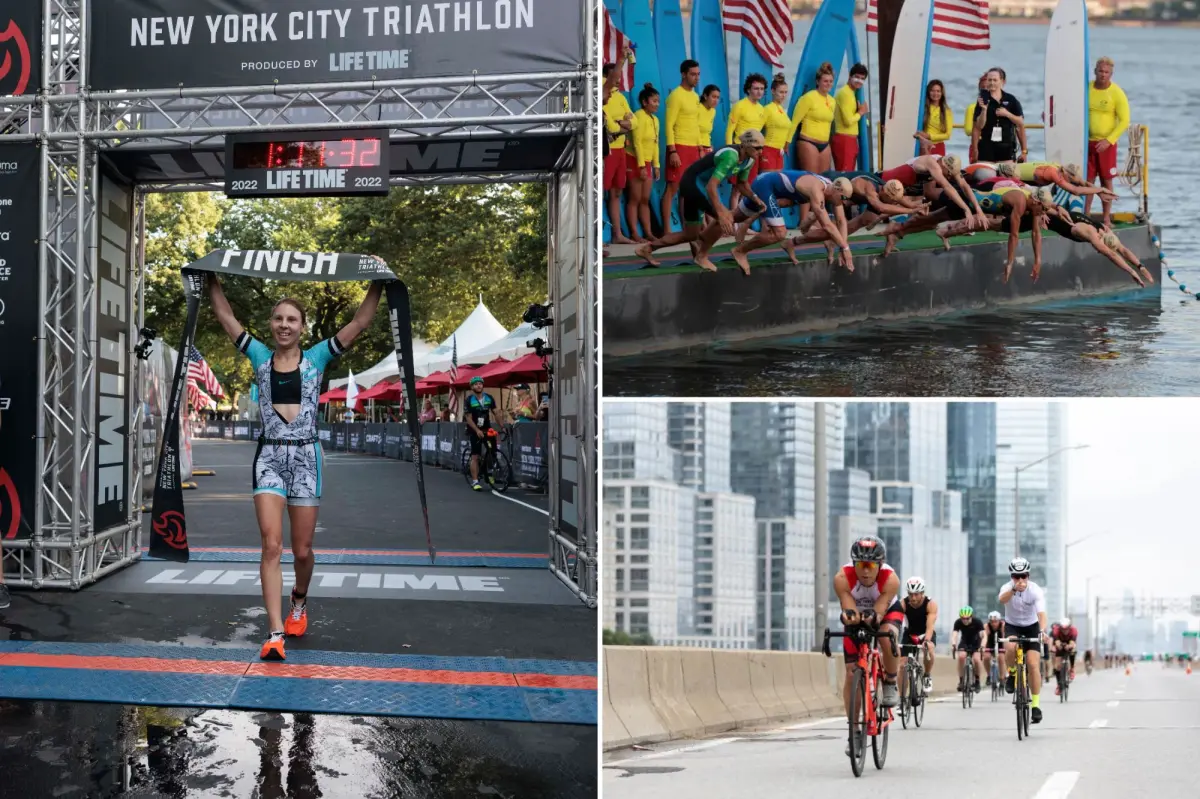
After a two-year hiatus, the Big Apple Triathlon is set to make a triumphant return to New York City, and the excitement is palpable. On Saturday, approximately 1,300 endurance athletes will gather at the banks of the Hudson River, ready to dive into a challenge that combines swimming, cycling, and running in one of the most iconic urban landscapes in the world. This event, formerly known as the New York City Triathlon, has been a staple of the city’s athletic calendar since 2001. For the participants taking on the longest distance, the journey will begin with a nearly mile-long swim up the shoreline, followed by a 25-mile bike ride along the scenic West Side Highway, and culminate in a 6.2-mile run into and around the lush pathways of Central Park. It’s a grueling test of endurance, but for those who love the sport, it’s also an unparalleled opportunity to experience the city in a way that few ever do—not just as a backdrop, but as an active, living part of the race itself.
The race’s recent history, however, has been anything but smooth. Since 2017, almost every edition has faced some form of disruption, whether it was a shortened run, a truncated bike course, or a completely canceled swim. Former race director Alex De Gracia of Life Time, the organization that sold the race in 2023, admitted to the Post that the event has been plagued by a series of unfortunate events. In 2019, extreme heat forced the cancellation of the entire race. In 2021 and 2023, concerns about water quality in the Hudson led to the swim being scrapped, leaving athletes to complete a run-bike-run instead. In 2022, temperatures in the 90s slashed the bike and run distances by at least half. And before 2024’s race even opened for registration, organizers threw in the towel, unable to find a viable date with the city that could avoid the scorching summer heat. For local triathletes who had come to love this event, it was a disappointing stretch of cancellations and compromises.
But now, under new leadership from Alpha Win, a race production company based in Saugerties, New York, the Big Apple Triathlon is ready to write a new chapter. With an early fall date and a renewed commitment to making it work, the starting gun will sound once again. The excitement is shared by both newcomers and veterans alike. Matt Stern, a 32-year-old attorney from Manhattan who raced in 2023, expressed his enthusiasm, saying, “I was super excited when I heard about it; I loved the New York City Triathlon. It’s amazing to be able to swim, bike, and run in the city. You train here every day, so to actually be able to race here is awesome.” For Stern and many others, this race isn’t just a competition—it’s a celebration of the city and their place within it.
For those unfamiliar with the sport, a triathlon is a multi-sport race that combines swimming, cycling, and running, typically in that order. The logic behind this sequence is practical: athletes enter the water fresh, before fatigue sets in, and then transition to the bike and run as the race progresses. The shortest versions of these races, known as “sprints,” often total around 16 miles. On the other end of the spectrum, the famous Ironman distance covers a staggering 140.6 miles, including a full marathon at the end. The New York City event has traditionally been an “Olympic” distance race, which is roughly double the length of a sprint, making it a challenging but achievable goal for many athletes. However, this year’s production has expanded to offer “a distance for everyone,” in keeping with Alpha Win’s motto. Participants can choose from a sprint, a relay, an aquabike (which combines swimming and biking), or a duathlon (which combines running and biking). This inclusivity is a key part of the sport’s appeal, as Stern pointed out. “People associate the name ‘triathlon’ with Ironman, and they think, ‘Oh, that’s some crazy goal,’” he said. “But I think triathlon is really accessible for a lot of people.”
Stern’s own journey into the sport is a testament to its accessibility. He got hooked three years ago after joining his cousin for a sprint race in Montauk, even though he could barely swim at the time. Since then, he has become an Ironman finisher and a proud member of the Empire Tri Club. For him, the sport is about pushing personal limits and discovering what the body and mind are capable of. “It’s fun to be able to push yourself, see what you can do, how far you can take yourself, how fast you can go,” he said. But equally important is the sense of community that surrounds the sport. “The community around you is what makes it really special,” he added. This sentiment is echoed by Tommy Struzzieri, the CEO and race director of Alpha Win, who noted that the sport attracts a diverse group of people, not just elite athletes. “It’s certainly a diversified group,” he said. “That’s why I love standing at the finish line.”
While the appeal of the triathlon is clear, pulling off such an event in New York City is a logistical nightmare. The first and most obvious obstacle is the weather. “Racing in the northeast has a very limited window,” said Joel Volterra, a triathlon coach with TriLife NYC and one of this year’s competitors. In the spring, the water is too cold for a comfortable swim. In the summer, the air can become dangerously hot, as evidenced by past cancellations. And in the fall, the unlikely but ever-present threat of hurricanes looms large. Finding a weekend that falls within this narrow window—and that doesn’t conflict with the city’s packed calendar of protests, parades, presidential visits, or playoff games—is a challenge in itself. Then there’s the matter of coordinating with a dizzying array of city, state, and federal authorities. “You’ve got DOT, you’ve got Parks, you’ve got police, you’ve got emergency services,” Volterra explained. “You’ve got Riverside Park and Central Park, and you’ve got all the community boards that are affected. So it’s any one of those things or a bad weather event that can derail it.” Unlike races in other locations, where securing a safe cycling route doesn’t mean closing off a major artery in Manhattan’s most populous ZIP code, and where arranging a swim doesn’t require a call to the Coast Guard, a multisport event in the Big Apple requires a level of coordination that borders on the heroic. The permits, the security plans, the traffic diversions, and the emergency response protocols all have to be meticulously planned and executed. It’s a testament to the dedication of the organizers and the city’s commitment to hosting the event that it’s happening at all.
And then there’s the Hudson River itself. For many, the idea of swimming in the Hudson conjures up images of pollution and danger, a reputation that has followed the river for decades. But as Deanne Draeger, founder of Urban Swim, points out, the reality is far more nuanced. “When people think of a river, they think of a river moving in one direction,” she said. “That’s not what happens in the Hudson.” Instead, the Hudson is technically a “tidal estuary,” meaning it experiences a series of tide cycles that cause the water to flow north and south in a constant rhythm. This is a crucial factor for race planners, who must account for the currents when designing the swim route. This year, the swim course heads north to help participants go with the literal flow, with man-made barges marking the start and end of the leg. But the river’s reputation as a polluted wasteland is largely outdated. Decades of wastewater improvements and federal regulations have dramatically reduced pollution levels. A 2007 report showed that “fecal coliform bacteria” in the New York Harbor had been cut by 95% since 1970. Since then, further investments in the city’s sewage system, along with efforts from nonprofits like the Billion Oyster Project, have continued to improve water quality and ecology. Draeger’s organization is able to safely guide about 200 swimmers in open-water events around the local waterways each year, a testament to how far the river has come. “The river isn’t just a pretty view; it’s public space,” she said. “This is part of the city, which is one of the things that I think is fantastic about the New York City Tri. It’s an opportunity when people can get in the water, and you have an experience of New York City that’s completely different from anything that you’ve had before.”
That said, the Hudson is no glacial spring. It’s not a place for casual swimming, and even organized events come with risks. The biggest enemy, according to experts, is heavy rainfall. “After a big storm, all of the contamination that’s on the city streets from the pets, from the animals, from trash gets flushed into the catch basins and over land into the water and goes through these outflows that the city is desperately trying to address,” explained Volterra. This is why careful monitoring is so essential. For this year’s race, the Department of Environmental Protection has been testing the river for months, and Alpha Win has been consulting with an on-site meteorologist for weeks. So far, the sky has stayed dry, and the water is testing safe. “So far, so good,” Struzzieri said, a promising sign for a race that has spent years battling the elements.
Beyond the logistics and the environmental considerations, the Big Apple Triathlon is ultimately about people. It’s about the athletes who train for months, often juggling demanding careers and family responsibilities, to push their bodies to the limit. It’s about the volunteers who give up their weekends to hand out water and cheer on strangers. And it’s about the spectators who line the streets, waving signs and ringing cowbells, creating an electric atmosphere that fuels the runners and riders as they make their way through the city. For many participants, the race is a deeply personal journey. Matt Stern’s story, from non-swimmer to Ironman finisher in just three years, is a reminder that triathlon is not just for the elite; it’s for anyone with the determination to try. The sense of community is one of the sport’s most compelling aspects. “The community around you is what makes it really special,” Stern said. This is why the return of the Big Apple Triathlon is so meaningful. For the past two years, the city’s triathletes have been left without a home turf race, forced to travel elsewhere or simply wait. Now, they have a chance to come together again, to celebrate their shared passion and to prove that the spirit of the sport is alive and well in New York City.
As race day approaches, there’s a sense of cautious optimism in the air. The weather forecast looks favorable, the water quality is testing safe, and the city has given its blessing. Of course, in New York, anything can happen, and the organizers know better than anyone that plans can change in an instant. But after so many years of setbacks, the Big Apple Triathlon is finally getting a chance to shine. For the 1,300 athletes who will line up at the start, this race is more than just a competition. It’s a testament to their resilience, their dedication, and their love for the sport. It’s a chance to experience the city in a way that few ever will, to swim in the Hudson, to ride along the West Side Highway, and to run through Central Park, all in a single day. The return of this event is also a victory for the city itself. It’s a sign that New York is open for business, that its public spaces—its rivers, its parks, its streets—are available for everyone to enjoy. The Big Apple Triathlon is a celebration of that ideal, a reminder that the city is not just a collection of buildings and streets but a living, breathing community. For the athletes, the volunteers, the organizers, and the spectators, Saturday will be a day to remember. And for those who have been waiting for this moment since 2023, it will be a long-awaited homecoming. So here’s to the Big Apple Triathlon, to the brave souls who dive into the Hudson, and to the city that makes it all possible. Gangrene-free fingers crossed, this time, the forecast is bright.