



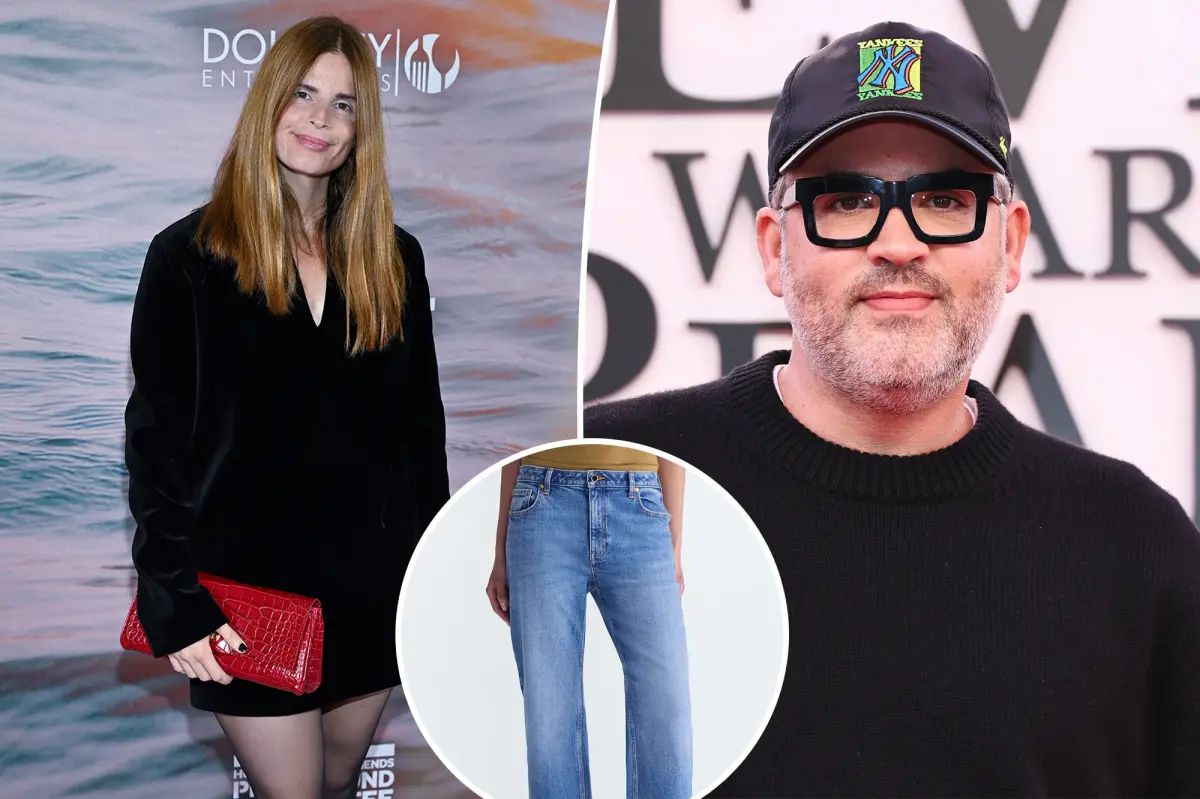
It started, as so many great fashion moments do, with a scroll and a double take. Somewhere between the cereal aisles and the seasonal decor, Walmart shoppers stumbled upon a pair of jeans that stopped them cold. They were $30, relaxed and effortlessly cool, with matte black enamel buttons glinting against deep indigo washes. At a glance, they looked exactly like the kind of high-end denim that celebrities like Kendall Jenner and Rihanna have been photographed in for years. And they were. The resemblance to Khaite’s wildly coveted $620 jeans was unmistakable. The internet collectively lost its mind, because this wasn’t just a random budget find — it was a luxurious aesthetic suddenly available to everyone, no celebrity stylist or trust fund required. For shoppers who had long admired that effortless, downtown-goddess look from afar, it felt like a golden ticket. They were craving some jean therapy, and Walmart unexpectedly delivered it in the most satisfying way possible. It was one of those rare moments where the fashion gods seemed to smile on ordinary people, collapsing the distance between red-carpet glamour and everyday life with a single, surprisingly flattering pair of denim.
To understand why these jeans caused such a stir, you have to understand the original. Khaite is a New York label created by Catherine Holstein, a Soho design darling with an impeccable résumé that includes stints at Gap and Vera Wang. The brand, which celebrated its tenth anniversary, has become a favorite among the fashion elite, loved for its sharp tailoring, clean lines, and a certain understated sexiness that feels both timeless and trendy. The jeans in question are one of the label’s signatures, beloved for their perfect fit and those distinctive black enamel buttons — a tiny detail that became a status symbol. But there was a problem, and it wasn’t just the price. Khaite’s clothes were notoriously tiny. According to Bergdorf Goodman, the brand’s largest cuts barely fit a size 12. That meant countless women who adored the style simply couldn’t wear it, no matter how much money they had. Then came Brandon Maxwell. Maxwell is a fashion designer with his own impressive career, dressing stars like Jennifer Lawrence and Meghan Markle, and serving as a judge on Project Runway. In 2021, he took over Walmart’s Scoop and Free Assembly lines, bringing his high-fashion sensibility to the mass market. And when he designed his denim collection, he created a pair of jeans that were essentially Khaite’s famous style — right down to the signature black enamel buttons. But the big difference was more than the price tag. These Walmart jeans went up to a women’s size 28, more than twice the size range of Khaite’s offerings. At $30, they cost just five percent of the premium pants. It was a deliberate, powerful statement about who deserves to feel fashionable.
Maxwell has long been an advocate for size diversity, and this move was entirely in character. He regularly includes larger models at his fashion shows, which are always packed with celebrities, and he has spoken openly about his commitment to inclusive design. He once told Bustle that he has been making plus-size clothes “from day one,” adding, “Our job is to make women feel good. If you have a problem doing that, with any type of woman, then you should not be doing this job.” That sentiment clearly resonated with the thousands of shoppers who snapped up the jeans. The $30 dupe sparked a genuine fashion frenzy, with sources inside Walmart telling reporters that they “cannot restock them fast enough” online. Influencers and everyday shoppers alike flooded social media with photos and reviews, praising the fit, the fabric, and the democratic price. Stella Kittrell, a plus-size model and influencer, bought “every shade” of the Khaite dupes, sharing her excitement with followers who had long felt left out of the luxury denim conversation. “All my plus-sized luxury girlies are going to be so excited,” she said. “Walmart, you outdid yourselves.” It was a moment of pure joy for women who are too often ignored by high-end brands, a reminder that style doesn’t have to be exclusive to be meaningful. And even the fashion world’s more cynical corners acknowledged the win. Casey Morrow Lewis, a luxury fashion consultant who runs the popular Substack newsletter After School, conceded that “a win is a win,” noting on TikTok that shoppers found the washes to be “almost completely identical” to the original.
But not everyone was cheering. In the insular world of high fashion, the duplicate caused more than a few raised eyebrows, and the reason was personal. Brandon Maxwell and Catherine Holstein know each other. They are friends, peers, and fellow travelers in the same glittering circles. They attend the same industry award ceremonies, sit at the same dinners, and circulate among the same parties. For Maxwell to turn around and produce something so similar to Holstein’s signature design felt, to some insiders, less like a clever democratization and more like a betrayal. “Fashion is such a small world,” one top publicist, who has worked with both designers, said. “They know each other. They’re friendly. They’ve been up for the same industry awards and go to the same dinners and parties. And now he goes and dupes her? It feels petty.” The criticism didn’t stop there. A noted stylist, who regularly works with the notoriously private Khaite brand and asked for anonymity, suggested that Maxwell was intentionally provoking Holstein. “It’s almost like Brandon is saying, ‘Hey Cate, this is so easy, even Walmart can do it,’” she said. She pointed specifically to the black enamel buttons, which have long been a Khaite signature, as an especially pointed detail. “He’s kind of trolling her,” the stylist concluded. It is a strange and delicate situation, the kind of tension that can only exist in an industry where relationships matter as much as talent, and where a small design choice can feel like a public statement between friends.
Yet there is another way to read the entire episode, one that suggests Maxwell’s dupe might actually be a gift to Holstein and Khaite. For all its prestige, Khaite is not exactly a household name. It is beloved by fashion insiders, celebrities, and the kind of shoppers who read Vogue and shop at Bergdorf Goodman, but to the average person, it is simply an unfamiliar label from a posh boutique. The Walmart jeans introduced Khaite’s design to millions of people who had never heard of the brand before. Suddenly, a pair of jeans that had been a quiet luxury secret became a recognizable cultural touchstone. “Plenty of people are hearing about Khaite for the first time through the dupe,” Lewis argued. “Walmart [is] helping establish Khaite as a brand to aspire to.” In that sense, the $30 jeans are not a cheap knockoff but a gateway drug — an introduction to a design language that many shoppers will now know, admire, and perhaps eventually buy in its original, premium form. The irony deepens when you consider that Walmart also sells Khaite handbags at significant discounts. The popular studded Elena bag, for instance, is currently available for $800 off. So the same store that sells a near-identical version of Khaite’s famous jeans also offers a way to own the brand’s luxury accessories at a fraction of their usual cost. It is a strange, contradictory retail ecosystem, but it works: Walmart gets to sell accessible style, Khaite gets priceless cultural visibility, and shoppers get options at every price point.
At its core, this whole saga is a reminder that fashion is so much more than fabric and stitching. It is about identity, aspiration, belonging, and the complicated feelings that arise when high art meets mass production. For many women, especially those above a size 12, the Walmart jeans are not just a bargain — they are validation. They say that you don’t have to be sample-sized to enjoy a beautiful thing, and that style should not be a punishment for having a body that doesn’t fit a narrow ideal. Brandon Maxwell understood that, and he used his position to make a statement with real impact. Whether he also meant to needle a friend is a question only he can answer, but the effect on ordinary shoppers is undeniable. As the argument over originality and ethics continues among publicists, stylists, and commentators, the real champions of this story are the women who found a pair of jeans that make them feel great. They don’t care about the politics of the design world or the delicate egos of its elite. They care about the way the denim fits, the way it moves, and the way it makes them look in the mirror. And in that sense, the dupe isn’t a knockoff at all — it’s a revolution. It brings a fantasy down to earth, places it in the reach of millions, and reminds us that beauty belongs to everyone. In a culture that so often equates luxury with exclusion, that is a very fashionable kind of win.