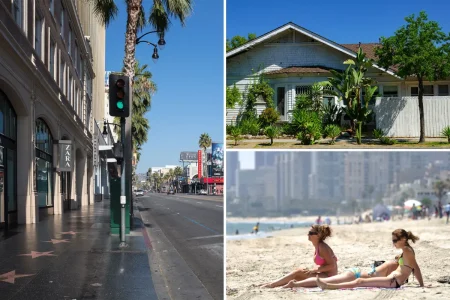


California is a land of contradictions. It’s the place people picture when they think of Hollywood glamour, palm trees swaying in perfect postcard rows, and the dreaded bumper-to-bumper crawl along the 405. But step off the well-worn tourist trail, trade the freeway for a dusty two-lane road, and the Golden State reveals a completely different side of itself—a side that feels like it was ripped straight from the pages of a Western novel. There are abandoned mining camps frozen in time, Gold Rush towns where you can still ride a stagecoach or prop your elbows on a century-old saloon bar, and even a desert settlement that was literally built by movie stars to look like the Old West. In fact, many of these places didn’t just inspire the movies; they were the movies. From the eerie, time-locked ghost town of Bodie to the Hollywood-born cowboy fantasy of Pioneertown, California is packed with destinations where the past doesn’t feel all that distant. Whether you’re chasing history, hoping to spot a ghost, or just looking for a good barbecue and a cold drink in a setting that feels like a film set, these four towns deliver a serious dose of Wild West magic.
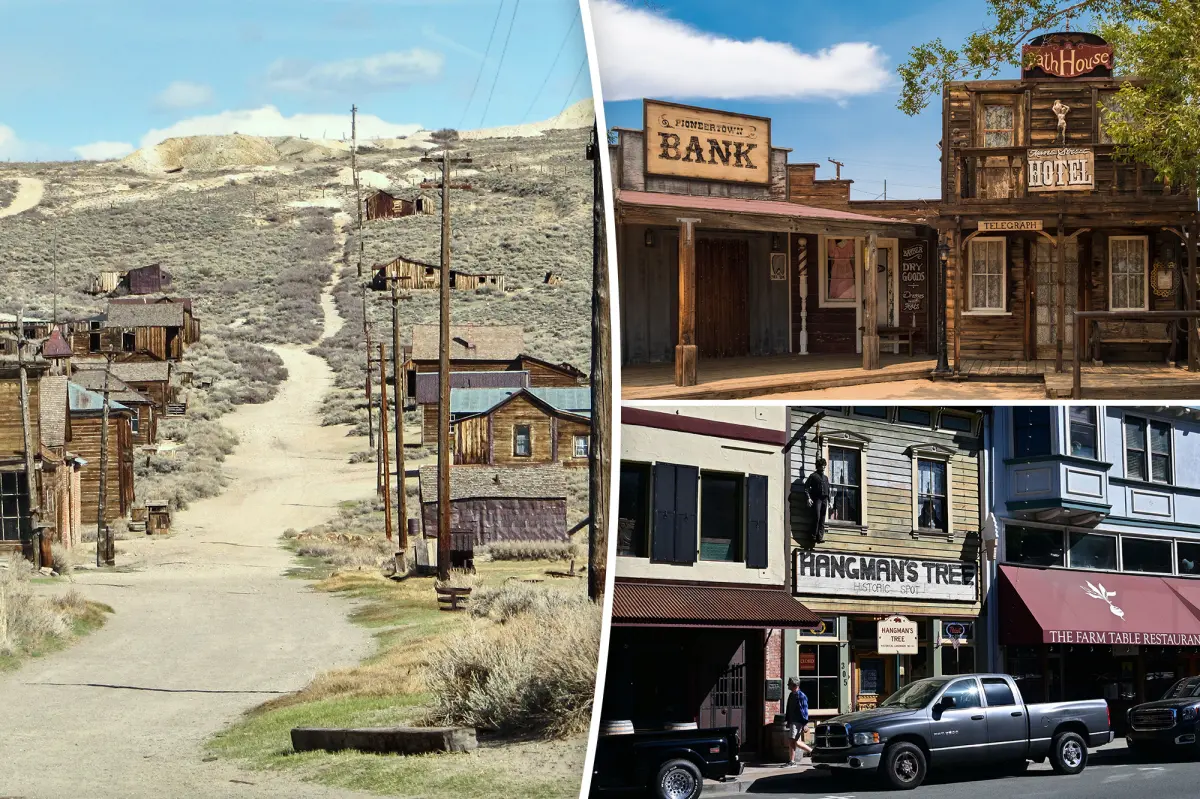
Take Pioneertown, for example. At first glance, it looks like the real deal—a dusty, sunbaked 1880s settlement with wooden storefronts, a saloon, a jail, and a main street that seems to have been plucked straight out of a classic Western. But here’s the twist: it was never a real frontier town at all. Pioneertown was born in Hollywood, dreamed up in 1946 by actor Dick Curtis, who wanted to create a “living, breathing movie set” where Westerns could be filmed while actual businesses operated behind the camera-ready facades. He gathered a group of famous investors—Roy Rogers, Dale Evans, Bud Abbott, and members of the Sons of the Pioneers—and together they bought thousands of acres near Palm Springs and started building their cowboy fantasy from scratch. And it worked. During the 1940s and 1950s, more than fifty movies and serials were shot there, including productions like “The Cisco Kid,” “Annie Oakley,” and “The Range Rider.” Today, visitors can wander Mane Street, browse shops, snap photos in front of those weathered Western facades, and occasionally catch a staged gunfight in the street. The legendary Pappy & Harriet’s Pioneertown Palace is right nearby, serving up barbecue, live music, and ice-cold drinks to a mix of bikers, tourists, and rock stars who’ve made the pilgrimage. It may be a fake town, but it’s a very real good time—a place where the line between Hollywood illusion and genuine Western atmosphere blurs in the most delightful way.
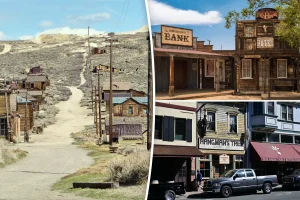
If Pioneertown is Hollywood’s version of the Wild West, Bodie State Historic Park is the real, unvarnished, and slightly haunting thing. Tucked east of the Sierra Nevada, Bodie exploded onto the map after a rich vein of gold was discovered in the 1870s. What had been a tiny, sleepy settlement quickly transformed into a roaring mining boomtown, packed with fortune seekers, saloon keepers, gamblers, and dreamers all hoping to strike it rich. At its peak, the town was a wild, lawless place with thousands of residents, and the streets were said to be so rough that even the miners carried guns to church. But the good times didn’t last. Bodie’s decline began in the 1880s, and the population kept shrinking until mining operations finally shut down for good in 1942. Two devastating fires—one in 1892 and another in 1932—destroyed much of the community, leaving fewer than ten percent of the roughly two thousand structures that once stood. Rather than restoring the remaining buildings to their former glory, park officials preserve Bodie in a state they call “arrested decay.” That means the interiors have been left almost exactly as the residents left them, with dusty beds, half-open drawers, faded photographs, and old cans of food still sitting on shelves. The effect is eerie, like everyone simply stood up and walked away one day and never came back. There are no restaurants, no gas stations, no modern conveniences inside the ghost town—just silent streets, creaking floorboards, and the wind whistling through broken windows. If you visit, bring your own snacks, fill up your tank beforehand, and maybe think twice about wandering around alone after dark. Bodie is a place where the past feels almost too close, and that’s exactly what makes it unforgettable.
For those who want Gold Rush history without the ghost-town doom and gloom, Columbia State Historic Park in the Sierra Nevada foothills is the perfect middle ground. Once nicknamed the “Gem of the Southern Mines,” Columbia boomed after gold was discovered nearby in the 1850s. By 1853, it had grown into one of the largest cities in California, with miners, merchants, and all manner of fortune seekers pouring into town to try their luck. Unlike so many mining settlements that disappeared through fires, vandalism, or simple neglect, much of Columbia survived, and today it offers one of the most immersive Gold Rush experiences in the entire state. You can wander the historic streets and feel like you’ve stepped back in time, browse old-time shops, watch candy makers hand-dip chocolates, listen to live music in saloons that have been serving drinks for over a century, or catch a show at the beautifully preserved Fallon Theatre. Seasonal stagecoach rides add a properly dramatic touch, letting you clatter down the dirt roads just as visitors did a hundred and fifty years ago. There’s also a historic two-story schoolhouse, a cemetery with graves dating back to the boom years, and a mile-long nature trail for those who want to stretch their legs. Columbia is part history lesson, part theme park, except the scenery you’re gawking at isn’t a replica—it’s the real thing. It’s the kind of place where you can easily lose an entire afternoon, and where the Gold Rush era doesn’t feel like a chapter in a textbook but like a living, breathing world you’ve somehow stumbled into.
Then there’s Placerville, a town whose modern charm—vineyards, restaurants, boutique shops, and lovely Gold Country streets—belies a much darker and rowdier past. Its original nickname, “Hangtown,” is not exactly the kind of branding you’d see on a tourism brochure today, but it stuck for a reason. The town’s history is deeply tied to the 1848 discovery of gold at nearby Coloma, the event that unleashed the California Gold Rush and sent thousands of prospectors racing into the region. At first, the booming settlement was called Dry Diggins, because miners had to haul dry soil to water to sift for gold. But then things took a grim turn. According to local history, after a robbery in 1849, three suspects were brought before an impromptu citizens’ jury. When someone in the crowd reportedly shouted, “Hang them!” the mob agreed, and the men were hanged from a large white oak tree. More hangings followed, and the settlement earned its infamous new nickname. Today, only the stump of that legendary tree remains, reportedly tucked inside the cellar of a Main Street establishment appropriately called The Hangman’s Tree. The community officially became Placerville when it incorporated in 1854, but “Hangtown” never completely disappeared from the local identity. These days, Placerville is a delightful mix of old and new, blending its wild Gold Rush past with a much more civilized lineup of restaurants, wineries, and outdoor recreation in the surrounding hills. Fortunately, public hangings are no longer among the attractions. Instead, you can sip local wine, explore historic buildings, and appreciate just how far the town has come—while still tipping your hat to the rough-and-tumble characters who put it on the map.
In the end, California’s Wild West isn’t just a memory preserved in museums or recreated in Hollywood backlots. It’s still out there, waiting on dusty roads and in quiet mountain towns, ready to be explored by anyone willing to look. Whether you want to step into the authentic, slightly spooky silence of Bodie, where the ghosts of the past seem to linger in every abandoned room, or you’d rather raise a glass at Pappy & Harriet’s in Pioneertown, where the Old West was invented by movie stars and then somehow became real, there’s something for every kind of traveler. You can ride a stagecoach through Columbia, feel the history beneath your feet on its worn wooden sidewalks, or stand in Placerville and imagine the days when justice was swift and the hangman’s tree cast a long shadow over Main Street. These towns aren’t just roadside attractions; they’re time machines, each with its own personality, its own stories, and its own unmistakable sense of place. So the next time someone tells you California is all about Hollywood stars and traffic jams, tell them to saddle up and head inland. The Golden State has a wild side, and it’s been waiting for you all along.