



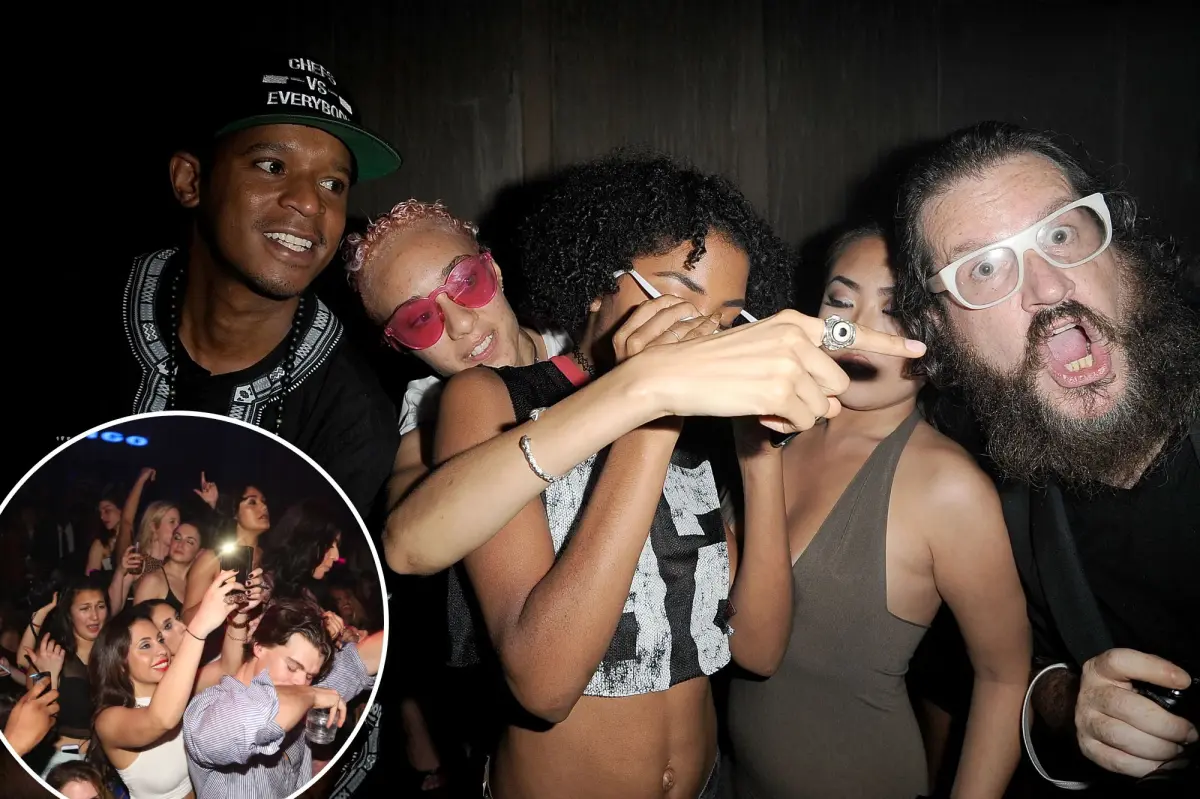
There was a time when the ultimate New York City night out did not end with a polite handshake in a carpeted lobby, but rather with a greasy, oversized slice of artichoke pizza sliding out of a paper plate at half-past two in the morning. Outside Artichoke Basille’s Pizza on 10th Avenue, the sidewalk became an impromptu stage where the hierarchy of the night stripped away, leaving only a chaotic, steam-filled sanctuary of hungry souls. The air, heavy with the sharp scent of cheap tobacco, melted cheese, and expensive perfume, hummed with the electric chatter of ravenous millennials who had just escaped the dark, echoing caverns of Chelsea’s mega-clubs. It was a grimy, beautiful, collective ritual that anchored the weekend—an unwritten law of gravity pulling the city’s weary dancers down from their synthesized highs back to the concrete earth. But over the last decade, and with brutal acceleration during the isolating years of the pandemic, this visceral nightlife ecosystem collapsed. In its place arose a new social paradigm: the pristine, velvet-gated kingdom of the private members’ club. Venues like Zero Bond, Casa Cipriani, and the Fly Fish Club emerged as the new temples of social status, trading the sweat and unpredictability of the dance floor for the muted lighting of corporate-friendly libraries, impossibly high annual dues, and restrictively sterile dress codes. For a generation of New Yorkers now drifting through their thirties and early forties, these high-tax-bracket enclaves felt less like an evolution of fun and more like a joyless retreat into curated networks, leaving many to wonder if the raw, democratic spark of the city’s legendary nightlife had been permanently snuffed out.
Yet, just as the collective fatigue with these exclusive silos reached a boiling point, a sudden wave of restorative nostalgia washed over the city, sparked by a single social media post from one of the golden era’s most legendary gatekeepers. When Avenue, the iconic Chelsea hotspot managed by Tao Group Hospitality, announced its impending resurrection on Instagram, it felt less like a standard business press release and more like a long-awaited cultural homecoming. The simple, evocative caption read, “It was never a goodbye,” igniting an immediate avalanche of emotional commentary from thousands of former patrons desperate to reclaim the unpolished magic of their youth. Users flooded the comment section with memories of wild, unbuttoned nights, reminiscing about the days when Avenue felt like a living blockbuster movie starring the likes of Lindsay Lohan and Justin Timberlake. They joked about the essential elements of a true night out—wondering if the legendary door host Wass Stevens would still wield his intimidating power over the velvet rope, and if the post-club pizza pilgrimage would remain intact. Commenters hailed the news as a “cultural reset” and celebrated the idea that New York was finally healing from its self-imposed era of overly-produced, sterile socialization. The original Avenue had shut its doors in 2020, and though the team tried desperately to reclaim its original footprint, the landlord’s sale of the building forced them to look upward. Now, partnered with the sleek architecture of Hudson Yards, the venue is poised to reborn this June as Avenue Sky Lounge, sprawling across a breathtaking 6,000 square feet on the 101st floor of 30 Hudson Yards, attempting a daring synthesis of high-altitude luxury and the raw energy of the early aughts.
To understand why this reopening has triggered such a profound cultural yearning requires looking back at how social media has fundamentally altered the chemistry of going out. As Noah Tepperberg, the co-CEO of Tao Group Hospitality and an undisputed architect of modern nightlife, points out, the original Avenue thrived in a pre-smartphone wilderness where mystery was the ultimate social currency. In the late 2000s and early 2010s, you could not simply peer into a club via an Instagram Story or TikTok feed; you had to brave the elements, charm the door staff, and physically cross the threshold to discover what layout of music, celebrity, and energy existed inside. By scaling the new venue to the skies of Hudson Yards, Tepperberg and his team are not merely trying to construct another luxury lounge, but are looking to revive that intoxicating sense of organic, unscripted serendipity while retaining a polished, mature edge that appeals to their original crowd. The prevailing dominance of private members’ clubs has arguably reached its saturation point, where the obsession with exclusivity, vetted guest lists, and networking has drained the night of its tribal passion. Tepperberg notes that while these filtered, quiet environments still hold value for those looking for a quiet drink under NDAs, the human spirit naturally rebels against over-managed environments. New Yorkers are increasingly looking for democratic spaces once again—rooms where the social hierarchy can dissolve under the weight of a heavy bass line, and where the music, rather than a bank statement, dictates the mood of the room.
This rebellion against the overly curated “country club” aesthetic is already playing out on the subterranean dance floors of downtown Manhattan, where a younger cohort of nightlife purists is leading its own raucous counter-revolution. At Jean’s on Lafayette, the traditional boundary between high-brow dining and uninhibited hedonism is blurred nightly, with fresh-faced patrons crowding the sidewalk for a chance to descend into the basement. The venue acts as a double-sided coin, offering wholesome, farm-to-table culinary experiences upstairs before descending into sheer, unadulterated debauchery below as the clock strikes midnight. Those running the operations at Jean’s describe their nightlife philosophy as constructing a “never-ending wedding”—an environment where pretension is discarded at the door, and the sole objective is to foster a wild, communal celebration. In a biting critique of the private club boom, a spokesperson for Jean’s observed that disillusioned patrons are actively fleeing what they call “Temu country clubs” in order to throw themselves back into the sweaty, beautiful chaos of rubbing shoulders with strangers on a crowded dance floor. The sheer vitality of these spaces cannot be manufactured by high membership fees; it belongs to the unpredictable collision of personalities, like transitioning a corporate fashion dinner for Jimmy Choo straight into an impromptu, high-octane afterparty following an intimate performance by the legendary punk icon Patti Smith.
This longing to inject grit back into otherwise manicured spaces is also redefining the boundaries of metropolitan nightlife, spilling over from the hot pavement of Manhattan to the exclusive summer colonies of Long Island. Jamie Mulholland, the seasoned nightlife impresario behind the beloved Broome Street hotspot Ketchy Shuby, is actively bringing this revivalist energy to the Hamptons. This summer, Mulholland is set to reopen Ketchy Shuby within the historic walls of the former Lily Pond space, a legendary Hamptons nightclub that came to define the champagne-fueled, sun-drenched party culture of the early 2000s. For Mulholland, the project is a deliberate, nostalgic effort to strip away the overly polished, sterile veneer that has slowly sanitized the beachside playground over the last two decades. By reviving the raw, exciting, and slightly unhinged party culture of his youth, he hopes to offer an antidote to the high-society dinner parties and quiet lounges that have left younger, high-energy vacationers with nowhere truly wild to dance under the summer stars. There is a widespread, shared recognition among these operators that the modern night out has become too safe, too quiet, and too transactional, and that the public is hungry for venues that dare to be loud, sweaty, and unapologetically fun once more.
Ultimately, the great nightlife renaissance of the late 2020s is driven by something much deeper than business trends or retro aesthetics; it is a fundamental, evolutionary defense mechanism against a world increasingly dominated by digital illusion and emotional isolation. As we drag ourselves deeper into the age of artificial intelligence, algorithms, and curated online personas, our daily lives have become increasingly characterized by a profound, artificial distancing. Jack Mulqueen, the founder and operator of the acclaimed Lower East Side venue Outer Heaven, eloquently suggests that the more digital our world becomes, the more precious and sacred our physical, face-to-face human interactions will ultimately be. The dance floor is one of the few remaining secular sanctuaries where humanity can still gather without screens, filters, or corporate agendas to participate in a timeless, collective ritual of movement and connection. This is why the return of Avenue, the sweat-soaked basements of Lafayette Street, and the rebirth of classic Hamptons party spots represent much more than just a passing commercial trend. They are a passionate reclamation of the city’s living, breathing soul—proving that no matter how many exclusive libraries or high-priced lounges are built to keep people apart, the beautiful, chaotic urge to gather in the dark and lose ourselves in the music remains eternal.