


The human imagination has always been deeply captivated by the romantic allure of the private island—a self-contained universe where the chaotic demands of modern civilization effortlessly fade into the gentle, rhythmic murmur of ocean waves. For decades, this ultimate symbol of luxury, isolation, and absolute personal freedom was deemed the exclusive playground of the ultra-wealthy, a status symbol reserved for those with bottomless bank accounts and global influence. Yet, every so often, a unique opportunity emerges from the azure waters of the Mediterranean that completely challenges this status quo, turning heads and igniting the deep-seated escapist dreams of ordinary people worldwide. Such is the fascinating and complicated case of Makri, a stunningly beautiful, completely uninhabited Greek island situated in the heart of the idyllic Ionian Sea. When high-end real estate agencies first whispered its name to the global market back in 2022, the initial price tag was set at a lofty and exclusive $9.2 million, a figure worthy of its pristine topography and investment potential. Today, however, the narrative surrounding this isolated paradise has taken a dramatic, almost unbelievable turn, as the starting auction price for this slice of heaven has plummeted to a mere $286,000. To put this astonishing number into a relatable, everyday perspective, one only has to look across the Atlantic to the current housing market in the United States, where official Federal Reserve Economic Data places the average price of a standard, single-family residential home at approximately $514,600. The math is as shocking as it is seductive: for nearly half the cost of a typical suburban American house—which usually comes with a manicured lawn, a hefty long-term mortgage, and neighboring traffic—you could theoretically hold the deed to an entire, sun-drenched Mediterranean island. This dramatic price drop invites us to daydream about trading gridlocked commutes for endless horizons of pristine blue, exchanging the persistent hum of the city for the gentle rustle of ancient olive trees in the sea breeze. It offers a fleeting, intoxicating glimpse of a life decoupled from the exhausting patterns of the modern rat race, suggesting that perhaps absolute solitude and natural beauty are no longer just the privileges of billionaires, but a tangible reality waiting for a bold adventurer to step forward and claim them.
However, as with most things in life that sound entirely too good to be true, a closer inspection reveals that the incredibly low starting auction price of Makri is merely the tip of a highly complex, financially hazardous iceberg. The beautiful dream of owning a private paradise quickly collides with the cold, hard, and unyielding realities of international finance, judicial proceedings, and sovereign debt, illustrating perfectly that a cheap purchase price is rarely the final cost of acquisition. Whoever decides to courageously raise their auction paddle and claim ownership of Makri will not just be buying a sun-drenched sanctuary of rock and sea; they will also be legally inheriting a massive, highly intimidating backlog of pre-existing tax claims, unresolved disputes, and accumulated debts tightly bound to the island’s legal title. According to detailed investigative reports from the local Greek financial media outlet Sofokleous10, these outstanding liabilities are staggering, with claims from the Greek state alone ballooning to a jaw-dropping minimum of approximately $23.2 million. This immense financial anchor instantly drags the romantic dream of island ownership back down to earth, transforming a $286,000 bargain into a multi-million-dollar legal and financial labyrinth that could easily overwhelm even the most experienced property developers. For the average investor or starry-eyed dreamer, this monumental debt burden represents a terrifying and practically insurmountable barrier to entry, highlighting the stark, often painful contrast between the superficial allure of real estate marketing and the underlying, punishing fiscal realities of distressed assets. It serves as a sobering modern parable of how historical financial mismanagement and complex bureaucratic entanglements can freeze a beautiful piece of the earth in a state of perpetual legal limbo, turning what should be a crown jewel of the Mediterranean into a high-stakes gamble where the initial buy-in is incredibly cheap, but the cost of staying in the game requires vast fortunes.
To fully comprehend how Makri arrived at this dramatic and unfortunate juncture, we must look back to the highly optimistic days of 2022, when the island was aggressively marketed as a premier, blank-canvas opportunity for ambitious international developers. Back then, it was proudly heralded by mainstream media, including major outlets like Metro, as a certified “crown jewel” of the Ionian Sea, perfectly positioned to capture the imaginations and wallets of the world’s most elite travelers. The glossy marketing materials painted a breathtaking picture of unparalleled luxury, pitching the expansive 243-acre landmass as the future home of an exclusive, ultra-high-end getaway complete with private, secluded villas and a world-class, five-star hotel. Prospective investors were repeatedly assured that Makri operated within a highly stable, “mature,” and reliable legal framework specifically tailored to support and streamline ambitious development projects. The listing proudly boasted clear, uncompromised, and unencumbered ownership titles, confidently declaring the property as “immediately available for transfer,” which gave eager buyers the distinct impression that they could begin breaking ground on their dream resort almost immediately without facing any administrative hurdles. It was a masterclass in luxury real estate positioning, meticulously designed to attract wealthy visionaries who wanted to carve out their own private kingdom while tapping into Greece’s highly lucrative tourism sector. Yet, this grand vision of high-society retreats, infinity pools, and private yacht docks was ultimately built on a fragile foundation, failing to account for the deep-seated complexities of local land classifications and the tightening grip of environmental protections. The grand plans that once seemed so secure and close to realization quickly and spectacularly unwound, leaving behind a cautionary tale of how quickly corporate hubris and real estate speculation can dissolve when confronted with the unyielding realities of the natural world and strict regulatory oversight.
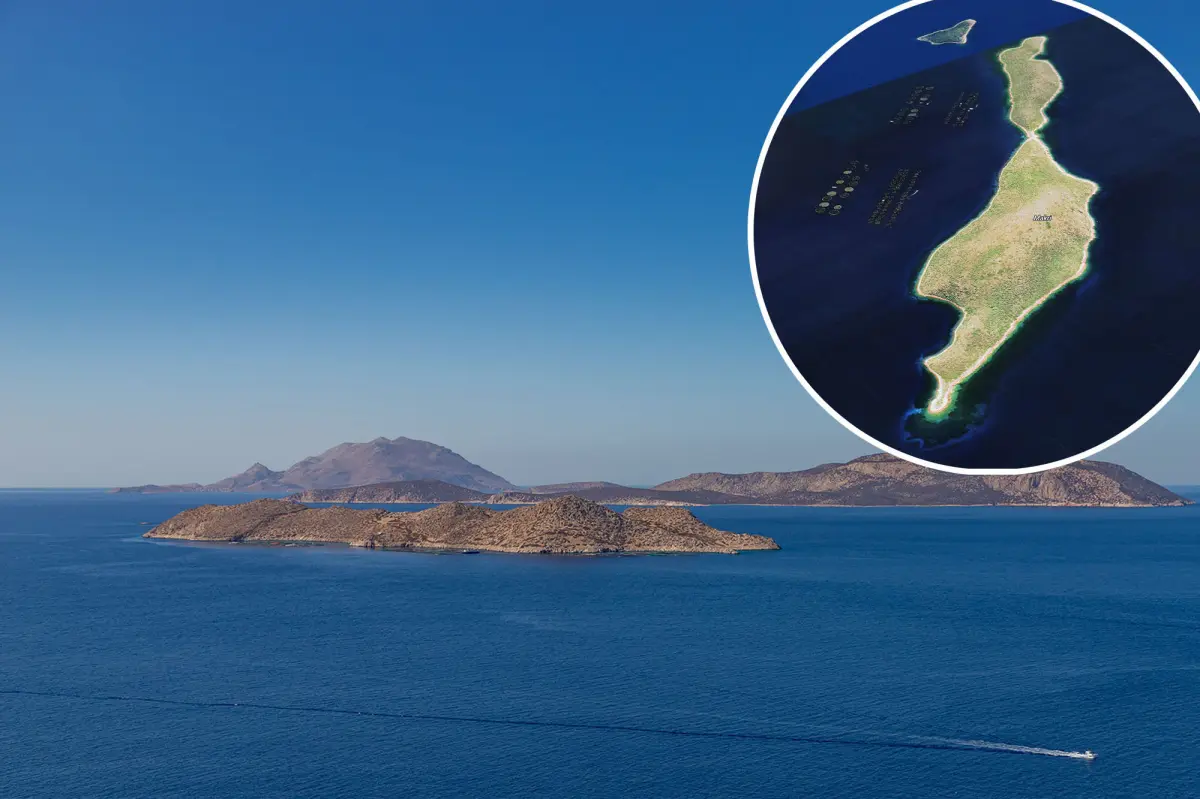
Geographically and visually, it is incredibly easy to understand why seasoned investors were so easily spellbound by Makri’s immense physical beauty and natural charm. Spanning an impressive 243 acres of pristine, completely untouched terrain, it stands proudly as the fifth-largest island within the enchanting Echinades archipelago, a cluster of scenic islands scattered across the crystal-clear, deep-blue waters of the Ionian Sea. The island’s topography is a dramatic masterpiece of nature, characterized by a highly rugged, deeply indented, and jagged coastline that naturally creates secluded coves, dramatic rocky cliffs, and endless pockets of private shoreline kissed by gentle waves. Blessed with the iconic, warm Mediterranean climate, Makri enjoys radiant sunshine for the vast majority of the year, making it a peaceful sanctuary where time seems to slow down and the warm air smells eternally of wild thyme, sage, and salty sea breezes. This very physical beauty, however, became the primary source of its own undoing, as an unexpected and critical administrative error threw a massive wrench into any hopes of modern commercial development. According to reports from Metro, the island was unfortunately misclassified by government authorities as a private forest, a heavy-handed and protective legal designation that severely limits human intervention, tree removal, and any major alterations to the natural landscape. To compound this administrative nightmare for developers, Makri lies squarely within a designated Site of Community Importance and a strictly monitored Special Protection Zone. These rigid environmental designations mean that the very low-impact, five-star luxury development proposals that were once showcased as the island’s primary selling points are legally and fundamentally prohibited, rendering the grand architectural blueprints for luxury resorts utterly useless and protecting the island’s wild, rugged character from the threat of commercial concrete.
The protective regulatory shield surrounding Makri is further reinforced by its inclusion in Natura 2000, the European Union’s vast, highly rigorous, and politically powerful ecological protection network designed to safeguard the continent’s most vulnerable, valuable, and threatened natural habitats. For an island like Makri, holding a Natura 2000 status is a glorious blessing for conservationists, but it represents an absolutely impenetrable, frustrating wall for commercial developers and private builders. Under these strict European Union guidelines, the holistic preservation of local biodiversity, fragile ecosystems, native flora, and local fauna takes absolute and unquestioned precedence over any economic ambitions, tourism demands, or capitalistic endeavors. Attempting to build even the most basic, unobtrusive infrastructure on an island protected by this ecological network is not a simple matter of obtaining standard local building permits or paying administrative fees; rather, it is a monumental, multi-year bureaucratic marathon that requires nothing less than formal approval by a presidential decree in Greece. This extreme level of state and judicial scrutiny ensures that any proposed human footprint on the island is analyzed under an intense scientific and legal microscope, making the construction of luxury villas, paved roads, docks, or utility lines an almost impossible dream to achieve. The heavy irony of the situation is profound and unavoidable: the exact ecological purity, total lack of pollution, and breathtaking biodiversity that make Makri so incredibly attractive to weary souls wishing to escape the modern world are the very factors that legally prevent any modern comforts or structures from being established there. It highlights a fascinating, ongoing philosophical clash between the human desire to possess, civilize, and monetize wild spaces, and the collective institutional effort to keep those spaces wild, untouched, and permanently free from the degrading touch of commercial overtourism.
Ultimately, the captivating story of Makri forces us to deeply redefine what it truly means to “own” a piece of the earth, stripping away the shiny illusions of luxury real estate to reveal a rugged, challenging, and profoundly off-grid reality. Because of the strict environmental regulations and forest protections, the potential uses for this 243-acre sanctuary are incredibly restricted, essentially limiting any future human activity to low-impact, traditional agricultural purposes. Furthermore, because the island has existed completely untouched by the modern world for generations, it possesses absolutely none of the basic municipal infrastructure required for everyday human comfort and survival. Any brave, incredibly wealthy soul who decides to take on the astronomical outstanding debts and navigate the dizzying bureaucratic maze of Makri would face the daunting, exhausting task of building their own entirely self-sustaining ecosystem from scratch. There are no power grids to connect to, no freshwater pipes running under the soil, and no municipal waste disposal systems; living on Makri would mean investing heavily in solar arrays, wind turbines, state-of-the-art desalination plants, and advanced, eco-friendly waste management solutions. Yet, in our increasingly overcrowded, hyper-connected, and digitally noisy world, perhaps there is a quiet, radical, and truly beautiful victory in a place that stubbornly refuses to be tamed by developers. While Makri may never host the five-star hotels, sparkling infinity pools, or glitzy yacht clubs that ambitious international investors once dreamed of creating, its true value lies in its stubborn preservation as a wild, untouched sanctuary. It remains a peaceful place where the sun still rises over a jagged, silent coastline, reminding us that some of the earth’s greatest treasures are meant to remain wild, free, and far beyond the reached grasp of human ambition and the transient systems of finance, debt, and development.